A guest may never see the work behind a perfectly made bed, streak-free mirror, or fresh-smelling bathroom. They will notice when it is missing. A reliable hotel housekeeping checklist gives every room attendant a clear standard, helps supervisors catch small issues early, and protects the experience guests expect from check-in to checkout.
The goal is not simply to make a room look clean at a glance. Good hotel housekeeping supports comfort, hygiene, safety, and the polished first impression that leads to better reviews and repeat stays. Whether your property is a small independent hotel, a managed property, or a larger hospitality operation, the right checklist creates consistency without making the team rush through important details.
Start With a Room Status and Safety Check
Before cleaning begins, attendants should confirm the room’s status. A vacant dirty room, stayover room, occupied room, and out-of-order room each require a different approach. Entering an occupied room without following procedure can create a guest-service issue, while cleaning a room that has not been released may delay the front desk.
Knock, announce housekeeping, and wait according to property policy before entering. Keep the door open while servicing the room when appropriate, use the doorstop or safety device, and avoid leaving carts unattended in hallways. If an attendant finds a damaged fixture, a pest concern, suspicious item, maintenance issue, or lost property, that concern should be documented and reported immediately rather than handled informally.
A quick safety check also includes looking for sharp objects, bodily fluids, excessive trash, and signs that the room needs a deeper sanitation process. Standard turnover cleaning is not always enough. When conditions call for specialized cleaning, the team should have clear escalation procedures and the right protective equipment.
Hotel Housekeeping Checklist for Guest Rooms
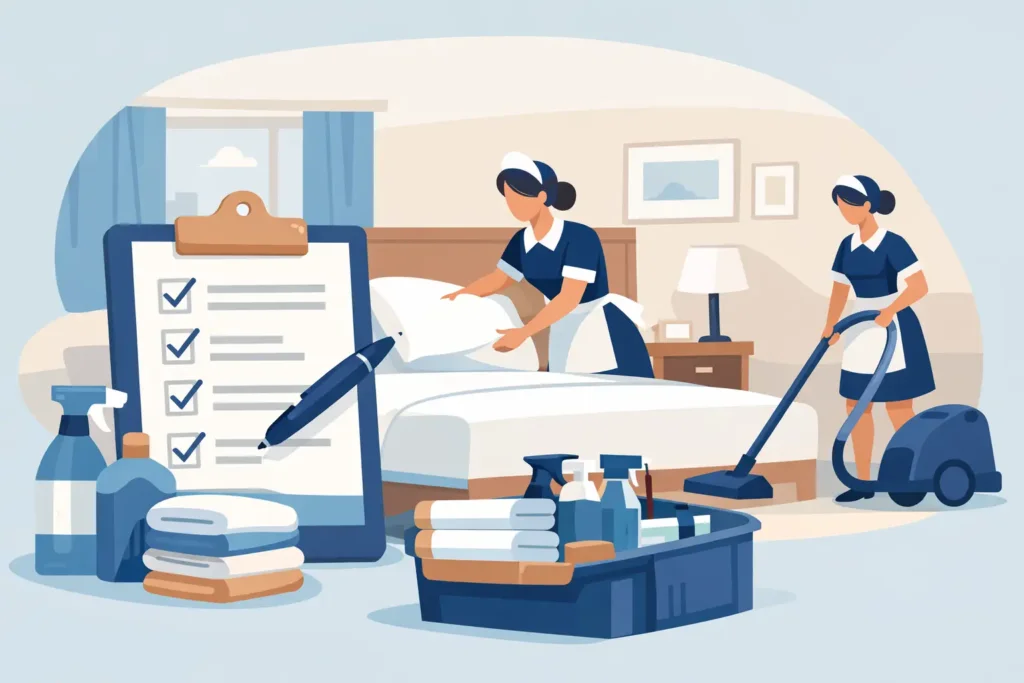
Guest rooms deserve a repeatable sequence. Working from high surfaces to low surfaces and from the cleanest areas to the dirtiest helps prevent cross-contamination and reduces missed steps. Many teams begin by ventilating the space, collecting trash and linens, then cleaning and resetting each area in order.
Entry, Closet, and Main Room
Start by removing used towels, trash, recycling, food containers, and stripped linens. Check drawers, closets, under the bed, behind curtains, and the luggage rack for guest belongings. Lost items should be labeled, secured, and handled according to the hotel’s lost-and-found policy.
Dust and wipe high-touch points first, including door handles, locks, light switches, thermostat controls, phones, remote controls, bedside lamps, alarm clocks, and drawer pulls. Clean visible dust from furniture, picture frames, headboards, window ledges, and vents. Inspect walls, upholstery, and curtains for stains or damage that needs attention beyond routine cleaning.
Make the bed with fresh, clean linens and check that sheets are smooth, pillows are properly protected, and blankets or duvets are free of hair, marks, or odors. Reset the room so it feels intentional: align furniture, straighten curtains, empty the ice bucket if applicable, and replenish approved guest materials.
Bathroom
The bathroom is where guests judge cleanliness most quickly. Use separate, color-coded cloths and tools for bathroom surfaces so they are never used in the bedroom or kitchenette area. Apply approved cleaner and disinfectant according to the product’s required contact time. Spraying and wiping immediately may look efficient, but it can reduce the disinfectant’s effectiveness.
Clean and disinfect the toilet, including the seat, lid, flush handle, base, and nearby wall areas. Scrub the tub or shower, fixtures, grout lines, shower door or curtain, sink, faucet handles, vanity, and drain area. Polish the mirror without leaving streaks, then check it from more than one angle.
Replace towels, bath mats, toilet paper, tissues, soap, shampoo, conditioner, lotion, and other designated amenities. Empty the wastebasket, install a clean liner, and inspect the floor around the toilet and under the vanity. Finish by mopping the floor with clean water and the appropriate floor product. A clean bathroom should smell neutral and fresh, not heavily perfumed to cover an odor.
Kitchenette, Coffee Station, and Appliances
Where rooms include a kitchenette or coffee area, wipe and sanitize counters, cabinet handles, appliance handles, sink fixtures, and tables. Clean the microwave inside and out, check the refrigerator for leftover food, and confirm the coffee maker, cups, stirrers, and supplies are clean and properly stocked.
Do not overlook fingerprints on stainless steel, crumbs in drawers, or spills inside the refrigerator. These details can make a recently cleaned room feel neglected. If food residue, grease buildup, or appliance odors are excessive, schedule deeper cleaning rather than expecting a quick turnover to solve the problem.
Floors and Final Room Presentation
Vacuum carpeting carefully, including edges, under movable furniture, and around the bed. Sweep and mop hard floors, paying attention to corners and transitions between flooring types. Look for hair, debris, stains, or sticky spots in natural light whenever possible.
Complete a final visual check from the doorway. The bed should be centered and smooth, towels neatly placed, amenities stocked, lights working, temperature set to property standards, and the room free of cleaning supplies, carts, odors, and stray hairs. Close windows, secure the room, and update its status only after it meets the required inspection standard.
Keep Public Areas Ready All Day
A hotel does not get a second chance at a lobby first impression. Public spaces need scheduled attention throughout the day, not only a single morning cleaning. The frequency depends on occupancy, weather, events, dining traffic, and the size of the property.
Lobby teams should remove trash, wipe tables, disinfect high-touch surfaces, clean entry doors and glass, straighten seating, and spot-clean floors as needed. Restrooms require regular checks for soap, paper products, toilet paper, odors, spills, and working fixtures. Elevators, hallways, stairwells, vending areas, laundry rooms, fitness centers, and meeting spaces each need assigned cleaning intervals.
High-traffic areas may need more frequent floor care during rainy days, busy weekends, or conferences. In those situations, a checklist should include dry mats, caution signage, and prompt spill response. Cleanliness is also a safety issue when wet floors and clutter create slip or trip hazards.
Build Quality Control Into Every Shift
A checklist only works when someone verifies the result. Supervisory inspections should not feel like a search for blame. They are a practical way to protect guests, coach team members, and identify recurring problems such as missed dusting, low amenity stock, damaged furniture, or poor linen quality.
Room inspectors can review cleanliness, bed presentation, bathroom sanitation, inventory, maintenance concerns, odor, and overall readiness. Random spot checks are helpful, but inspecting rooms before release is especially valuable during training, high occupancy periods, and after a complaint.
Use the same standards for every shift, but leave room for property-specific needs. A limited-service hotel may not need the same nightly detail as a luxury property, while a pet-friendly property may need additional hair removal and odor control. The checklist should be consistent enough to set expectations and flexible enough to reflect the room type, guest request, and service level.
Support Your Team With the Right System
The best checklists are easy to use under real working conditions. Keep them clear, organized by area, and available in the format your team actually uses, whether that is printed room cards, a mobile task system, or shift boards. Avoid creating a long document that people are expected to memorize but cannot realistically follow during a busy turnover.
Training matters just as much as the list itself. Show new attendants what “clean” means at your property, explain why the sequence matters, and provide practical coaching on chemical safety, linen handling, cross-contamination prevention, and guest privacy. A rushed team without enough supplies or time will struggle to meet standards, no matter how detailed the checklist is.
For hotels and managed properties in Lawrenceville and nearby communities, UpStraight Cleaning can help create a tailored commercial cleaning plan that supports your in-house staff or covers the areas that need extra attention. You stay in charge of the scope, schedule, and priorities.
A well-run housekeeping program gives guests something they may not put into words: confidence. When the room feels cared for, the bathroom feels genuinely clean, and common areas stay orderly, guests can focus on their visit instead of wondering what was overlooked.

