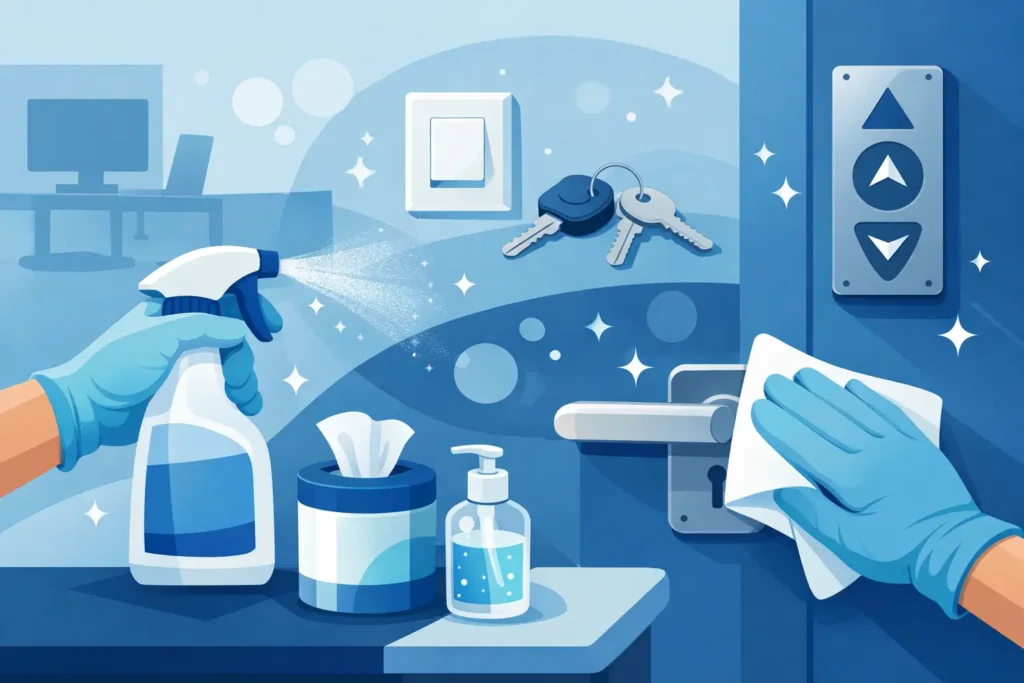
The places people touch without thinking often need the most attention: the refrigerator handle after lunch, the office door push bar, the bathroom faucet, and the checkout counter between customers. To sanitize high touch surfaces effectively, you need more than a quick spray and wipe. The right routine removes soil first, uses the product correctly, and focuses effort where it makes the biggest difference.
For busy homes and workplaces, that approach keeps cleaning manageable. You do not need to treat every square inch of a room the same way. You need a practical plan that keeps frequently handled areas clean, presentable, and ready for the next person.
What Counts as a High-Touch Surface?
A high-touch surface is any area handled often by multiple people or repeatedly by the same household or employee. Frequency matters more than size. A small light switch may deserve more attention than a large wall because hands land on it all day.
At home, common examples include doorknobs, cabinet pulls, appliance handles, faucets, toilet flush levers, remotes, phones, keyboards, light switches, stair rails, and car door handles. In commercial settings, add entry doors, elevator buttons, point-of-sale equipment, shared desks, breakroom appliances, restroom fixtures, menus, gym equipment, and reception counters.
The right list will look different for every property. A household with young children may prioritize toy bins and bathroom fixtures. A restaurant needs close attention to menus, counter surfaces, condiment containers, and staff touchpoints. An office with shared workstations may need a more frequent keyboard and phone routine than a private office.
Clean First, Then Sanitize
Cleaning and sanitizing are related, but they are not the same job. Cleaning physically removes dust, crumbs, grease, fingerprints, and other buildup from a surface. Sanitizing reduces certain germs on a cleaned surface to levels considered safer by public health standards.
That order matters. If a door handle is visibly dirty or greasy, a sanitizing product may not work as intended until the soil has been removed. Start with a cleaner appropriate for the material and a clean cloth or disposable towel. Then apply your sanitizer or disinfectant according to its label instructions.
Disinfecting is a stronger claim than sanitizing and may be appropriate in settings with higher exposure concerns, after illness, or for certain commercial needs. It can also be harder on finishes if used too often or incorrectly. For everyday upkeep, use the product and level of treatment that fits the surface, setting, and concern. More chemicals are not automatically better cleaning.
How to Sanitize High Touch Surfaces the Right Way
A consistent method protects both the people using the space and the materials in it. Rushing is where many routines fall short, especially when a product is wiped away before it has time to work.
Start With the Right Supplies
Use a cleaner for removing visible soil, clean microfiber cloths or disposable towels, gloves when the product label calls for them, and an EPA-registered sanitizer or disinfectant suitable for the surface. Keep products in their original containers so directions, safety information, and expiration dates remain available.
Avoid mixing cleaning products. Combining chemicals can create harmful fumes or reduce effectiveness. Ventilate bathrooms, kitchens, breakrooms, and other smaller spaces while you work, particularly when using stronger products.
Microfiber cloths are useful because they capture dust and residue well, but they need to be changed or laundered regularly. Using the same dirty cloth across every room can spread grime instead of removing it. A simple color-coding system for bathrooms, kitchens, and general surfaces can make a routine easier to manage.
Remove Soil and Apply the Product Evenly
Wipe away visible dirt, food residue, or moisture first. Apply the sanitizer or disinfectant so the entire target area is covered, not just one spot in the middle. On electronics and other sensitive items, apply the product to a cloth when the manufacturer allows it rather than spraying directly into openings.
Pay attention to the parts hands actually touch. For example, clean both sides of a door handle, the underside of a refrigerator pull, the button panel on a microwave, and the lever or button on a soap dispenser. These details are small, but they create the polished, cared-for feeling people notice immediately.
Respect Contact Time
Contact time is the amount of time a product must remain visibly wet on a surface to do its job. It is printed on the label and varies by product. If instructions say the surface must stay wet for several minutes, wiping it dry after a few seconds will not provide the intended result.
This can feel inconvenient during a busy shift or a fast morning cleanup. The solution is to work in sections. Apply product to one area, move to another task while it sits, and return when the required time has passed. For food-contact surfaces, follow label directions on whether a clean-water rinse is needed afterward.
Let the Surface Dry or Wipe as Directed
Some products should air dry. Others may be wiped after the listed contact time. Follow the label, especially on food preparation areas, children’s items, and surfaces used by pets. Once the task is finished, wash your hands thoroughly, even if you wore gloves.
Match the Routine to Your Space
The best schedule is not necessarily the most aggressive one. It is the one your household or team can maintain consistently.
For most homes, high-touch areas benefit from attention during regular cleaning and more often when someone is sick, visitors are coming and going, or a particular room sees heavy use. Kitchen and bathroom touchpoints may need a quick daily pass, while remotes, switches, and cabinet pulls can be included in a weekly routine.
Commercial spaces usually need a more structured plan. A busy retail store may sanitize entry handles, payment equipment, and counters throughout the day. An office may schedule shared touchpoints before opening, during lunch, and after closing. Fitness centers, restaurants, medical-facing businesses, and managed properties often need more frequent service based on traffic, industry expectations, and the specific areas customers use.
A simple checklist helps prevent missed details, but it should not replace judgment. If an area is visibly soiled, clean it right away. If traffic spikes for an event, meeting, move-in, or busy weekend, increase service accordingly.
Protect Delicate Materials and Equipment
Not every surface responds well to the same product. Natural stone, unfinished wood, certain painted finishes, leather, acrylic, and some metals can discolor, dull, or break down with harsh chemicals. Electronics need special care because excess liquid can damage screens, ports, and internal components.
Read the product label and, when available, the manufacturer’s care instructions for the item itself. Test a small hidden spot if you are unsure. For delicate finishes, use a product approved for that material and avoid abrasive pads that can leave permanent marks.
This is also where a professional cleaning plan can be helpful. A reliable team does not treat every room with one generic product. They consider the surfaces in front of them, the traffic in the space, and the result you need. UpStraight Cleaning builds flexible home and commercial service plans around those real-world details, from routine upkeep to deeper reset cleaning.
Common Mistakes That Waste Time
The most common mistake is spraying and immediately wiping. The second is trying to sanitize over crumbs, grease, or grime. Both can leave a surface looking cleaner without allowing the product to perform as intended.
Another problem is overlooking personal items and hidden touchpoints. Phones, computer mice, steering wheels, drawer pulls, chair arms, shared pens, and the outside of trash bins can carry plenty of hand contact. They may not need constant treatment, but they deserve a place in the routine.
Finally, do not confuse a strong scent with a clean surface. Fragrance is not proof of cleaning or sanitizing. Visible results, appropriate products, correct contact time, and a repeatable schedule matter much more.
Keep the Routine Easy Enough to Repeat
A good sanitation routine should reduce stress, not create another overwhelming task. Keep a small set of approved supplies where they are needed most, such as under the kitchen sink, in a restroom supply closet, or at a janitorial station. Train family members or staff on the same basic method so results stay consistent.
For homes, pairing high-touch cleaning with existing habits works well. Wipe handles and switches while resetting the kitchen after dinner, or include bathroom fixtures when replacing towels. For businesses, assign responsibilities by shift and document the areas that need service. Consistency builds trust for everyone who walks through the door.
The goal is a space that feels cared for at every touchpoint. Start with the surfaces people use most, choose products that fit the materials, and give each step enough time to work. A few intentional minutes can make a home feel more comfortable and a business feel ready to welcome its next guest.

