
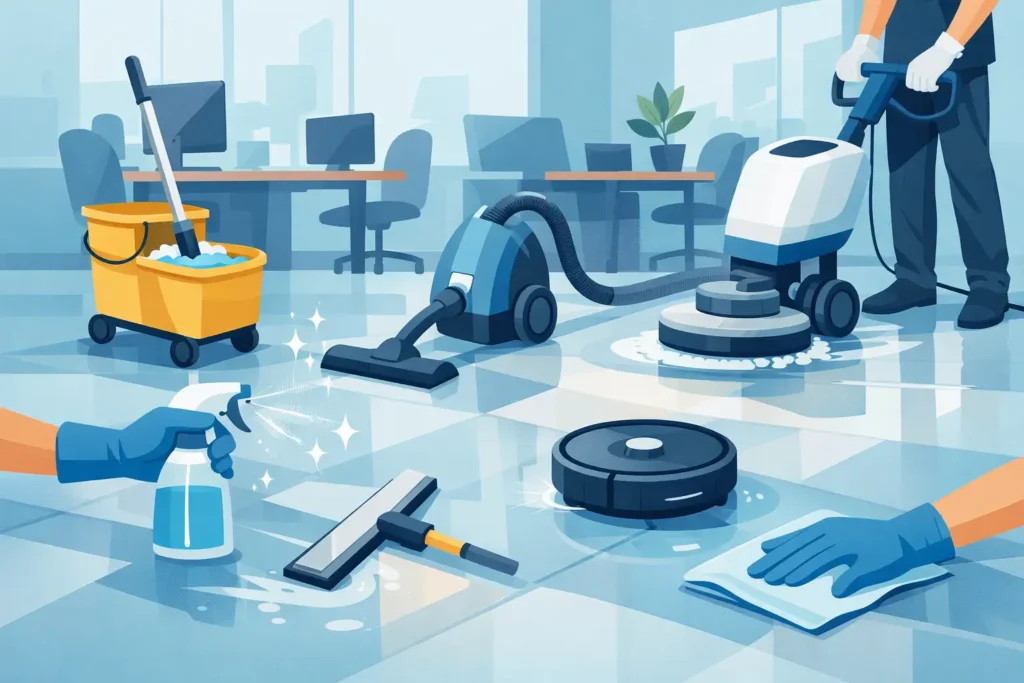
A floor can look clean at 8 a.m. and feel neglected by lunchtime. Rainy-day footprints, coffee runs, rolling office chairs, and high-traffic entryways all leave their mark. The best office floor cleaning methods account for the flooring material, how people use the space, and how quickly your team needs the area ready for work again.
For office managers, property managers, and business owners, the goal is not simply a shiny floor. It is a cleaner, safer workplace that makes a positive impression without disrupting the workday or shortening the life of costly flooring.
Best Office Floor Cleaning Methods by Floor Type
There is no single cleaning method that works well for every office floor. Using too much water on wood, a harsh chemical on vinyl, or the wrong vacuum setting on carpet can create more work and more expense. Start by identifying the material, then match the cleaning routine to its needs.
1. Vacuum and spot-treat commercial carpet
Carpet is common in offices because it softens noise and creates a more comfortable feel. It also holds onto dust, allergens, crumbs, and tracked-in soil. Regular vacuuming is the foundation of carpet care, especially around entrances, break rooms, hallways, and desks where people walk most often.
Use a commercial-grade vacuum with strong suction and a maintained filter. High-traffic lanes may need attention several times a week, while less-used conference rooms can often be vacuumed weekly. Move lightweight chairs and wastebaskets when possible so dirt does not build up around workstations.
Spills should be addressed right away. Blot liquid with a clean cloth rather than rubbing, which can push stains deeper into the fibers. For coffee, soda, or food spots, use a carpet-safe cleaner according to the product instructions. Deep extraction cleaning should be scheduled periodically to remove embedded soil that vacuuming cannot reach. How often depends on traffic, weather, and whether clients regularly visit the office.
2. Damp mop luxury vinyl tile and vinyl flooring
Luxury vinyl tile, vinyl composition tile, and sheet vinyl are popular in offices because they are durable and relatively easy to maintain. Still, they can lose their finish when dirt is allowed to act like sandpaper under shoes and chair wheels.
Start with dry soil removal. Sweep, dust mop, or vacuum using a hard-floor setting before introducing moisture. Then damp mop with a neutral cleaner made for vinyl flooring. The mop should be damp, not dripping. Excess water can work into seams and leave dull residue behind.
Avoid abrasive powders, stiff scrub brushes, and products that promise a glossy finish unless they are specifically approved for your flooring. These can leave a slippery film or damage the protective wear layer. In busy offices, daily dry mopping with regular damp mopping is often the most practical balance.
3. Clean ceramic and porcelain tile with attention to grout
Tile handles moisture well, which makes it a smart option near restrooms, kitchenettes, and building entrances. The tile surface itself may be easy to clean, but grout lines can collect grime and discolor over time. A floor that appears clean from across the room can still look worn when the grout is dark or stained.
Sweep or vacuum first, then mop with a cleaner suited to tile. For routine care, a neutral cleaner is usually enough. Restroom floors or food-service areas may require a disinfecting step, but the disinfectant must remain wet for the full contact time listed on its label to work as intended.
Grout benefits from periodic detail cleaning with a grout-safe solution and a small brush. This work is more time-consuming than standard mopping, which is why many offices schedule it as part of a deeper maintenance visit. Sealing grout, when appropriate for the material, can also make future cleaning easier.
4. Use low-moisture care for hardwood and laminate
Wood and laminate floors create a polished, professional look, but they need a gentler approach. Water is the main concern. Standing moisture can lead to warping, swollen edges, cloudy finishes, and long-term damage.
Dust mop or vacuum frequently using a soft-floor attachment. Follow with a lightly damp microfiber mop and a cleaner approved for the floor’s finish. Spray the cleaner onto the mop pad instead of pouring it directly onto the floor. This gives you better control and reduces the chance of water sitting in seams.
Skip steam mops, soaking-wet mops, and oil soaps unless the flooring manufacturer specifically recommends them. Place quality mats at doors and consider protective pads under movable furniture. These small choices help reduce scratches and protect a floor that can be expensive to refinish or replace.
5. Machine scrub resilient floors in high-traffic areas
Large offices with vinyl, sealed concrete, rubber, or other resilient flooring may need more than routine mopping. In corridors, lobbies, break rooms, and shared spaces, a floor machine or auto scrubber can lift ground-in dirt more evenly than manual cleaning alone.
Machine scrubbing is especially useful when the floor looks dull despite regular maintenance. The right pad, brush, cleaning solution, and water level matter. An aggressive pad may strip or scratch a finish, while an overly mild approach may not remove buildup. This is one area where professional cleaning support can help protect the surface while improving the result.
For offices that operate during regular business hours, after-hours machine cleaning often makes the most sense. It gives floors time to dry fully and avoids creating wet-floor hazards for employees and visitors.
6. Maintain entry mats before dirt reaches the floor
Entry mats are one of the most effective and overlooked tools in office floor care. They catch water, grit, pollen, and debris before those materials spread across carpet, tile, or vinyl. A good matting system can reduce wear throughout the building, particularly during Georgia’s rainy seasons.
The catch is that mats need cleaning too. Vacuum them regularly, remove debris underneath them, and wash or replace them when they no longer trap dirt effectively. Curled edges should be corrected immediately because they can become a trip hazard.
Use mats both outside and inside main entrances when possible. The outside mat removes larger debris, while the interior mat helps capture moisture and fine particles from shoes.
7. Build a schedule around traffic, not guesswork
The strongest floor-cleaning plan is one your office can maintain consistently. A lightly used professional office has different needs than a medical waiting room, retail space, or busy shared workspace. Cleaning every floor the same way on the same schedule often wastes time in some areas and leaves others behind.
A practical routine may include daily attention to entryways, restrooms, break rooms, and visible spills. Weekly cleaning can cover lower-traffic work areas, detailed vacuuming, and routine damp mopping. Monthly or quarterly service can focus on carpet extraction, machine scrubbing, grout work, finish care, and other deeper tasks.
Pay attention to signs that the schedule needs adjustment. Persistent odors, dark traffic lanes, sticky spots, dull finishes, and recurring complaints about dirty floors are all signals that routine cleaning is no longer enough. Seasonal changes can matter too. Wet weather may require more frequent entryway service, while pollen season can increase the need for vacuuming and dust control.
Safety Matters as Much as Appearance
Clean floors should never create a new risk. Place wet-floor signs before mopping or machine scrubbing begins, and remove them only after the surface is fully dry. Keep cords, equipment, and cleaning carts out of walkways whenever possible.
Chemical choices also matter. Use products designed for the specific floor type, follow dilution instructions, and store supplies away from employees and visitors. More cleaner is not always better. Overusing solution can leave residue that attracts dirt, makes floors slippery, and creates a cloudy look.
When Professional Office Floor Care Makes Sense
Daily upkeep can handle a lot, but deep cleaning is worth considering when floors stay dull after routine work, carpet odors return, grout looks permanently discolored, or high-traffic areas need specialized equipment. A tailored commercial cleaning plan can cover the basics on a reliable schedule while adding deeper floor care where it delivers the most value.
UpStraight Cleaning helps local businesses create flexible cleaning plans that fit their office hours, flooring types, and level of foot traffic. The right plan gives your staff one less thing to manage and helps every visitor walk into a space that feels cared for.
A consistently clean office floor quietly supports the whole workplace. It protects your investment, reduces preventable mess, and lets employees and guests focus on why they are there instead of what is underfoot.

