
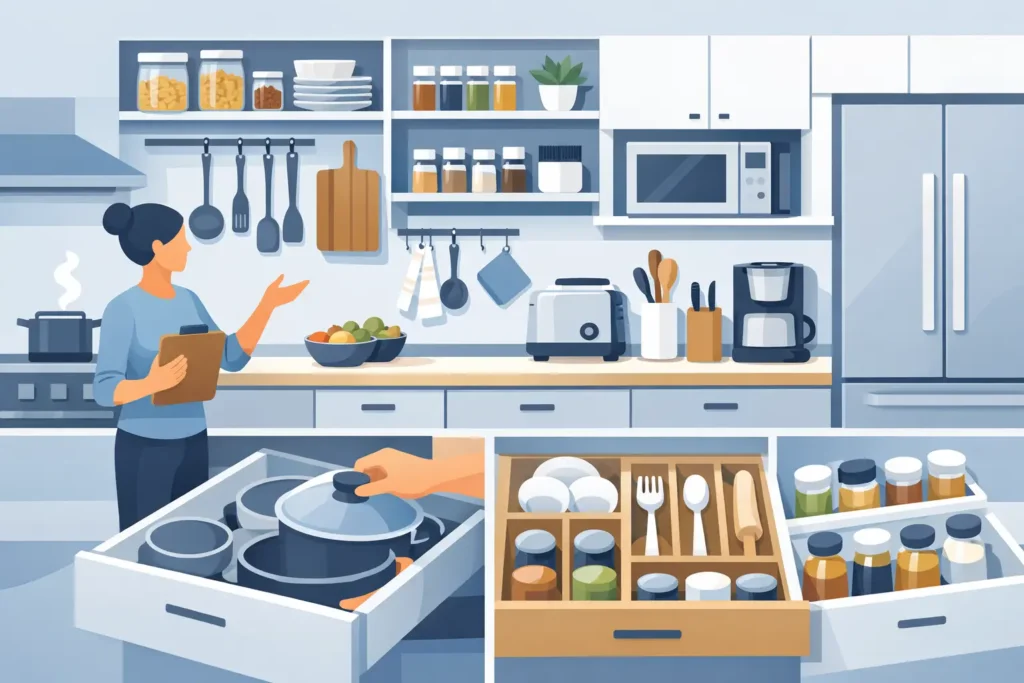
If you are trying to organize kitchen for efficiency, the problem is rarely a lack of cabinets. More often, the items you use every day are too far from where you need them, counters have become holding areas, and each meal creates a new round of searching, shifting, and cleaning. A functional kitchen should reduce those little frustrations so breakfast, dinner, packing lunches, and cleanup take less effort.
The goal is not a picture-perfect pantry or matching containers in every drawer. It is a kitchen that supports the way your household actually lives. With a few practical changes, you can create clear work zones, make frequently used items easy to reach, and keep the space under control between cleanings.
Start by organizing your kitchen for efficiency, not appearance
Before buying bins, drawer dividers, or shelf risers, pay attention to how you move through the room. Where do groceries land when you walk in? Which drawer do you open while making coffee? Where does mail collect? Which countertop becomes crowded first?
These patterns tell you what needs to change. An attractive setup that puts coffee filters across the kitchen from the coffee maker will not save time. The best organization places supplies where the task happens.
Begin with one category or one cabinet at a time. Pull everything out, wipe down the empty space, and sort items into three groups: keep and use, donate or discard, and relocate. Expired food, duplicate utensils, chipped dishware, and appliances that have not been used in years take up valuable room. Letting them go creates space for the items that make daily routines easier.
Be realistic about what stays. A large serving platter may be worth keeping even if it is only used for holidays. It just does not need the same convenient shelf space as the plates your family uses every day.
Create zones around your real routines
A kitchen works best when it is arranged in simple zones. You do not need labels on every shelf, but each area should have a clear purpose. This reduces the time spent looking for things and makes it easier for everyone in the household to put items back.
Set up a prep zone
Your primary prep zone should be close to the largest clear stretch of counter space. Store knives, cutting boards, mixing bowls, measuring tools, peelers, and food storage bags nearby. If these basics are spread across several cabinets, cooking can feel more complicated than it needs to be.
Keep the counters as open as possible around this area. Counter space is a working surface, not long-term storage. It is fine to leave out appliances you use every day, such as a coffee maker or toaster, but occasional-use items can move to a cabinet or pantry shelf.
Keep cooking tools near the stove
Pots, pans, cooking utensils, oven mitts, and cooking oils belong close to the range. A drawer beside the stove is ideal for spatulas, tongs, and wooden spoons. If you do not have that drawer, use the nearest cabinet or a contained countertop utensil holder.
Store cookware according to frequency of use. Keep the skillet and saucepan you reach for most at the front or on an easy-to-access shelf. Large stockpots, roasting pans, and specialty bakeware can go lower or higher because they are not part of most weeknight meals.
Make cleanup easier around the sink and dishwasher
Place dish soap, sponges, dishwasher pods, and dish towels near the sink. Keep food storage containers, everyday plates, glasses, and silverware close to the dishwasher when possible. This small adjustment makes unloading faster and encourages everyone to finish the job instead of leaving clean dishes on the counter.
If cabinet placement cannot be changed, use a simple workaround. Put a small basket near the dishwasher for items that belong elsewhere, then return them after unloading. That is more efficient than stopping every few seconds to walk across the kitchen.
Build a breakfast and beverage station
Mornings are smoother when coffee, tea, mugs, filters, sweeteners, and breakfast basics are grouped together. Families with school-age children may also benefit from a lower shelf or drawer stocked with bowls, cups, and easy breakfast items they can safely reach themselves.
This is one area where duplication can be helpful. A second set of teaspoons near a coffee station may save more frustration than it costs in drawer space. Efficiency is not always about owning fewer things. It is about keeping the right things where they are useful.
Use cabinets and drawers with intention
Deep cabinets and crowded drawers often hide the items you need most. The right storage solution depends on your kitchen, but visibility and access should guide every decision.
Use clear bins or open baskets to group snack items, baking supplies, lunchbox foods, and pantry staples. Pull-out bins are especially useful in deep cabinets because they prevent small items from disappearing in the back. Label categories if multiple people share the kitchen, but keep labels broad enough to stay useful. “Snacks” works better than creating separate bins for every type of granola bar.
Vertical storage can make a major difference. Store baking sheets, cutting boards, muffin tins, and serving trays upright rather than stacking them flat. A simple divider lets you pull out one item without lifting five others first.
Drawers need limits. Use dividers for utensils and small tools, then avoid turning the remaining space into a catch-all. If you find loose batteries, takeout menus, rubber bands, and random hardware in the kitchen, give those items a different home. A well-organized kitchen cannot stay efficient when every drawer becomes a miscellaneous drawer.
Make the pantry work harder
A pantry should help you see what you have before you shop. When food is hard to find, households often buy duplicates, forget ingredients until they expire, and lose time deciding what to make.
Group pantry items by how they are used: breakfast foods, snacks, baking ingredients, canned goods, grains and pasta, sauces, and lunch supplies. Put the most frequently used categories between waist and eye level. Heavy items belong on lower shelves, while seasonal baking supplies and backup paper goods can go higher.
Decanting every ingredient into matching containers is optional. It can look tidy and make some foods easier to store, but it also takes time to maintain. For busy households, clear bins and consistent categories are often enough. If you do transfer items, keep the original cooking instructions or expiration date with the container.
Create one designated spot for open snacks and one for items that need to be used soon. This reduces half-empty boxes scattered across shelves and makes it easier to pack lunches without opening three different packages.
Protect your counters from everyday clutter
Kitchen counters attract everything: grocery bags, backpacks, paperwork, keys, water bottles, and items that need to be returned elsewhere. Without a plan, this clutter can make an otherwise clean kitchen feel overwhelming.
Choose a landing spot outside the main prep area for the things that enter your home each day. A nearby console, entry basket, or designated corner can keep bags and mail from taking over the kitchen. For papers that must stay in the kitchen, use one tray or wall-mounted organizer instead of allowing stacks to spread.
Then give yourself a realistic counter rule. Before bed, return dishes, wipe the main work surface, and remove anything that does not belong there. A five-minute reset is much easier than a full weekend cleanup, especially after a busy week.
Build simple habits that keep the system in place
Organization only works when it is easy to maintain. Rather than scheduling a major overhaul every few months, attach small resets to routines you already have. Put groceries away by category when you unpack them. Empty the dishwasher in the morning or after dinner. Check the refrigerator once a week before grocery shopping and move older produce or leftovers where they will be seen.
A monthly check of one problem area can prevent clutter from building up. Choose the junk drawer, food storage containers, spice cabinet, or refrigerator door. Small, focused maintenance sessions are more manageable than waiting until the entire kitchen needs attention.
It also helps to make your system visible to the people who use it. Keep children’s dishes in reachable places when appropriate, place cleaning supplies where they are needed, and use straightforward labels for shared bins. An efficient kitchen should not depend on one person knowing where everything goes.
Know when outside help can save time
Some kitchens need more than a quick reset. After a move, renovation, schedule change, or long stretch of busy family life, the space may be too crowded to tackle in one afternoon. Professional organizing support can help you make decisions, create workable zones, and start with a thoroughly cleaned foundation.
UpStraight Cleaning provides flexible organizing and cleaning support for homeowners and renters who want a kitchen that feels calmer, cleaner, and easier to use. The right level of help depends on your space and your goals, whether you need a single cabinet refreshed or a full kitchen reset.
A kitchen does not have to be large or newly remodeled to work well. When the tools, food, and supplies you use most are easy to find and easy to return, everyday tasks become lighter – and that relief carries into the rest of your day.

