
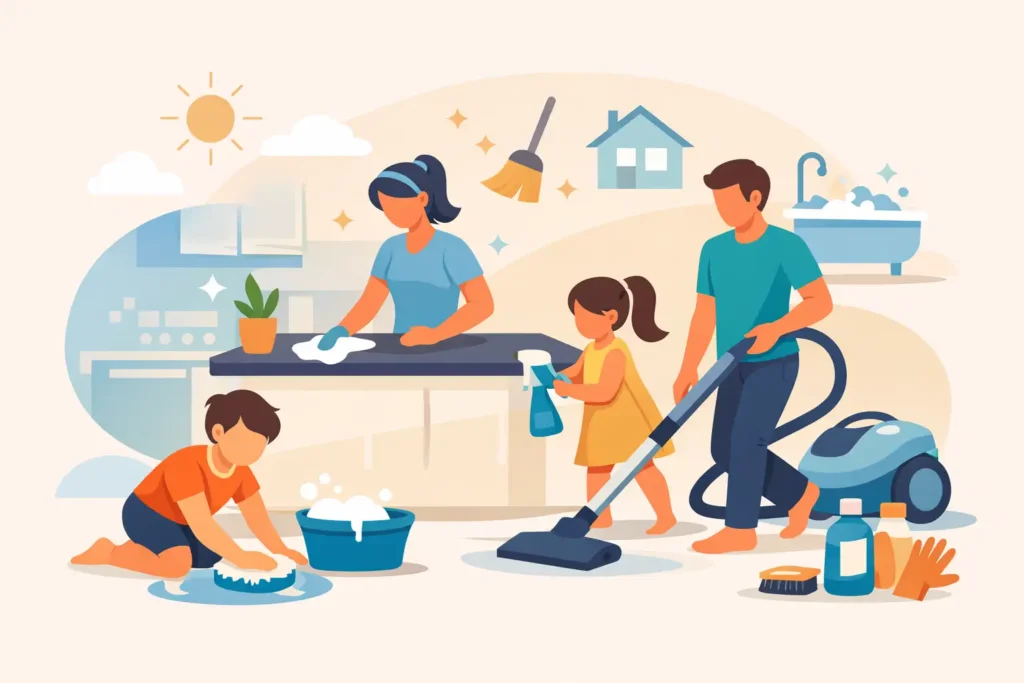
Some family messes happen so fast they feel personal. You clear the kitchen after breakfast, answer two emails, and come back to crumbs, a sticky counter, and one sock on the table for reasons nobody can explain. That is exactly why the best cleaning routine for families is not the one with the longest checklist. It is the one your household can actually keep up with on busy school mornings, workdays, and weekends.
For most families, a good routine does two jobs at once. It keeps the home healthy and presentable, and it prevents cleaning from swallowing your limited free time. The goal is not a picture-perfect house every hour of the day. The goal is to stay ahead of buildup so your home feels easier to live in.
What the best cleaning routine for families really looks like
The most effective routine is built in layers. Daily tasks handle the mess that spreads quickly, weekly tasks reset the spaces everyone uses most, and occasional deeper cleaning keeps small issues from turning into overwhelming ones.
This matters because family homes get used hard. Kitchens, bathrooms, entryways, and living rooms can go from tidy to chaotic in a single day. If you treat every mess like a major project, cleaning starts to feel exhausting. If you break it into repeatable habits, the work becomes lighter and more predictable.
A routine also has to match your season of life. A family with toddlers needs a different rhythm than one with teens. A household with pets, sports schedules, or both working parents will need more flexibility than a home with a slower pace. The right routine is the one that fits your real life, not the one that looks impressive on paper.
Start with a daily reset, not an all-day cleaning plan
Most families do better with short resets than marathon cleaning sessions. A 10 to 20 minute reset in the morning and another in the evening can keep the house under control without turning every day into a chore day.
In the morning, focus on the spaces that affect the rest of the day. Make beds if that helps rooms look calmer. Clear breakfast dishes, wipe the kitchen table and counters, and do a quick floor check for crumbs or spills. If the dishwasher is clean, empty it early so dirty dishes can go straight in instead of collecting in the sink.
In the evening, aim for a house that is ready for tomorrow. That usually means dishes done or loaded, counters wiped, trash checked, toys and shoes picked up, and one load of laundry moved forward. Even a basic reset can make the next morning feel far less rushed.
If you only adopt one habit, make it this: finish the kitchen every night. A clean sink and clear counters have an outsize effect on how the whole house feels.
Build your weekly routine around the high-traffic zones
A strong weekly plan keeps the major surfaces from slipping too far. Instead of trying to clean the whole house top to bottom in one day, assign focus areas across the week.
Kitchens usually need the most attention. Beyond the daily wipe-down, give the appliances, cabinet fronts, microwave, and floors a more thorough clean once a week. Bathrooms come next. Toilets, sinks, mirrors, tubs, and shower surfaces should be cleaned on a regular weekly cycle, especially in households with multiple children sharing the same spaces.
Living areas and bedrooms can often be handled with straightening, dusting, vacuuming, and changing sheets. Entryways deserve more attention than people expect because they collect dirt, backpacks, mail, and everything else that enters the home. Keeping that zone under control helps the mess stop there instead of spreading through the house.
A simple weekly rhythm often works better than a rigid schedule. For example, you might handle bathrooms early in the week, floors midweek, and bedrooms and linens before the weekend. The exact day matters less than the consistency.
The best cleaning routine for families includes realistic job sharing
One person doing everything is rarely sustainable. Even in households where one adult handles more of the cleaning, the routine works better when everyone contributes in age-appropriate ways.
Small children can put toys in bins, carry laundry to a basket, and help wipe low surfaces. School-age kids can make beds, clear tables, empty small trash cans, and keep their rooms picked up. Teens can manage laundry, vacuum, clean bathrooms, and take on more independent responsibility.
Adults should focus on tasks that require more judgment or physical effort, but delegation still matters. If every family member knows the few things they are responsible for each day, the house stays more manageable. It also reduces the resentment that builds when cleaning feels invisible or one-sided.
The trade-off is that shared cleaning may not be done perfectly. That is okay. A task done adequately by a family member is usually better than a task left undone while one person burns out trying to do it all.
Focus on clutter control if cleaning never seems to stick
Sometimes the issue is not the routine. It is the amount of stuff in the house.
Families often struggle because every flat surface has become a holding area. Papers pile up, kids’ items drift from room to room, and daily-use objects never return to a home base. When clutter is high, even good cleaning habits feel less effective because there is always something in the way.
If that sounds familiar, reduce before you intensify. Create simple drop zones near the door for shoes, bags, and jackets. Use baskets where toys naturally land. Keep cleaning supplies in the bathrooms they serve. Store like with like so putting things away takes less thought.
This is one reason families often benefit from support that includes organizing, not just surface cleaning. A cleaner home is easier to maintain when your systems make sense.
Know when daily, weekly, and deep cleaning should overlap
Not every home needs the same level of attention every week. That depends on household size, pets, allergies, work schedules, and how much time people actually spend at home.
A family with two dogs and young kids may need frequent vacuuming and bathroom touch-ups. A smaller household with older children may be able to stretch some tasks a little longer. The key is to notice what builds up fastest in your home and adjust there first.
Deep cleaning should also be part of the plan, just not part of every week. Baseboards, ceiling fans, behind furniture, inside appliances, and neglected corners need attention on a rotating basis. If they are ignored too long, regular cleaning starts to feel less effective because grime is accumulating underneath the visible surface mess.
A practical approach is to pick one or two deeper tasks each month. That keeps the home moving in the right direction without creating an exhausting all-or-nothing standard.
When a professional routine makes more sense
There is a point where the best routine is not about doing more yourself. It is about getting dependable help.
That does not mean your home is out of control. It usually means your time has become more valuable than the hours required to keep everything caught up. Many busy families do well with a recurring service that handles the heavy weekly or biweekly work while the household manages smaller daily resets in between.
This is often the sweet spot. You stay consistently clean, the buildup never gets too far, and your weekends are not consumed by bathrooms, floors, and dusting. It also gives families a workable plan for seasons when life gets crowded, like a new baby, a move, a demanding work period, or a packed school schedule.
A flexible service plan can be especially helpful because every family has different pressure points. Some need help maintaining bathrooms and kitchens. Others need a deeper reset first, then routine upkeep. The right support should feel tailored, not one-size-fits-all.
For families in Lawrenceville and nearby communities, that kind of steady, no-judgment help is exactly what companies like UpStraight Cleaning are built to provide.
A routine that works is one you can recover with
Even the best plan gets interrupted. Someone gets sick, work runs late, the week turns chaotic, and suddenly the laundry multiplies and the floors feel gritty. That does not mean the routine failed. It means you are living a normal family life.
What matters is having a simple way to restart. Begin with dishes, trash, laundry, and bathroom basics. Then reset the main living spaces. Once the essential zones feel under control, everything else becomes easier.
Families do not need a harder routine. They need a cleaner rhythm, less guilt, and a system that can bend without breaking. When your cleaning plan supports your life instead of competing with it, home feels lighter for everyone.
The best routine is the one that gives your family more breathing room, not just cleaner counters.

