
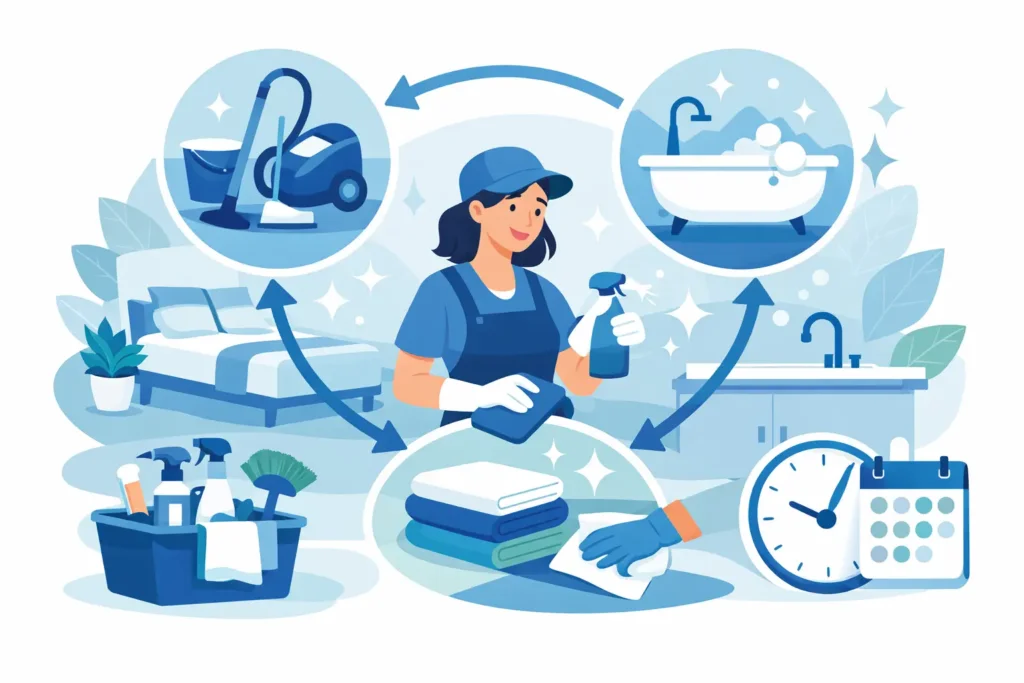
When life gets busy, cleaning usually slips to the bottom of the list. That is why many homeowners and business owners ask what is included in recurring cleaning before they commit to a weekly, biweekly, or monthly service. The short answer is simple: recurring cleaning covers the routine tasks that keep a space consistently clean, presentable, and easier to manage over time.
The longer answer matters more, because no two properties need the exact same level of attention. A family home with pets will have different priorities than a quiet apartment. A busy office will need something different from a retail space or managed property. That is where recurring cleaning works best – it creates a reliable baseline and can be adjusted around the way you actually live or work.
What is included in recurring cleaning for most spaces?
In most homes and commercial spaces, recurring cleaning focuses on the areas that collect the most dust, traffic, and everyday mess. The goal is not to reset a property from top to bottom every visit. It is to maintain cleanliness so dirt, clutter, and buildup do not turn into a bigger problem.
For residential service, that usually means dusting reachable surfaces, wiping counters, cleaning sinks, vacuuming carpets and rugs, sweeping and mopping floors, taking care of bathrooms, and tidying the visible condition of main living areas. Kitchens often include wiping exterior appliance surfaces, cleaning the stovetop, sanitizing counters, and spot-cleaning cabinet fronts if needed.
Bedrooms and common areas are typically part of the routine as well. Beds may be made if fresh linens are left out and that is part of the agreed service. High-use touchpoints like mirrors, light switches, and door handles may also be addressed depending on the cleaning plan.
For commercial spaces, recurring cleaning usually includes trash removal, restroom cleaning, breakroom or kitchenette upkeep, vacuuming, mopping, dusting, and wiping down shared surfaces. The exact scope depends on the type of business. A fitness space, office, restaurant, or retail location all have different cleaning priorities, traffic patterns, and sanitation concerns.
The difference between recurring cleaning and deep cleaning
This is where expectations matter. Recurring cleaning is maintenance cleaning. It is designed to keep a property in good shape on an ongoing basis. Deep cleaning is more detailed and more time-intensive, often used for a first visit, a seasonal reset, or a home that has fallen behind.
If a home has heavy soap scum, grease buildup, thick dust on baseboards, or long-neglected areas, those issues may need a deep cleaning before recurring service begins. After that, routine visits help maintain the result. This often saves money and stress in the long run because the home never gets too far off track.
The same applies in commercial settings. A business that starts with a strong initial clean can usually stay in much better condition through recurring service than one trying to fix months of wear with a basic weekly visit.
Room-by-room expectations
In bathrooms, recurring cleaning usually includes scrubbing toilets, wiping sinks and counters, cleaning mirrors, and cleaning showers or tubs at a maintenance level. Floors are vacuumed or mopped, and trash is emptied if part of the plan. If mineral deposits or heavy mildew are already present, those may require extra attention beyond standard recurring service.
In kitchens, recurring cleaning usually covers countertops, sinks, stovetops, exterior appliance surfaces, and floors. The visible areas are refreshed so the room feels clean and ready to use. Inside ovens, inside refrigerators, and detailed cabinet interior cleaning are often separate add-ons unless specifically included.
Living rooms, family rooms, offices, and bedrooms generally include dusting, straightening the overall appearance, vacuuming, and floor care. Cleaners will focus on accessible surfaces and normal upkeep. If surfaces are heavily cluttered, the visit may be slower or more limited because cleaning around items takes more time.
Entryways, hallways, and stairs are usually included as part of routine floor care and dust control. These are easy-to-overlook areas, but they make a big difference in how clean a home or business feels overall.
What may not be included in recurring cleaning
A good recurring plan is clear about what falls inside standard service and what does not. That protects both the client and the cleaning team.
Tasks that are often not included by default are washing walls, cleaning inside appliances, cleaning inside cabinets and drawers, lifting and moving heavy furniture, handling biohazards, removing excessive pet waste, and detailed post-construction cleanup. High-reach areas like ceiling fans, vents, blinds, and light fixtures may be included on a rotation or added by request, but not always on every visit.
Laundry, dishwashing, organizing, and linen changes also vary by company and by package. Some clients want simple surface cleaning. Others want a broader housekeeping approach. Neither is wrong, but the scope should be discussed up front.
That is one reason tailored service plans matter. If your household needs help with tidying, organization, or transition support during a move, those services may be available but should not be assumed to be part of a standard recurring visit.
How frequency changes what gets done
Weekly, biweekly, and monthly cleaning schedules do not always look the same. A weekly visit usually focuses on keeping everything in steady shape with less buildup between appointments. That means the cleaner can spend more time maintaining detail and less time catching up.
Biweekly service is one of the most common choices because it balances cost and consistency. It works well for busy families, working professionals, and households that want reliable help without needing weekly service.
Monthly service can still be useful, but it often involves more catch-up from visit to visit. If you have kids, pets, frequent guests, or a high-traffic business, monthly cleaning may not be enough to maintain the level of freshness you want.
In other words, what is included in recurring cleaning may stay mostly the same, but the condition of the space and the frequency of service affect how much can realistically be completed during each appointment.
Why recurring cleaning saves time and money
People sometimes assume recurring cleaning is a luxury. In practice, it is often a practical way to stay ahead of bigger cleaning problems. Regular service reduces buildup, protects surfaces, and cuts down on the time and effort needed to restore a space later.
It also creates consistency. Instead of waiting until the house feels overwhelming or the office starts looking neglected, you know there is a plan in place. That peace of mind matters, especially for busy households and businesses that need to stay presentable.
Recurring service can also be more cost-effective than repeated one-time visits. When a team is maintaining a clean space rather than starting over each time, the service tends to be more efficient. That is one reason many clients choose an ongoing schedule once they see how much easier it makes everyday life.
How to know what your service will include
The best way to avoid surprises is to ask for a clear scope of work before service starts. A reliable company should explain what is included, what can be added, and how the plan can be adjusted over time.
Be specific about your priorities. If the bathrooms matter most, say that. If pet hair is a constant issue, mention it. If your office lobby needs extra attention because clients see it first, that should be part of the conversation. You are not supposed to fit into a one-size-fits-all plan.
At UpStraight Cleaning, that flexible approach is part of what makes recurring service more useful. You stay in charge of the scope, the schedule, and the details that matter most in your space.
Recurring cleaning works best when it matches real life. A good plan does not just clean your property. It gives you breathing room, keeps your space ready for whatever the week brings, and helps clean feel manageable instead of constantly behind.

