
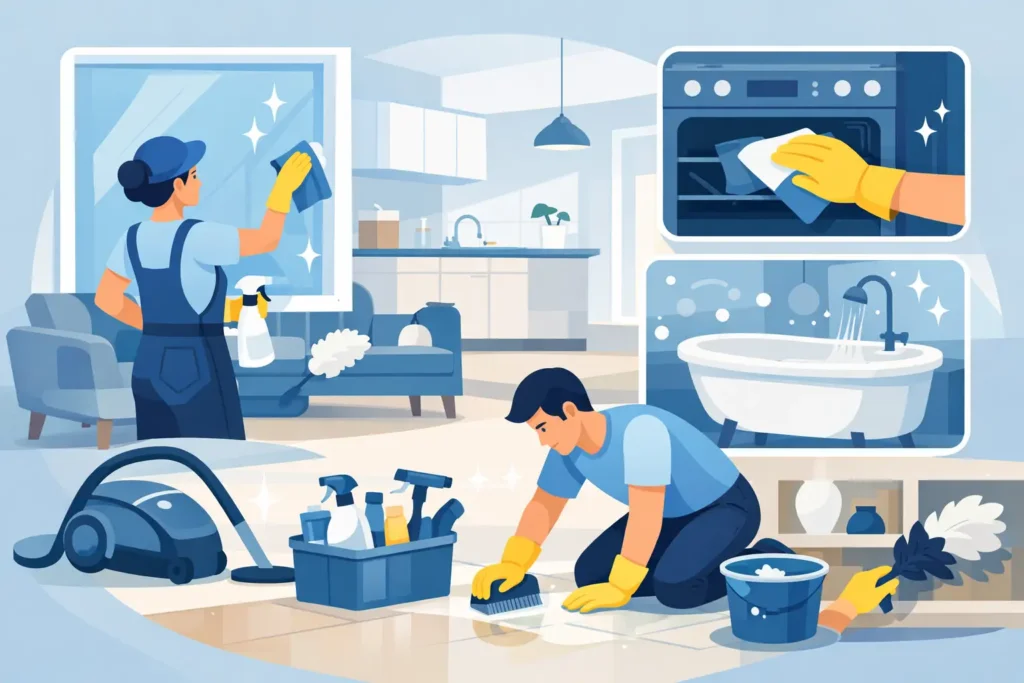
If you have ever looked around your home and thought, “It’s not exactly dirty, but it definitely does not feel fully clean,” you are probably thinking about the difference between routine cleaning and a deep clean. That is usually where the question comes up: what does deep cleaning include, exactly?
The short answer is that deep cleaning goes beyond surface-level upkeep. It focuses on built-up dust, grime, grease, soap scum, and overlooked areas that do not always get attention during regular weekly or biweekly cleaning. It is the kind of service people book when a home needs a reset, not just a quick tidy-up.
What does deep cleaning include?
A deep cleaning typically includes the high-touch, visible areas you expect, plus the detail work that changes how a space feels. Standard tasks like wiping counters, vacuuming floors, and cleaning bathrooms are usually part of it, but the difference is in the extra attention. Baseboards get wiped down. Light fixtures, ceiling fans, vents, door frames, and window sills are cleaned. Grease around the stovetop is scrubbed away. Soap buildup in tubs and showers gets more focused treatment.
This is also where detail matters. Instead of wiping around objects, cleaners may clean under and behind what can be safely moved. Instead of a quick pass on cabinet fronts, they may remove fingerprints, splatter, and residue from handles, trim, and edges. The goal is not just to make your home look presentable for a day. It is to remove the buildup that slowly collects over time.
That said, deep cleaning is not always identical from one home to the next. The size of the home, the current condition, pets, children, and how long it has been since the last professional cleaning all affect the scope.
Room-by-room: what a deep clean usually covers
In the kitchen, deep cleaning is often the most noticeable because kitchens hold onto grease and food residue fast. Counters, backsplashes, sinks, cabinet exteriors, stovetops, appliance surfaces, and floors are cleaned thoroughly. Many deep cleans also include more detailed work around the microwave, range hood exterior, and the edges where crumbs and grease collect. If there is heavy buildup, this room can take longer than clients expect.
In bathrooms, the focus is on sanitation and buildup removal. Toilets, sinks, mirrors, counters, tubs, and showers are scrubbed in more detail than in a routine clean. Deep cleaning often means extra attention to grout lines, faucet bases, glass shower doors, tile edges, and the hard-to-reach places where moisture leaves residue behind. This is one of the biggest reasons people book a deep clean before guests arrive or before starting recurring service.
Bedrooms and living areas usually involve dusting much more thoroughly than a standard visit. That can include baseboards, blinds, ceiling fans, furniture surfaces, picture frames, lamps, and window ledges. Floors are vacuumed or mopped carefully, including edges and corners that are easy to miss during fast upkeep cleaning. If clutter is minimal, the result feels immediate. The room looks brighter, and it also feels calmer.
Entryways, hallways, and laundry rooms are often overlooked until they start to show traffic and dust. A deep clean brings those transition spaces back into shape. Marks on doors, dirt around trim, and buildup on floors can make the whole house feel less clean than it is. Taking care of those details helps the home feel consistently cared for.
What deep cleaning usually does not include
This is where expectations matter. Deep cleaning is thorough, but it is not the same as restoration work, full-scale decluttering, or hazardous cleanup. If a home has severe neglect, mold concerns, pest debris, or damage-related issues, the work may fall outside a standard deep clean.
Laundry, dishes, inside cabinets, inside drawers, and inside appliances may or may not be included unless specifically requested. The same goes for washing walls, cleaning interior windows in detail, or moving large furniture. Some clients assume deep cleaning means every single inch of the home gets cleaned no matter what. In practice, service providers usually define the scope based on time, safety, access, and what the client wants prioritized.
That is why clear communication matters before the appointment. A dependable cleaning company will explain what is included, what can be added, and where there may be limits.
Deep cleaning vs. standard cleaning
A standard cleaning is designed to maintain a home that is already in reasonably good shape. It keeps surfaces, bathrooms, kitchens, and floors under control so mess does not build up too quickly. It is practical, efficient, and ideal for recurring service.
A deep cleaning is different because it addresses the buildup that routine cleaning may not fully remove. Think of it as catching up on the detail work. If regular cleaning is what keeps a home steady, deep cleaning is what gets it back to baseline.
For many households, the best time to schedule a deep clean is before starting recurring service. That way, future visits can focus on maintenance instead of trying to chip away at old buildup little by little. Busy families and working professionals especially benefit from this because it creates a cleaner starting point and makes ongoing upkeep easier.
When a deep clean makes the most sense
Sometimes the timing is obvious. You are moving in, moving out, hosting family, recovering from a hectic season, or getting ready for a new baby. Other times, the signs are more subtle. Maybe your home still looks cluttered even after you pick up. Maybe the bathrooms never quite feel fresh. Maybe dust shows up again almost immediately because it has built up in vents, corners, and overlooked surfaces.
A deep clean also makes sense after renovations, during seasonal transitions, or when life has simply gotten too busy. There is no judgment in that. Homes go through active seasons, and it is normal for the detail work to fall behind.
For businesses, deep cleaning can be just as useful. Offices, retail spaces, and shared commercial environments often benefit from periodic deep cleaning to address buildup in restrooms, breakrooms, floors, and high-touch areas that daily upkeep may not fully handle.
What affects the scope of a deep clean?
Not every deep cleaning appointment looks the same because every property starts from a different place. A one-bedroom apartment that gets regular tidying may need focused detail cleaning and little else. A large home with pets, heavy foot traffic, and months of buildup may require more time and a customized plan.
Clutter is another factor. Cleaners can clean more thoroughly when surfaces are accessible. If counters are packed, floors are covered, or closets are overflowing into the room, some of the appointment may need to go toward organizing or simply creating access. That does not mean the service is not worthwhile. It just means the best results come when cleaning and organizing needs are discussed honestly from the start.
This is one reason flexible service matters. A tailored approach gives you more control over what gets attention first, whether that is bathrooms, kitchen buildup, pet hair, or the dust that has collected in every forgotten corner.
How to prepare for a deep cleaning service
You do not need to pre-clean your home before professionals arrive. That defeats the point. But a little preparation can help the service go further. Picking up clothing, toys, paperwork, and personal items allows cleaners to reach the surfaces that actually need scrubbing and dusting.
It also helps to decide what matters most to you. Some clients care most about bathrooms. Others want help with kitchen grease, dust, or floors. If there are rooms you rarely use or problem areas you want addressed first, say so. You are in charge of the priorities.
Companies like UpStraight Cleaning build service around that kind of flexibility because deep cleaning works best when it matches the real condition of the space, not a one-size-fits-all checklist.
The real value of a deep clean
A deep clean is not just about appearance, although that part certainly matters. It is about relief. It removes the layer of stress that builds when your home feels one step behind no matter how often you straighten up.
It can also help protect the effort you put into your space. Dirt and residue are harder to remove the longer they sit. Starting fresh makes routine maintenance easier, faster, and more cost-effective over time.
If you have been wondering what does deep cleaning include, the most accurate answer is this: it includes the detail work that helps your home feel truly reset. Not just picked up. Not just wiped down. Clean in the places that make a difference when you walk in the door and finally feel like the house is working for you again.

