
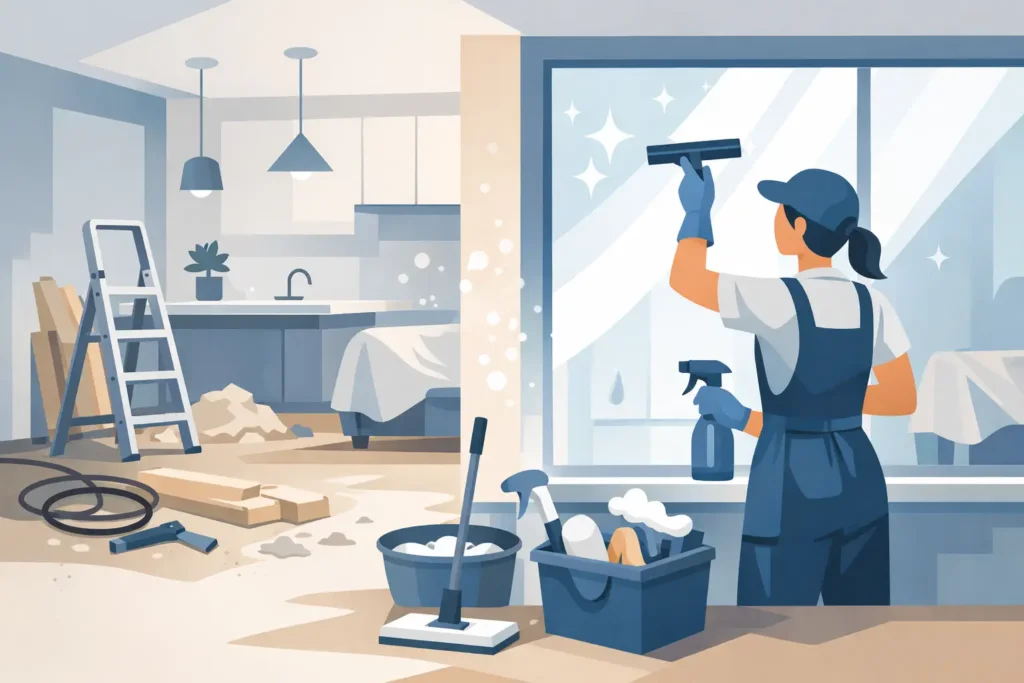
Fresh paint looks great until you run your hand along a windowsill and it comes back white with dust. That is the reality of post construction cleaning after renovation. Even a small remodel can leave behind fine debris, sticker residue, drywall dust, sawdust, caulk smudges, and a layer of grit that settles far beyond the work zone.
A renovated space is close to finished, but it does not truly feel complete until it is cleaned the right way. For homeowners, that means getting back to normal faster. For property managers and business owners, it means presenting a polished, ready-to-use space without the leftover mess of construction hanging around.
Why post construction cleaning after renovation is different
Cleaning after a renovation is not the same as regular house cleaning or routine janitorial work. Standard cleaning focuses on maintenance. Post-renovation cleanup focuses on removing the mess that construction leaves behind, including particles that travel into vents, corners, baseboards, light fixtures, and other places that are easy to miss.
The biggest issue is usually dust. Drywall dust is especially stubborn because it is so fine. It clings to surfaces, gets into tracks and trim, and can keep reappearing even after a quick wipe-down. That is why many people feel frustrated after trying to clean a remodeled room themselves. The room may look better at first, then another layer of dust shows up the next morning.
There is also a practical side to this kind of cleaning. Leftover nails, packaging scraps, tape pieces, and adhesive residue are not just unattractive. They can create safety concerns, especially in homes with children or pets and in commercial spaces preparing to reopen.
What a thorough cleanup should include
The exact scope depends on the project. A bathroom refresh creates a different mess than a full kitchen renovation or office build-out. Still, a strong post-construction clean usually follows a top-to-bottom approach so dust is not pushed back onto already-cleaned areas.
Ceilings, vents, light fixtures, walls, trim, doors, and windows often need detailed attention first. From there, the focus shifts to cabinets, shelves, counters, appliances, ledges, and floor edges where dust collects heavily. Floors are usually the final stage, but even that depends on the surface. Tile, hardwood, luxury vinyl, and carpet each need a different method if you want good results without damage.
Glass is another area that gets overlooked. Renovation can leave smears, labels, and film on mirrors, windows, and shower doors. Removing that buildup carefully makes a big difference in how finished the space feels.
Bathrooms and kitchens usually require extra detail because they combine visible surfaces with tight spaces. Around faucets, backsplash lines, cabinet faces, and inside drawers, small traces of construction residue stand out quickly. When those spots are cleaned properly, the room stops feeling like a work site and starts feeling usable.
The hidden mess most people miss
One reason post construction cleaning after renovation takes longer than expected is that the mess spreads. Dust does not stay in one room. It drifts through hallways, settles in adjoining spaces, and often ends up in areas no one planned to clean.
Air vents and return covers are a common example. If dust has moved through the system, wiping visible surfaces alone may not solve the problem. Window tracks, blinds, closet shelves, and door frames are also easy to skip during a rushed cleanup. Yet these are the places people notice once they move furniture back in or start using the room every day.
In commercial properties, the same issue shows up on a larger scale. Dust can settle on display shelving, front desks, baseboards, restroom fixtures, and breakroom surfaces long after the contractor leaves. If a business is preparing for employees, tenants, or customers, those details matter.
DIY cleanup versus professional help
Some renovation cleanups are manageable without professional support. If the project was minor, limited to one area, and completed with strong dust control, a careful homeowner may be able to handle it. A simple paint update or a small fixture replacement usually does not create the same level of mess as demolition, flooring work, or cabinet installation.
But many people underestimate the time involved. What sounds like a few hours often turns into a full weekend of wiping, vacuuming, re-wiping, and chasing dust from room to room. That trade-off matters if your schedule is already full or if you are trying to get a property ready for move-in, listing photos, or reopening.
Professional cleaning also helps when the scope needs to be tailored. Some clients only need the renovated rooms cleaned. Others need the entire home or facility addressed because dust traveled everywhere. A flexible plan is usually the most useful approach because every project leaves a different kind of mess.
When to schedule post-renovation cleaning
Timing matters more than people think. If cleaning happens too early, contractors may still be tracking in debris or stirring up fresh dust. If it happens too late, the mess can settle deeper into surfaces and delay move-in or normal use.
The best time is usually after the major work is completely done, including punch-list items, sanding, painting touch-ups, and installation. Once workers are out and materials are removed, the cleaning can actually hold. That gives you a better final result and avoids paying for the same areas to be cleaned twice.
For larger projects, it may make sense to break the work into phases. A rough clean during the project can keep the site more manageable, and a final detailed clean can happen once everything is complete. That depends on the size of the renovation and how quickly the space needs to be turned over.
What to expect from a well-planned service
A good post-construction cleaning service should start with clarity. The most helpful approach is not a one-size-fits-all checklist. It is a plan based on the size of the property, the type of renovation, the surfaces involved, and the level of cleanup needed.
That matters because a home office remodel is different from a full restaurant refresh, and a newly renovated rental unit is different from an occupied family home. In some cases, the priority is detailed dust removal. In others, it is making kitchens, bathrooms, or customer-facing areas presentation-ready as fast as possible.
This is where a tailored service stands out. UpStraight Cleaning works with clients who need flexibility, whether that means focusing on high-impact spaces first or cleaning the entire property so it feels fully reset. The goal is simple – make the space look finished, feel comfortable, and be ready for real life again.
How to prepare before the cleaners arrive
A few simple steps can make the cleaning process smoother. If possible, have contractors remove tools, leftover materials, and large debris first. Make sure utilities are on, especially power and water if kitchens or bathrooms are involved. If you have specific concerns such as delicate finishes, newly installed surfaces, or rooms that need priority attention, communicate those in advance.
It also helps to decide what “ready” means for your space. Some clients want a final polish before moving furniture back in. Others need a practical turnover clean so they can reopen, list, stage, or settle in. Being clear about the end goal helps shape the service around what matters most to you.
The result people actually want
Most people are not looking for a technical cleaning process. They want relief. They want to walk into the space they invested in and enjoy it without seeing footprints in dust, bits of tape on trim, or powder collecting in every corner.
That is the value of thorough post-renovation cleaning. It closes the gap between construction and comfort. It turns a nearly finished project into a truly usable home, office, rental, or storefront.
If your renovation is done but the space still feels unfinished, the issue may not be the remodel at all. It may just need the right cleaning to finally look the way it should.

