A clean workplace is more than a good first impression. It affects how employees feel during the workday, how customers view your business, and how confidently you can welcome people through the door. This workplace sanitation guide is built for business owners, managers, and property teams who want practical routines that keep their spaces clean, comfortable, and ready for work.
The right plan does not look exactly the same for every business. A small office, busy restaurant, fitness center, retail store, and managed property all have different traffic patterns, surfaces, and sanitation needs. The goal is to create a routine that fits the space, addresses high-touch areas consistently, and leaves no one guessing about what has been cleaned.
Start With the Areas People Touch Most
Sanitation should focus on the places where hands, shoes, food, sweat, and shared equipment create the most buildup. These areas deserve more frequent attention than a back storage room that is rarely used.
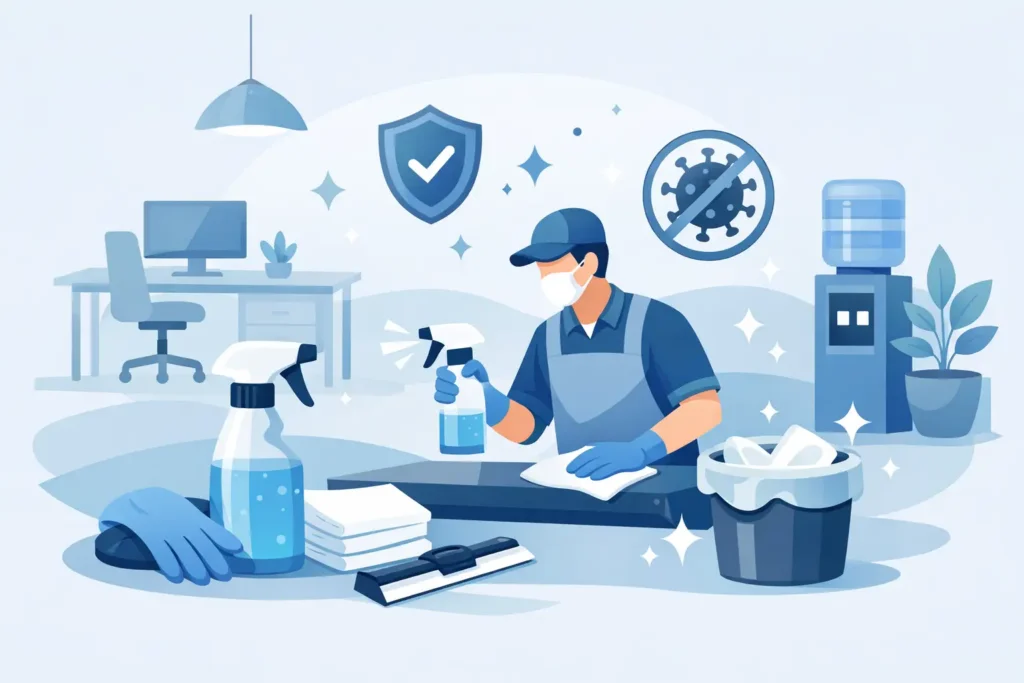
In most workplaces, door handles, light switches, elevator buttons, shared keyboards, phones, counters, breakroom tables, faucet handles, and restroom fixtures should be cleaned and disinfected regularly. Reception desks and payment terminals also need attention, especially when customers interact with them throughout the day.
Cleaning and disinfecting are related but different tasks. Cleaning removes visible dirt, crumbs, dust, and residue. Disinfecting uses an appropriate product and dwell time to reduce germs on a clean surface. If a surface is visibly soiled, it should be cleaned first. Skipping that step can make disinfecting less effective.
For high-traffic businesses, one daily cleaning may not be enough. A restaurant restroom, gym locker room, or retail checkout area may need touch-up cleaning during operating hours, followed by a more complete service after closing. It depends on foot traffic, the type of work performed, and the expectations of your customers.
Build a Workplace Sanitation Guide Around Your Schedule
A sanitation plan works best when it is specific. “Keep the office clean” is not a useful instruction when several people are sharing responsibility. Assign tasks by frequency, location, and role so that the routine is easy to follow.
Daily priorities
Daily work should cover the surfaces and rooms that are used constantly. Empty trash before it overflows, clean restrooms, wipe down shared breakroom surfaces, remove food waste, and disinfect high-touch points. Floors in entryways, dining areas, and work zones should be checked for dirt, spills, and debris that can make the space look neglected or create a slip hazard.
Restrooms deserve close attention every day. Refill soap, paper products, and sanitizer before supplies run low. Clean toilets, sinks, mirrors, partitions, and floors, while checking corners and edges where buildup is easy to miss. A restroom that smells fresh and looks cared for reassures everyone who uses it.
Weekly and monthly care
Weekly tasks go beyond the visible surface work. This may include vacuuming upholstered seating, wiping baseboards, cleaning interior glass, dusting vents and ledges, and addressing fingerprints on doors and walls. Kitchens and breakrooms may need more detailed attention around microwaves, refrigerators, cabinet handles, and small appliances.
Monthly cleaning can target areas that slowly collect dust and grime, such as blinds, ceiling vents, behind equipment, and lower wall surfaces. For some facilities, periodic deep cleaning is the right choice after a busy season, a renovation, a move, or an event that brought in extra traffic.
A written checklist helps, but it should not become a box-checking exercise. Managers should occasionally inspect the space from a visitor’s point of view. Walk through the front door, use the restroom, sit in the waiting area, and look at the details employees may stop noticing. Smudged glass, full trash cans, dusty corners, and sticky counters can change how a business feels in minutes.
Keep Restrooms, Breakrooms, and Shared Spaces Under Control
Some rooms require more than standard surface cleaning because they bring people together in close quarters. These shared areas are where a consistent routine pays off most.
In breakrooms, food residue can quickly lead to odors, pests, and clutter. Employees should have clear expectations for labeling personal food, removing leftovers, wiping spills, and loading or unloading the dishwasher if one is available. Your cleaning plan can handle the deeper routine, but a few everyday habits prevent the room from becoming overwhelming between visits.
Restrooms should be stocked, cleaned, and checked often enough that guests are not greeted by empty dispensers or messy floors. If your location is open to the public, increase inspections during peak hours. A small touch-up can make a major difference before a customer notices a problem.
Shared desks and workstations require a balanced approach. Employees may prefer to manage personal items and sensitive equipment themselves, while a cleaning team handles exterior surfaces, common desks, floors, and trash. Clear boundaries protect privacy while still maintaining a clean environment.
Use Products Safely and Consistently
The strongest-smelling product is not automatically the best choice. Select cleaning and disinfecting products that are appropriate for the surface, the level of soil, and the people using the space. Follow label instructions, including dilution directions and required contact time.
Never mix cleaning chemicals. Combining certain products can create dangerous fumes or reduce effectiveness. Store supplies in clearly labeled containers, keep them away from food areas, and make sure employees know where safety information is located.
Fragrance is another consideration. A heavily scented product may make a room seem clean, but it can be uncomfortable for employees or guests with sensitivities. Many businesses choose effective products with low or neutral fragrance, then rely on proper cleaning, ventilation, and waste removal to control odors at the source.
Color-coded cloths and mops can also help prevent cross-contamination. For example, materials used in restrooms should not be used on breakroom counters or reception surfaces. This is a simple operational detail, but it supports safer and more consistent results.
Improve the Habits That Support Cleanliness
A professional cleaning service can provide dependable results, but daily sanitation also depends on the people who use the workplace. When supplies are easy to reach and expectations are reasonable, employees are more likely to clean up small messes before they become larger issues.
Place hand sanitizer where it is useful, such as entrances, checkout areas, shared equipment stations, and breakrooms. Keep soap, paper towels, liners, and disinfecting wipes stocked in the areas that need them. If supplies are locked away or difficult to find, even well-intentioned routines tend to fall apart.
It also helps to establish a simple process for reporting spills, restroom problems, damaged fixtures, or pest concerns. Employees should know who to tell and what to do when an issue needs immediate attention. Fast communication protects the space and reduces disruption.
Know When to Bring in Professional Help
Internal teams can handle light daily upkeep, but many businesses need support for recurring cleaning, detailed sanitation, floor care, post-construction cleanup, or high-traffic facilities. Outsourcing can give managers more consistency without pulling employees away from their primary work.
The best service plan is flexible. A small office may need after-hours cleaning once or twice a week, while a restaurant or fitness facility may require more frequent care. Retail spaces may need extra attention before weekends, holidays, or special events. Your schedule should follow the pace of your business, not a one-size-fits-all package.
UpStraight Cleaning works with commercial clients who want tailored cleaning support, from routine office upkeep to detailed cleaning for restaurants, retail locations, managed properties, hotels, and fitness centers. A clear scope of work helps ensure the details that matter to your space are handled every visit.
A well-maintained workplace sends a quiet but powerful message: the people here care. Give your team and guests a space that feels fresh, organized, and ready for whatever the day brings.

