
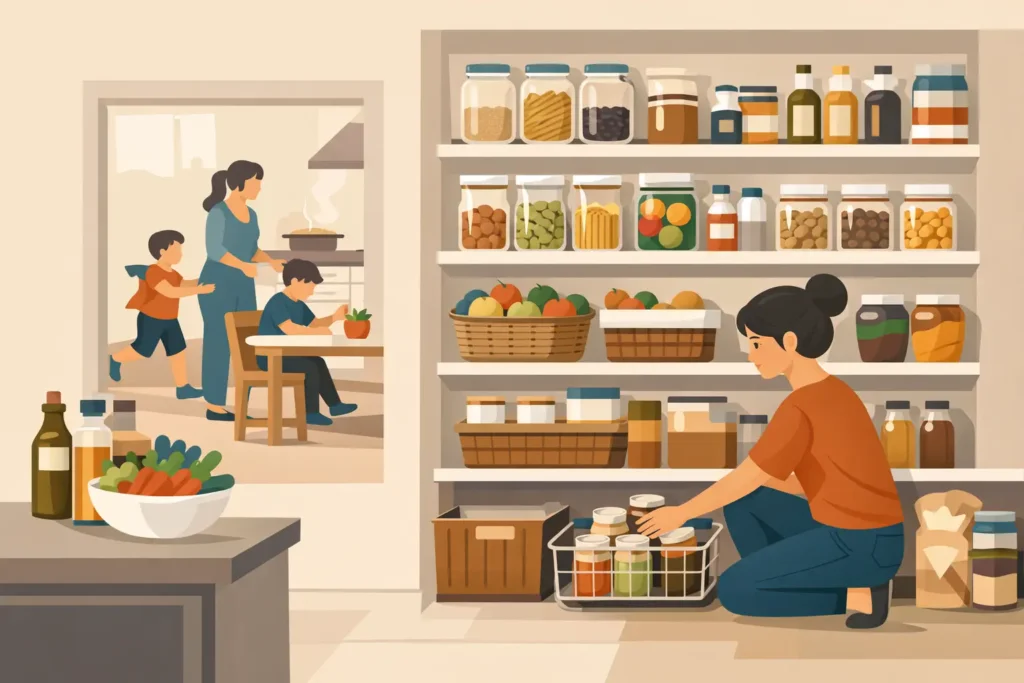
A pantry can look tidy for one afternoon and still make dinner feel harder than it needs to be. When cereal boxes block canned goods, snacks disappear behind baking supplies, and expired items collect in the back, even a well-stocked kitchen becomes frustrating. The best ways to organize pantry spaces focus on making everyday items easy to see, reach, and put back.
You do not need a designer pantry or a full weekend to create one that works. A few practical decisions, made around your household’s real routines, can reduce food waste, speed up meal prep, and make grocery day far less stressful.
Start With What You Actually Use
Before buying containers or labels, take everything out of the pantry. Check expiration dates, set aside unopened food you will not use, and discard anything stale, damaged, or expired. This is also the best time to wipe down shelves, corners, and door racks so you are organizing a clean space rather than covering up crumbs and spills.
As you sort, notice what your household reaches for most. A family that packs lunches every morning needs quick access to snack items and breakfast foods. Someone who cooks from scratch may need baking supplies, oils, grains, and spices closer at hand. An organization system should support your life, not force you into a picture-perfect setup that is difficult to maintain.
1. Create Clear Pantry Zones
Give each shelf or section one job. Grouping food by purpose is easier to maintain than arranging everything by package size or color. You might create areas for breakfast, pasta and grains, canned goods, baking supplies, snacks, sauces, and backstock items.
Keep the zones broad enough that they make sense at a glance. Too many tiny categories can turn a pantry into a guessing game, especially when several people put groceries away. A simple “lunch box snacks” zone will usually work better than separate bins for crackers, fruit snacks, granola bars, and pretzels.
Keep Meal Staples Together
Place ingredients you often use in the same type of meal near each other. Pasta, jarred sauce, canned tomatoes, and boxed broth can live in one dinner-staples area. This saves time when you are planning meals and helps you see when you are running low on a key ingredient.
2. Put Everyday Food at Eye Level
The most useful shelves are between waist and eye level. Reserve that space for the foods you use several times a week, such as cereal, lunch supplies, coffee, rice, canned beans, or quick dinner ingredients.
Put heavier items on lower shelves, where they are safer and easier to lift. Use top shelves for occasional appliances, party supplies, extra paper goods, or bulk purchases. If children regularly get their own snacks, a lower shelf or basket can give them safe access without pulling down the rest of the pantry.
3. Use Bins Where They Solve a Problem
Bins are helpful when they keep similar loose packages together or make deep shelves easier to use. A handled bin can pull forward like a drawer, allowing you to reach items in the back without moving everything in front. They are especially useful for snack pouches, seasoning packets, drink mixes, soup packets, and small baking items.
However, bins are not required for every category. Large boxes, canned goods, and tall bottles may be easier to see directly on a shelf. Use containers where they create a clear benefit, not just because matching storage looks appealing.
4. Decant Only the Foods That Need It
Clear, airtight containers can keep flour, sugar, cereal, pasta, rice, and snacks fresher while making it easy to see what is left. They also prevent half-open bags from spilling or attracting pantry pests.
There is a trade-off: decanting takes time, requires refilling, and can make it harder to track expiration dates. If you transfer food into a container, place the expiration date on a small label or keep the original packaging information nearby. For households with limited time, organizing unopened packages in labeled bins may be the more practical choice.
5. Make Labels Easy to Read
Labels help everyone return items to the right spot. Choose clear, simple names such as “Breakfast,” “Baking,” “Snacks,” or “Pasta.” Labels do not need to be decorative to work. A neat handwritten label is better than a complicated system nobody follows.
For reusable bins, use removable labels so you can adjust categories as your needs change. Your pantry should be flexible enough to handle school schedules, holiday baking, changing diets, and the occasional oversized warehouse-store purchase.
6. Use Vertical Space Carefully
Most pantry shelves have unused vertical space. Shelf risers can make canned goods, spices, and jars easier to see. Stackable bins can help when shelves are tall, while under-shelf baskets can hold lightweight items such as napkins, wraps, or small snack bags.
Avoid stacking so high that you have to remove several items to reach one thing. The goal is quick access, not maximum capacity at any cost. A pantry that is slightly less full but easy to use will stay organized longer.
7. Give Cans and Jars a Better System
Canned goods tend to disappear behind one another on deep shelves. Arrange them in rows by type, with vegetables, beans, soups, and sauces grouped together. A riser can help you see labels in the back, while a simple first-in, first-out approach keeps older items from being forgotten.
When you bring home new cans or jars, place them behind the older ones. This small habit reduces waste without requiring a complicated inventory system.
8. Use the Pantry Door Wisely
Door-mounted storage can be valuable for small, lightweight items that often get lost, including spices, foil, wraps, tea, seasoning packets, and snack bars. It can also free up shelf space for larger groceries.
Check clearance before adding any door organizer. If shelves are shallow or the pantry is narrow, bulky racks may prevent the door from closing properly. Keep glass bottles and heavy cans off the door unless the organizer is designed to hold them securely.
9. Separate Backstock From Daily Supplies
Bulk shopping can save money, but it can also create clutter when every extra package is mixed into the everyday pantry. Designate one shelf, basket, or labeled area for backstock. Keep the open or currently used package in its normal zone, and store extras behind or above it.
This approach makes grocery shopping easier because you can quickly see what is open, what is nearly gone, and what you already own. It also helps prevent buying a third bottle of cooking oil while two are hidden in the back.
10. Keep a Small Space for Quick Meals
Busy nights are easier when a few dependable ingredients are gathered in one visible place. This does not need to be a full meal kit. It can be a shelf section with pasta, canned beans, broth, rice, jarred sauce, and other staples your household uses for fast dinners.
The right items depend on your family. The purpose is to reduce the “what can I make?” search when time and energy are low.
11. Build in a Reset Routine
Even the best-organized pantry will drift if there is no simple maintenance plan. Take two minutes after grocery shopping to return items to their zones and move older food forward. Once a month, quickly check for spills, expired products, and nearly empty containers.
A seasonal reset is useful before major holidays, the start of a school year, or any time your routine changes. You do not need to empty the entire pantry every month. Small, consistent touch-ups are more realistic for busy households.
12. Choose a System You Can Keep Up With
The best pantry organization is the one your household can maintain on an ordinary Wednesday night. If clear containers and detailed labels make you happy and help you stay on top of groceries, use them. If labeled baskets and simple shelf zones fit your schedule better, that is a successful system too.
When a pantry feels too overwhelming to tackle alone, professional home organizing support can provide a fresh start without judgment. UpStraight Cleaning helps create practical, personalized spaces that are easier to clean, use, and maintain.
A functional pantry should give you relief each time you open the door. Start with one shelf, create one useful zone, and let the space become easier to manage one decision at a time.

