
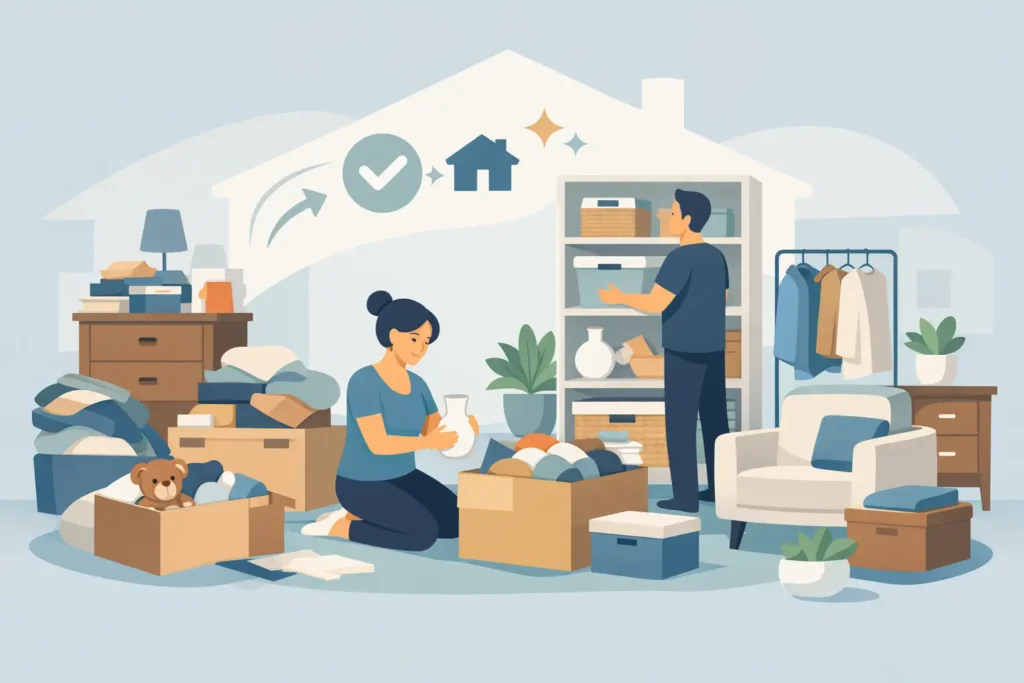
The chair in the bedroom becomes a landing spot for laundry. The kitchen counter collects mail, school papers, and small appliances. A closet gets harder to use every time something is tucked inside “for now.” If that sounds familiar, this home decluttering guide for beginners can help you make visible progress without turning your entire weekend into a stressful project.
Decluttering is not about owning as little as possible or making your home look like a showroom. It is about making room for the life you actually live. When your belongings are easier to find, put away, and clean around, everyday routines feel lighter.
Start Your Home Decluttering Guide for Beginners With One Small Area
The fastest way to lose momentum is to pull everything out of every closet, drawer, and cabinet at once. Start with a contained space that you can finish in one session, such as a bathroom drawer, the entryway, a coffee table, or one kitchen cabinet.
Choose an area that creates a daily annoyance. Clearing a crowded counter may make mornings easier right away. Organizing the entryway can reduce the scramble for keys, shoes, bags, and jackets. Small wins matter because they prove that the process is working.
Set a realistic time limit, usually 20 to 30 minutes. When the timer ends, stop if you need to. Consistent short sessions are more manageable than waiting for a perfect free day that may never arrive.
Make Simple Decisions, Not Perfect Ones
For each item, ask whether you use it, need it, or genuinely enjoy having it. If the answer is no, it may be time for it to leave your home. Avoid getting stuck on what an item cost or how long you have owned it. Those factors do not change whether it serves a purpose now.
Create a clear place for items you are keeping, items you are donating, items you are recycling, and items that belong elsewhere in the house. If you are unsure about something, use a small “decide later” box. Give yourself a deadline to revisit it, such as 30 days. This keeps uncertainty from stopping your progress while preventing rushed decisions about meaningful belongings.
Focus on What Creates the Most Daily Stress
Not every room needs the same approach. A busy family may need better systems for backpacks, toys, and laundry. A renter preparing for a move may need to reduce what will have to be packed. A working professional may be more concerned with clearing a home office or making the kitchen easier to reset after a long day.
Begin with the spaces you see and use most often. The kitchen, living room, bedroom, bathroom, and entryway usually deliver the biggest return because they affect your daily routine. A storage room or garage can wait until you have built confidence and created room elsewhere.
In the kitchen, remove expired food, duplicates, and gadgets that are rarely used. Keep the tools you reach for often within easy access. In the bedroom, focus first on surfaces, clothing piles, and bedside areas. A calmer bedroom supports better rest, and it is much easier to clean when the floor and furniture are not covered in extra items.
Paper can be especially frustrating because it arrives constantly. Do not try to organize every paper you have ever received in one afternoon. Start with incoming mail and recent documents. Recycle junk mail immediately, shred paperwork with sensitive information, and create one simple place for bills, school forms, and action items.
Declutter by Category When You Are Ready
Once you have completed a few smaller spaces, category-based decluttering can help you spot duplicates. This works well for clothing, books, linens, cleaning supplies, beauty products, and children’s toys.
Clothing is a good category to approach with care. Keep what fits your current life, not only the version of life you hope to return to someday. If a piece needs repair, decide whether you will realistically repair it within the next month. If not, it may be taking up space that could serve you better.
With sentimental items, go slowly. You do not need to get rid of every keepsake to create an organized home. Instead, choose a reasonable container or shelf for the items that matter most. Keeping a few meaningful things on purpose often feels better than storing a large collection you never see or enjoy.
Give Everything You Keep a Practical Home
Decluttering without assigning homes to belongings often leads to clutter returning. The goal is not to buy a lot of organizing products. In fact, bins and baskets can hide a problem if they are filled before you decide what should stay.
Use the storage you already have before buying anything new. Place frequently used items where they are easiest to reach. Store occasional-use items higher up, lower down, or in another area. Keep like items together, such as charging cords, pet supplies, baking tools, or extra toiletries.
A good storage system should be easy for everyone in the household to maintain. If putting something away requires moving five other things, the system is too complicated. Open baskets may work well for everyday toys and blankets, while labeled containers can help with seasonal items or supplies stored out of sight.
Avoid the “Just in Case” Trap
Many homes hold onto items for a possible future need. Some extras are practical, especially if they are used regularly or expensive to replace. But five spare water bottles, a stack of mystery cables, or duplicate cleaning products can create more frustration than convenience.
Ask yourself how easy the item would be to replace, how likely you are to need it, and whether you have a specific place to store it. The answer depends on your household, budget, and space. Decluttering should make your home work better for you, not force you into someone else’s rules.
Build a Reset Routine That Keeps Clutter From Returning
A decluttered home stays manageable through small habits, not constant major cleanouts. Spend a few minutes each evening returning items to their homes. Clear the kitchen counter, put shoes and bags back where they belong, and reset the living room before bed.
It also helps to make one-in, one-out decisions for certain categories. When a new sweater comes home, consider donating one you no longer wear. When your child receives new toys, choose a few that are outgrown or unused to pass along. This is not a strict rule for every purchase, but it can prevent slow buildup.
Keep a donation bag or box in a closet so you can add items as you notice them. When it is full, take it to a local donation center promptly. A donation pile that sits by the door for months is still clutter.
Know When to Ask for Help
Sometimes clutter is tied to a major life transition, a move, a renovation, a new baby, a loss, or an overloaded schedule. In those situations, asking for help can be the practical choice, not a sign that you have failed.
A professional organizing and cleaning team can help you sort through a space, create systems that fit your routine, and clean once surfaces and floors are accessible. For Lawrenceville-area households, UpStraight Cleaning can tailor organizing and cleaning support around your priorities, whether you need help with one problem area or a larger home reset.
Start with the drawer, counter, or corner that bothers you most. Clear it completely, give the items you keep a home, and enjoy the relief of one space that is easier to use. That small change can be the beginning of a home that feels calmer every time you walk in.

