
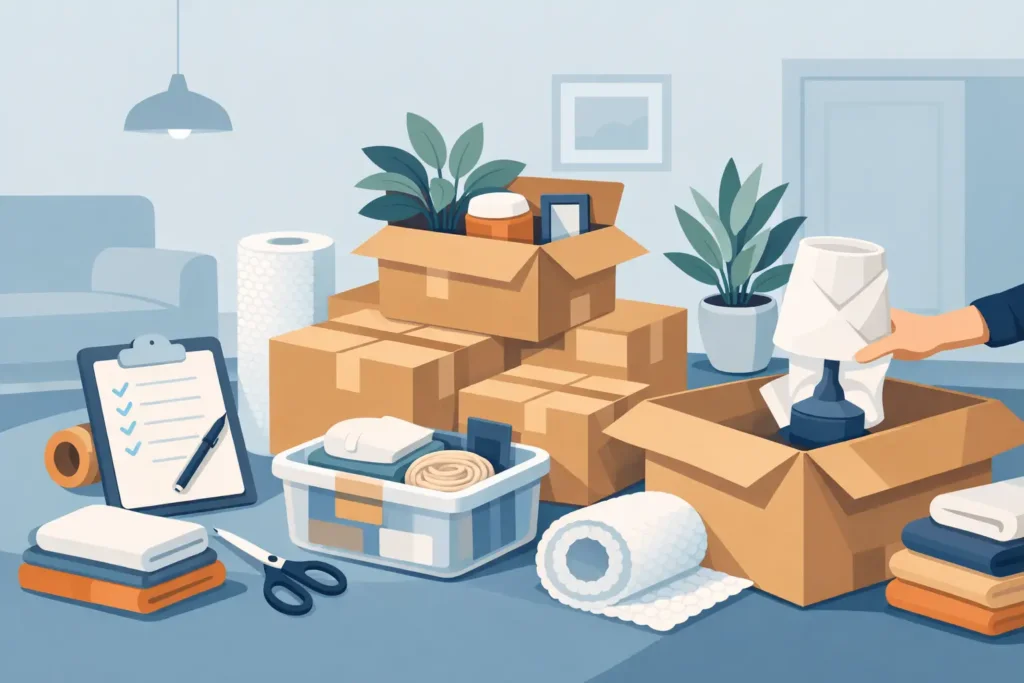
The hardest part of moving usually is not the heavy lifting. It is opening a closet, seeing years of clutter, and realizing you have to pack for a move without stopping your regular life. That is where a solid plan helps. When packing is organized from the start, you protect your belongings, save time on moving day, and make the first week in your new place a lot less frustrating.
Packing well is not about buying the fanciest supplies or turning your home into a warehouse of labeled bins. It is about making smart decisions in the right order. If you pack too early, you end up living out of random boxes. If you pack too late, everything gets rushed, mislabeled, and more likely to break. The goal is to stay in control from room one to the final box.
How to pack for a move in the right order
The best approach is to start with the areas you use the least and finish with the spaces you rely on every day. Seasonal decor, guest room items, extra linens, books, and stored keepsakes usually come first. Daily kitchen tools, bathroom essentials, work supplies, and children’s routines should stay accessible until the final stretch.
This order matters because it keeps your home functional while the packing progresses. It also prevents the common mistake of boxing up easy things first just to feel productive, then facing the hardest rooms when time is short. A move goes more smoothly when your schedule and your boxes match real life.
Before you tape a single box, do a quick edit of what you own. Moving items you do not use, need, or want costs time and energy. If something is broken, expired, duplicated, or has not fit your life in a long time, this is the time to let it go. Packing becomes much easier when you are only taking what deserves space in the next home.
Start with supplies that actually help
You do not need an excessive amount of specialty gear, but the basics matter. Sturdy boxes in a few useful sizes, packing tape, markers, labels, bubble wrap or packing paper, and small bags for hardware will handle most moves well. What matters more than quantity is consistency. Using similar box sizes makes stacking safer and loading more efficient.
Small boxes are better for heavy items like books, tools, canned goods, and dishes. Larger boxes work better for lighter items such as pillows, bedding, and clothing. Overfilled boxes are one of the main reasons packing falls apart, literally and logistically. If a box is hard to lift in your living room, it will not improve on moving day.
It also helps to keep one packing station in the home. A single place for tape, scissors, markers, labels, and wrapping materials cuts down on wasted time. You do not want every room half-packed while you search for the tape gun.
Pack by room, not by category
It can be tempting to gather all books, all decor, or all cords from the entire house and pack them together. That sounds efficient, but it usually makes unpacking harder. Packing by room keeps items connected to where they belong. It also makes labeling much clearer for movers, helpers, or anyone trying to place boxes correctly.
Label each box with the room name and a short description of what is inside. “Kitchen – baking tools” is more useful than “Kitchen.” “Primary bedroom – winter clothes” is better than “Clothes.” If a box should be opened soon, mark that clearly. You do not need a color-coded spreadsheet unless that suits your style. Simple, readable labels are enough.
There is one exception to the room-by-room rule. Hardware, remotes, and loose parts from furniture or electronics need extra care. Place screws, brackets, and small pieces in sealed bags and label them immediately. Taping the bag securely to the related item or packing it in a clearly marked parts box can save a surprising amount of stress later.
The kitchen needs a different strategy
The kitchen is often the most time-consuming room to pack because it contains fragile items, sharp tools, odd shapes, and everyday essentials. Start with specialty appliances and serving pieces you do not use daily. Wrap glassware and dishes carefully, and keep boxes reasonably light.
Use towels, dish cloths, or packing paper to cushion breakables, but do not assume soft items alone will fully protect delicate pieces. Plates should be packed vertically when possible, and empty spaces in the box should be filled so nothing shifts in transit. It takes a little longer, but replacing broken kitchenware after a move is rarely worth the shortcut.
Leave yourself a basic kitchen kit for the last few days: a pan, a few utensils, a couple of plates, cups, coffee supplies, snacks, and cleaning wipes. That small setup keeps you functional without reopening multiple boxes.
Clothes and closets are easier than they look
Closets can feel overwhelming because they hold more than clothes. Shoes, bags, documents, keepsakes, linens, and forgotten storage all tend to land there. Sort first, then pack. If you are moving locally, leaving some clothes on hangers and grouping them in garment bags or clean large bags can save time.
Folded clothes can go into suitcases, bins, or boxes depending on what you already have. This is one area where using your existing containers helps. A suitcase full of shoes or sweaters is one less moving box to buy and one more item already built for transport.
Protect what you will need first
One of the smartest ways to pack for a move is to separate your first-day essentials before the main packing gets serious. Think of what you would need if every other box stayed closed for 24 hours. That usually includes medications, chargers, toiletries, a change of clothes, toilet paper, pet supplies, basic cleaning products, important documents, and a few simple tools.
Keep these items with you rather than loading them deep into the truck. The same goes for valuables, personal records, jewelry, and anything irreplaceable. Moving day has enough motion and enough distraction already. The less you have to search for critical items, the calmer the whole process feels.
For families with children, older adults, or pets, this matters even more. Routines get disrupted quickly during a move. Easy access to comfort items, food, medications, and familiar basics can make the transition much smoother for everyone in the home.
Don’t ignore cleaning while you pack
Packing creates mess faster than most people expect. Dust appears behind furniture, closets shed debris, and cabinets reveal old spills and crumbs once they are emptied. Cleaning as you go is usually easier than leaving everything for the end.
Wiping shelves before boxing their contents, clearing out the pantry before sealing kitchen boxes, and vacuuming emptied rooms in stages all reduce the final workload. It also means your belongings arrive cleaner at the next place. There is little benefit in carefully packing items from dusty cabinets only to unpack that dust again later.
This is where many people realize they need support. If the timeline is tight, combining packing help with move-out or move-in cleaning can take a major burden off your plate. Companies like UpStraight Cleaning often help clients handle both the visible mess and the behind-the-scenes details that make a move feel manageable.
What slows packing down the most
Most packing delays come from decision fatigue, not the physical act of boxing items. People stall when every object becomes a question. Keep, donate, toss, store, sell, carry with me, or deal with later. Those choices add up fast.
The fix is not perfection. It is momentum. Set a reasonable standard for each room and keep moving. If you pause for too long on low-value items, the important work gets pushed aside. Some sentimental categories need extra time, and that is fine. Just do not let one drawer derail the entire week.
Another slowdown is underestimating the final 20 percent. The last stage of packing often includes everyday essentials, remaining decor, laundry supplies, and all the small items that were easy to overlook. Build extra time into that final stretch because it is almost always slower than expected.
A better unpacking starts before the truck leaves
Good packing is really future-focused. It is not only about getting out of one home. It is about making the next one workable as quickly as possible. When boxes are labeled clearly, fragile items are protected, and essentials are easy to reach, unpacking becomes a series of manageable tasks instead of a stressful scavenger hunt.
That is why it helps to think beyond moving day. Ask yourself where you want immediate order. Usually that means beds made first, bathrooms stocked, kitchen basics available, and high-traffic areas free of unnecessary boxes. Packing with that setup in mind gives you a cleaner start.
A move rarely feels simple while you are in the middle of it. But it does feel lighter when each box has a purpose, each room is handled in order, and the mess stays under control. Give yourself more time than you think you need, make the practical decisions early, and aim for progress you can trust. A calmer move starts long before the first box reaches the truck.

