
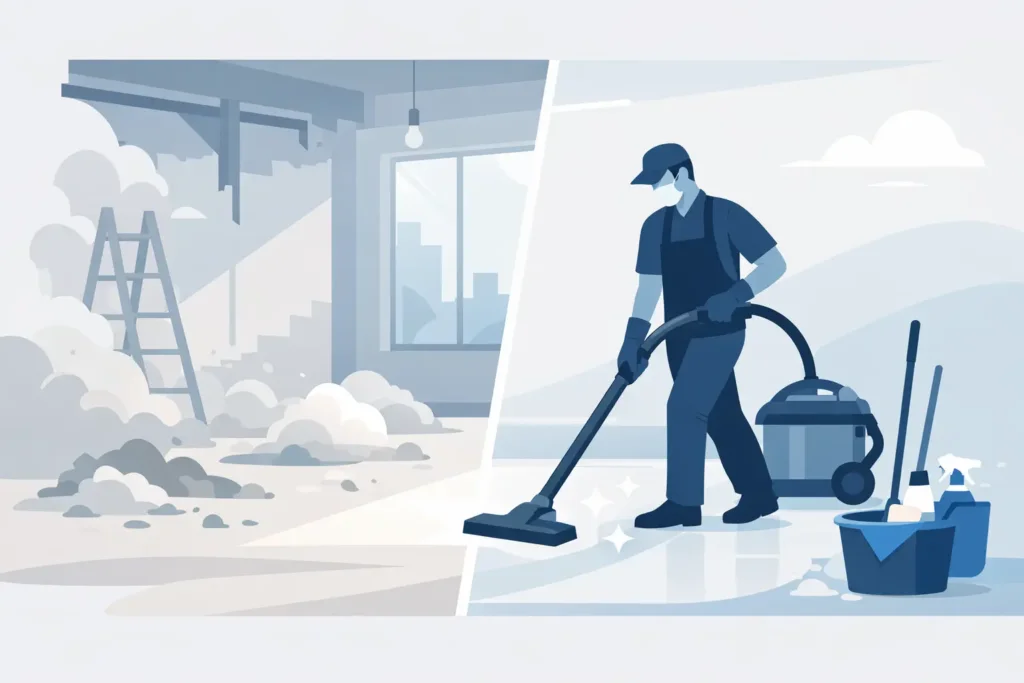
Fresh paint, new floors, updated cabinets – the project is finished, but the mess that stays behind can make the space feel anything but complete. Post construction dust removal is what turns a newly built or renovated property from technically finished into genuinely ready to live in, work in, or hand over to a client.
Construction dust has a way of reaching places you would not expect. It settles on baseboards, inside light fixtures, on window tracks, across shelving, and deep into vents. Even after contractors sweep up larger debris, a fine layer often remains and keeps circulating through the space. That is usually the point when homeowners, property managers, and business owners realize the last step matters just as much as the first.
Why post construction dust removal matters
This is not the same as routine house cleaning or a standard janitorial visit. Construction creates finer, more stubborn dust from drywall, wood, tile, insulation, and saw cutting. That dust does not just sit on obvious surfaces. It clings, drifts, and resettles.
For homeowners, that can mean wiping the same countertop several times and still seeing a pale film by evening. For businesses, it can delay opening, distract employees, and leave a poor first impression on customers or tenants. In both cases, the goal is simple – get the space truly clean so it looks finished and feels comfortable.
There is also a practical health side to it. Fine dust can irritate the eyes, nose, and throat, especially for children, older adults, and anyone with allergies or asthma. If the HVAC system has been running during construction, dust may have moved through vents and onto surfaces in rooms far from the actual work zone. That is why surface cleaning alone is not always enough.
What makes construction dust so hard to remove
The challenge is not only the amount of dust. It is the texture and the way it spreads. Drywall dust, for example, is extremely fine and easy to stir back into the air. If it is cleaned in the wrong order, you can end up moving it around instead of removing it.
That is why the process matters. A rushed cleanup can leave dust on ceiling fans, door frames, blinds, trim, and inside cabinets. Then, as people start walking through the property or the air turns on, the dust settles all over again.
Moisture matters too. Some post-renovation residue wipes away best with a damp cloth, while other materials can smear if handled incorrectly. Floors need special attention because different surfaces react differently. What works on sealed tile is not always right for hardwood, luxury vinyl, or natural stone.
The difference between basic cleanup and a ready-to-use space
Many construction crews do a rough clean at the end of a job, and that can be helpful. They may remove scraps, sweep, and collect larger debris. But rough cleaning and detailed post construction dust removal are not the same thing.
A rough clean gets the site safer and more presentable. A detailed clean gets it livable, workable, and polished. That includes removing dust from high and low surfaces, cleaning trim and ledges, wiping fixtures, detailing floors, and addressing the places people notice right away once they move back in or open the doors.
This difference matters when expectations are high. If you have just invested in a remodel, listed a property, prepared a rental turnover, or finished out a commercial space, the final presentation counts. Dust on vents, smudges on glass, and residue in corners can make a brand-new improvement feel unfinished.
How a professional approach to post construction dust removal works
The best results usually come from cleaning in a careful sequence. High surfaces are addressed first so dust falls downward only once. That includes ceiling corners, vents, fans, upper trim, and light fixtures. After that, attention moves to walls, doors, frames, switches, counters, shelves, and lower surfaces. Floors come last.
In many spaces, detail work is what changes everything. Window sills and tracks, cabinet interiors, bathroom fixtures, and baseboards tend to collect more dust than people expect. If the project involved sanding, cutting, or drywall work, these areas often need repeated passes to fully clear out the residue.
Vacuuming also plays a bigger role than many people think, especially when the equipment is designed to capture fine particles instead of blowing them back into the room. Once loose dust is removed, surfaces can be wiped more effectively without creating muddy streaks or pushing grit into finishes.
There is some judgment involved too. A newly remodeled kitchen has different needs than a retail suite, office, or move-in ready home. Some clients need every cabinet, drawer, and shelf cleaned inside and out. Others are focused on floors, bathrooms, breakrooms, and customer-facing areas. The right plan depends on the property and how soon it needs to be used.
What should be cleaned after construction
The answer depends on the scope of the work, but a complete job often includes much more than the floor. Dust collects on vents, trim, blinds, ledges, doors, walls, light fixtures, countertops, appliances, and inside storage areas. It also settles into corners, around plumbing fixtures, and along baseboards where it is easy to miss during a quick wipe-down.
Glass deserves special attention because it shows every streak and speck. So do floors. Hard floors may need vacuuming, damp mopping, and finish-safe detailing along edges. Carpeted areas can trap fine particles and may need more than a simple pass with a household vacuum.
Restrooms, kitchens, and break areas often need a second layer of cleanup beyond dust removal because construction can leave adhesive marks, smudges, packaging residue, and fingerprints. The goal is not just to remove debris. It is to make the space look cared for and ready.
When to schedule post construction dust removal
Timing can make or break the result. If cleaners arrive too early, ongoing work may undo everything. If you wait too long, dust can continue circulating and settling into more areas.
The best time is usually after all major construction work is complete and trades are done moving through the space. Paint should be dry, punch-list work should be close to finished, and no more sanding or cutting should be expected. If utilities and lighting are fully on, that helps too, because it is easier to spot leftover dust and residue under normal conditions.
For larger projects, it may make sense to schedule cleaning in phases. A rough clean can happen first, followed by a more detailed final clean once the job is fully wrapped up. That approach is especially useful for commercial properties, tenant improvements, and homes with multiple renovation stages.
Why flexibility matters for homes and businesses
Not every property needs the same level of service. A family finishing a bathroom remodel has different priorities than a property manager turning over several units or a business owner preparing for opening day. That is why a one-size-fits-all approach does not work very well.
Some people mainly need dust removed from the renovated area plus connected rooms where particles traveled. Others need the whole property cleaned because the HVAC spread dust throughout the building. In commercial settings, schedules matter too. Cleaning may need to happen after hours, between vendor visits, or right before furniture delivery.
This is where a customized plan helps reduce stress. You stay in charge of the scope, the timing, and the areas that matter most, while the cleaning is handled thoroughly enough that you are not left chasing dust for days afterward.
Choosing help you can trust
Post-renovation cleanup should feel like relief, not one more thing to manage. Look for a cleaning team that pays attention to detail, understands different surface types, and can adjust the service to fit your property instead of forcing your space into a preset checklist.
A dependable team will also be realistic. Some jobs need one visit. Others, especially after major remodeling, may benefit from a follow-up once any lingering dust finishes settling. Honest guidance matters because the goal is visible, lasting results, not a rushed appearance of clean.
For homeowners and businesses in and around Lawrenceville, working with a local company like UpStraight Cleaning can make that process easier. A tailored service plan, clear communication, and a focus on the details can make the difference between a space that still feels under construction and one that finally feels ready.
Once the dust is gone, you get to enjoy what you actually paid for – a space that looks finished, feels fresh, and lets you move forward without the cleanup hanging over your head.

