
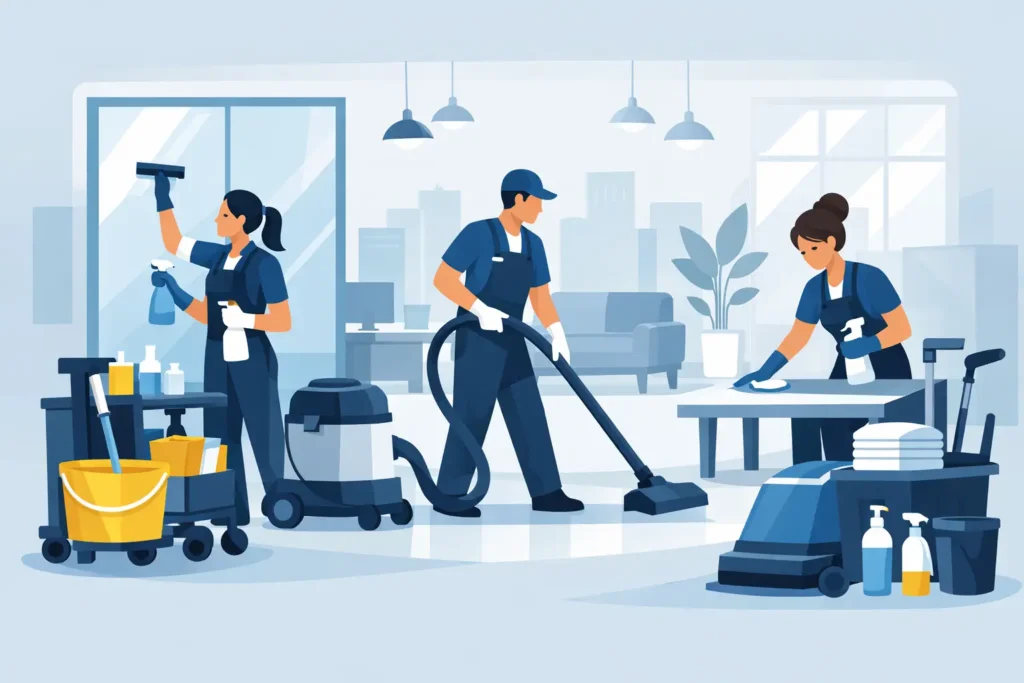
A clean lobby tells people one story. A dusty vent, smudged glass door, or restroom that runs out of supplies tells another. That is why a solid commercial cleaning service guide matters. For business owners and property managers, cleaning is not just about appearance. It affects health, customer confidence, staff morale, and how smoothly the day runs.
The challenge is that commercial cleaning is rarely one-size-fits-all. An office with light weekday traffic needs something different from a restaurant, fitness center, or managed property with constant turnover. The right plan depends on your space, your hours, your budget, and the level of detail you expect. When those pieces line up, cleaning stops feeling like one more thing to chase and starts supporting the way your business works.
What a commercial cleaning service guide should help you decide
The best commercial cleaning service guide does more than define basic tasks. It should help you figure out what your facility actually needs, how often it should be cleaned, and where professional support will save you the most time and frustration.
For some businesses, that means routine care like vacuuming, mopping, restroom sanitation, trash removal, breakroom cleaning, and wiping down high-touch surfaces. For others, it includes deeper work such as floor care, post-construction cleanup, detailed disinfecting, window cleaning, or turnover support between tenants or guests. If your space serves the public, small details matter more than many owners realize. People notice fingerprints on entry doors, dust on baseboards, and odors in shared spaces even if they never mention them.
A good guide should also make room for flexibility. Your needs can change with the season, staffing levels, foot traffic, or special events. A retail store may need extra attention during holidays. A property manager may need common areas maintained on a recurring basis but want move-out or post-renovation cleaning as needed. The cleaner the service plan fits the real use of the space, the better the results.
Start with your facility, not a generic checklist
Before you compare providers or request a quote, take a close look at how your building functions day to day. This step helps you avoid paying for the wrong scope or missing problem areas that need regular attention.
Offices
Office cleaning often sounds simple, but the needs can vary a lot. A small private office may mainly need dusting, floors, trash service, restroom cleaning, and breakroom upkeep. A larger office with shared workstations, conference rooms, and frequent visitors may need more attention on touchpoints, glass, and common areas. If your team eats at desks or hosts clients often, cleaning expectations should be higher.
Restaurants and food service spaces
Restaurants have less room for inconsistency. Floors, dining areas, restrooms, entryways, and customer-facing surfaces need frequent care, and timing matters. Cleaning should work around service hours without disrupting operations. Depending on the setup, grease, odors, and heavy floor traffic may call for more specialized attention than a basic janitorial visit.
Retail stores
Retail spaces live and die by presentation. Smudged mirrors, dusty shelving, and dirty fitting rooms can chip away at customer trust. A store may not need the same kind of cleaning as a medical facility or office, but it often needs steady maintenance that keeps the space polished throughout the week.
Hotels, fitness centers, and managed properties
These environments usually have high-touch surfaces and frequent turnover. Cleanliness affects reviews, retention, and overall perception. In fitness spaces, sanitation is part of the customer experience. In hotels and managed properties, the pace of turnovers can create pressure, so reliability is just as important as the cleaning itself.
How often should commercial cleaning happen?
This is where many businesses either overspend or fall behind. Daily service is right for some spaces, but not all. The ideal schedule depends on traffic, type of business, and how quickly the space shows wear.
A busy office might do well with cleaning several times a week, while a smaller administrative space may only need weekly service plus occasional deep cleaning. Restaurants, hospitality spaces, and fitness centers often need much more frequent attention because dirt, moisture, and touchpoints build up fast. Retail stores may need extra visits during peak seasons and lighter service at other times.
It also helps to separate recurring cleaning from periodic deep cleaning. Recurring service handles the daily and weekly basics that keep your business presentable and sanitary. Deep cleaning gets into the edges, buildup, and neglected areas that routine visits may not fully address. If you rely on recurring service alone, standards may slowly slip. If you only book occasional deep cleans, your business may spend too much time looking almost clean instead of truly cared for.
What to look for in a cleaning provider
Price matters, but it should not be the only filter. The cheapest quote can become expensive if the team is inconsistent, misses details, or needs constant follow-up. Commercial cleaning should reduce your workload, not create another layer of supervision.
A dependable provider should be clear about scope, scheduling, and expectations from the start. You should know what is included, what requires special requests, and how issues are handled if something is missed. That kind of clarity matters for busy owners and managers who do not have time to chase down avoidable confusion.
Look for a company that is willing to tailor the service plan to your facility instead of forcing a fixed package that does not fit. That matters even more if you manage more than one type of space or need help beyond standard cleaning, such as organizing, move-related support, or post-construction cleanup. A flexible team can save time because you are not coordinating multiple vendors for related needs.
Consistency is another major factor. A polished first visit is nice, but what you really need is dependable follow-through. Businesses benefit most from cleaning partners who pay attention to detail over time and adjust as needs change.
Questions worth asking before you book
You do not need to overcomplicate the process, but a few practical questions can help you choose well. Ask how the provider handles recurring schedules, whether they can clean around your operating hours, and what tasks are included in routine visits. If your space has problem areas, ask how those will be addressed. If you need flexibility for events, busy seasons, or tenant turnover, ask how schedule changes are managed.
It is also smart to ask how satisfaction concerns are handled. Even strong cleaning teams can occasionally miss something. What matters is whether the company responds quickly and takes the concern seriously. A service-first approach shows up in the follow-up, not just the quote.
Why customization usually beats a standard package
Commercial spaces do not age or function in the same way. A standard checklist can cover basics, but it often misses the reality of how your staff and customers use the building. One business may need extra restroom attention and almost no breakroom work. Another may need frequent glass cleaning, entryway care, and lobby detailing because first impressions drive sales.
Customization also helps control cost. You are not paying for tasks that add little value to your operation, and you are less likely to neglect areas that really do need regular attention. That balance is where many businesses see the best return from recurring service.
For local businesses in and around Lawrenceville, working with a company that understands different property types can make the process easier. UpStraight Cleaning takes that practical approach by building service plans around the space, the schedule, and the result the client wants to maintain. That kind of flexibility is especially useful when your cleaning needs shift over time.
The real goal is fewer headaches
A clean workplace should make your day easier. Staff should be able to focus on work, customers should feel comfortable in the space, and you should not have to wonder whether the restrooms, floors, or front entry are ready for the next person who walks in.
That is why the right commercial cleaning plan is less about checking a box and more about creating consistency. When the schedule fits your traffic, the scope fits your building, and the provider pays attention to details, the results show up everywhere. Your space feels more professional. Problems get caught earlier. And cleaning becomes one less thing pulling your attention away from the business itself.
If you are comparing options, start simple. Look at how your space is used, where standards matter most, and what level of support will actually save you time. The best plan is the one that keeps your business ready without making your schedule harder than it needs to be.

