
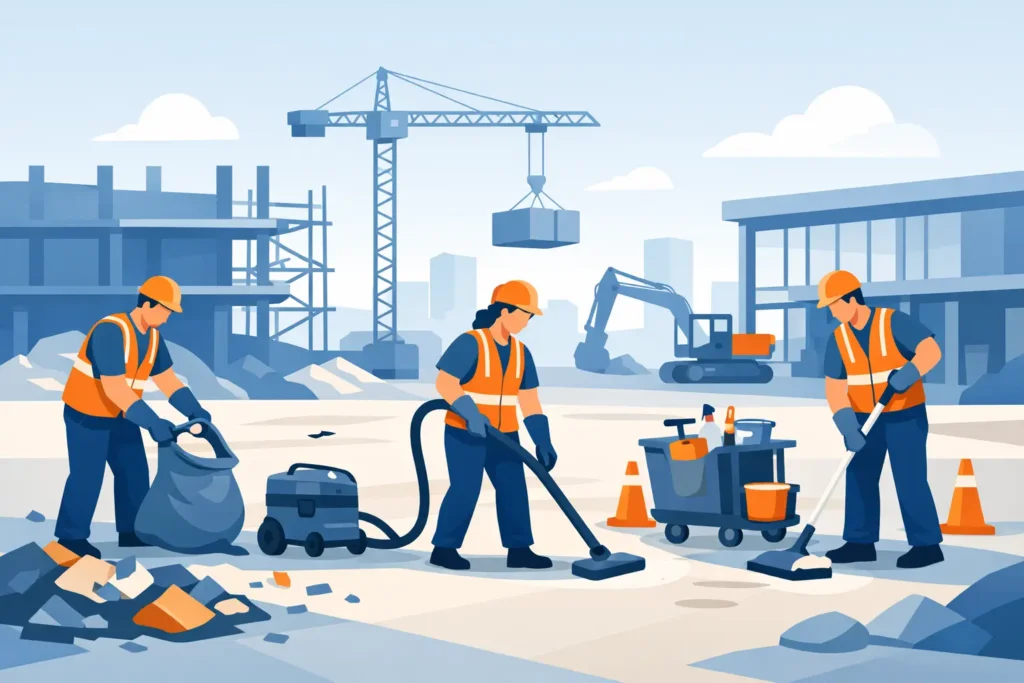
A renovation can look finished long before the space is actually ready to use. Fine dust settles inside cabinets, drywall residue clings to window tracks, and protective film may still cover fixtures and glass. Understanding how post construction cleanup works helps homeowners, contractors, property managers, and business owners plan for the final stage that turns a work site into a clean, comfortable, usable space.
Post-construction cleaning is not the same as a standard house cleaning. It is a detail-focused process designed to remove construction debris, dust, residue, and marks left behind after building, remodeling, repairs, or tenant improvements. The right scope depends on the project, the condition of the site, and whether crews are still working in the space.
How Post Construction Cleanup Works From Start to Finish
A professional cleanup usually begins with a walkthrough. This is where the cleaning team reviews the rooms, identifies surfaces that need extra attention, and confirms what should be removed versus what needs to stay in place. For example, leftover scrap material may need to be handled by a contractor or dumpster service, while a cleaning crew can remove smaller debris, packaging, labels, dust, and construction residue.
The walkthrough also helps set realistic expectations. A newly built home with empty rooms needs a different approach than an occupied office that received flooring, paint, and lighting updates. If painters, installers, or punch-list crews still need access, it may make sense to schedule cleaning in phases rather than perform one final visit too early.
Phase One: Rough Cleaning and Debris Removal
The first phase focuses on making the space safe and manageable. Crews collect loose trash, cardboard, plastic wrap, tape, small scraps, and other non-hazardous materials left behind during the project. Floors are cleared so they can be properly cleaned, and accessible surfaces are checked for stickers, protective coverings, and residue.
This phase is especially useful after framing, drywall, flooring, cabinetry, or major installation work. It gives contractors and property owners a clearer view of the project while reducing clutter that can get in the way of inspections or final work.
Not every cleaning company provides hauling for large construction waste, heavy materials, paint cans, chemicals, or hazardous items. Those items often require separate disposal arrangements. Clarifying this before service prevents delays and ensures the right team handles each part of the job.
Phase Two: Detailed Dust and Surface Cleaning
Construction dust is persistent. It can settle on baseboards, vents, light fixtures, doors, shelves, ceiling fans, window sills, and inside drawers or cabinets. Even after vacuuming, more dust may appear as air moves through the space. That is why detailed cleaning is the center of most post-construction services.
A cleaning team works from higher surfaces down to the floors to avoid re-contaminating areas that have already been cleaned. This may include wiping accessible walls and trim, dusting ledges, cleaning cabinet interiors and exteriors, wiping doors and hardware, and removing dust from reachable fixtures. Careful attention is given to corners, crevices, and edges where renovation dust tends to collect.
Floors require the right method for the material. Vacuuming with appropriate equipment helps capture fine dust from carpet and hard surfaces. Hard flooring may then be cleaned according to its finish, whether it is tile, vinyl, sealed wood, laminate, or polished concrete. The goal is to remove residue without leaving streaks, scratches, or excess moisture behind.
Phase Three: Final Detail Cleaning
The final phase is what makes a completed property feel ready for move-in, handoff, opening day, or everyday use. Glass and mirrors are cleaned, fingerprints are removed from switches and hardware, and bathrooms and kitchens receive focused attention. Fixtures, counters, sinks, toilets, appliances, and accessible interior surfaces are cleaned so the space presents well and functions comfortably.
This is also the stage for spotting the details people notice first: smudges on a front door, dust in a closet, tape residue on a window, or debris tucked behind a toilet. A careful final cleaning supports a better first impression for buyers, tenants, guests, employees, and customers.
What Post-Construction Cleaning Usually Includes
The exact checklist should be tailored to the property, but most projects involve debris pickup, detailed dust removal, vacuuming, floor care, bathroom cleaning, kitchen cleaning, interior glass cleaning, and cleaning of accessible cabinets, shelves, doors, trim, and fixtures.
For commercial spaces, the scope may also include break rooms, reception areas, restrooms, offices, retail shelving, and high-touch surfaces. For homes, clients often request extra attention in kitchens, bathrooms, closets, bedrooms, and newly installed cabinetry.
A good cleaning plan accounts for the work that was done. A bathroom remodel may require extra cleanup around tile, grout, mirrors, and fixtures. A whole-home renovation may call for more extensive dust removal throughout vents, trim, windows, and storage areas. For a restaurant, retail location, or office, the priority may be getting customer-facing areas polished before reopening.
Timing Matters More Than Most People Expect
The best time for final post-construction cleaning is after the major work is complete and after contractors have removed large debris. If cleaning happens before final touch-ups, more dust, footprints, and smudges can appear afterward. On the other hand, waiting too long can allow dust and residue to settle deeper into the property.
For larger projects, a staged approach often works best. A rough clean can happen before final installations, followed by detailed cleaning after the last contractor leaves. A short final touch-up may be scheduled just before move-in, photography, an inspection, or a grand opening.
If the property is occupied during renovations, it helps to isolate work areas as much as possible and clean those spaces separately. This reduces the spread of dust into living areas, workstations, or customer spaces. It may also be worth planning recurring cleaning after the project, particularly when fine dust continues to settle during the first weeks of use.
Preparing for a Professional Cleanup
A little preparation helps the service go smoothly. Make sure the project has reliable water, working electricity, and safe access to the areas being cleaned. Contractors should remove tools, ladders, and valuable materials before the appointment whenever possible. If there are surfaces that require special care, such as natural stone, newly finished wood, specialty flooring, or delicate fixtures, point them out during the walkthrough.
It is also helpful to identify anything that is outside the cleaning scope. Large dumpsters, demolition materials, paint, solvents, sharp objects, and hazardous waste need proper handling by the appropriate provider. Clear communication protects the property and keeps the cleanup focused on the work that delivers the most visible results.
Why Professional Post-Construction Cleaning Is Worth It
Post-construction cleanup can be physically demanding and time-consuming. Dust travels farther than expected, residue can be difficult to remove safely, and a rushed final wipe-down often misses the places that affect how clean a property truly feels. Professional cleaners bring a systematic approach, appropriate supplies, and the time needed to work through the details.
For property managers and business owners, a polished space supports a smoother handoff and a stronger first impression. For homeowners and renters, it creates relief after weeks or months of disruption. UpStraight Cleaning can tailor post-construction service to the condition of the space, helping you stay in control of the priorities while the cleanup work gets handled with care.
The last contractor may leave when the construction is done, but the project is not fully complete until the dust, debris, and final marks are gone. Scheduling the right cleanup gives your new or updated space the fresh start it deserves.

