
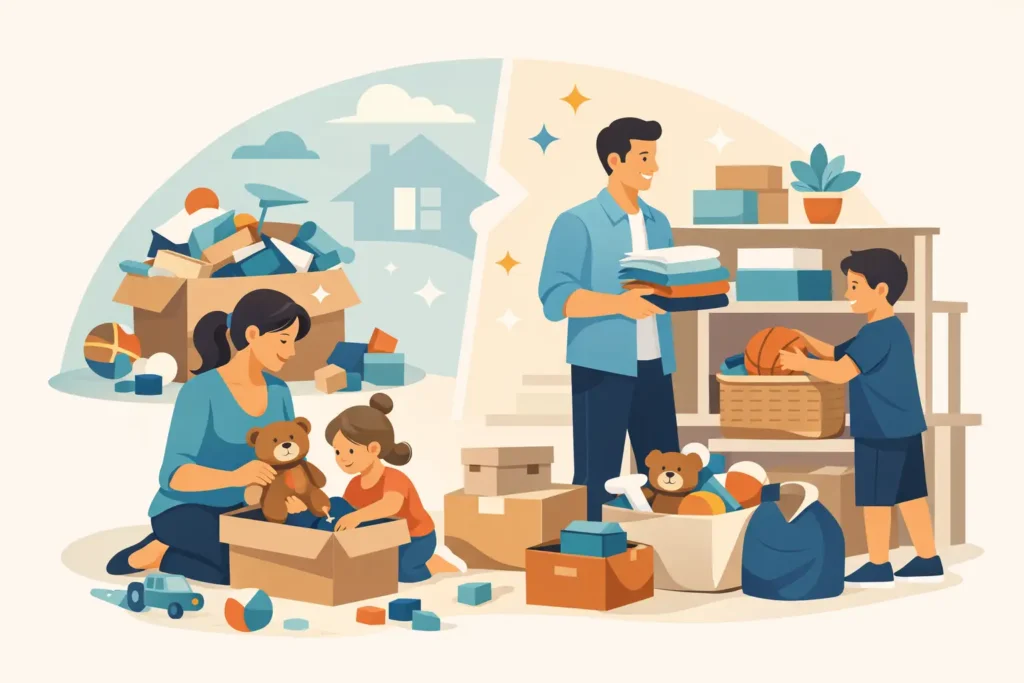
The laundry is half-folded, school papers are spread across the counter, and somebody left a soccer bag in the hallway again. For many households, decluttering help for busy families is not about creating a picture-perfect home. It is about making daily life easier, faster, and less stressful.
When schedules are packed, clutter builds up in small layers. A few unopened packages on the dining table turn into a pile. One missed laundry day becomes three. Toys move from bedrooms to the living room, then stay there because everyone is too tired to reset the space at night. That does not mean your home is out of control. It usually means your family is active, working hard, and short on time.
Why clutter hits busy families differently
Clutter affects every home, but busy families feel it faster because the house has to do more. It is a landing zone, office, playroom, homework station, laundry center, and recovery space all at once. When every room serves multiple purposes, even a little disorder can create friction.
That friction shows up in practical ways. Mornings take longer because shoes are hard to find. Meal prep feels harder because counters are crowded. Cleaning gets delayed because it is tough to wipe, vacuum, or reset a room that is full of extra stuff. The result is not just visual stress. It is lost time.
That is why decluttering should not be treated as a massive one-time project unless the home truly needs a major reset. For most families, the better approach is to reduce what slows the house down and create simple systems the household can actually keep up with.
Decluttering help for busy families starts with priorities
One common mistake is trying to organize the whole house in one weekend. That sounds productive, but it often leads to half-finished rooms, bigger messes, and frustration by Sunday night. A better plan is to start with the spaces that create the most daily pressure.
For some families, that is the kitchen because paperwork, snacks, lunch supplies, and dishes all collide there. For others, it is the entryway, where backpacks, keys, jackets, and shoes pile up. Bedrooms also matter, especially when clutter makes it harder for children to sleep, get dressed, or put things away.
Start by asking one question: which space would make everyday life easier if it stayed functional? That answer tells you where to begin.
Once you choose a room, aim for visible improvement, not perfection. Clear the floor. Open the main surfaces. Remove what does not belong. Put only the most-used items within reach. If the room works better at the end of the session, that is progress worth keeping.
The best first rooms to tackle
The kitchen is often the fastest win because it affects mornings, after-school routines, and dinner cleanup. Clearing countertops, reducing duplicate containers, and giving papers one home can instantly make the room feel calmer.
The entryway is another high-value area. When bags, shoes, and outerwear have a clear landing spot, the whole house feels less scattered. This is especially helpful for families with young kids who need a routine they can follow without much coaching.
Bathrooms are worth considering too. They are small, but product buildup happens fast. Letting go of expired items, duplicates, and empty containers creates more usable storage and makes regular cleaning easier.
Make decluttering fit your real schedule
Busy families usually do not need a better intention. They need a realistic method. If your calendar is packed, long organizing sessions may not happen consistently, and that is fine.
Short resets are often more effective than occasional marathons. Fifteen to twenty minutes can be enough to clear a table, sort a pile of mail, or reset a mudroom. The key is to define the task before you begin. “Declutter the house” is too broad. “Clear the kitchen island” is manageable.
It also helps to match the task to your energy. On a weeknight, do something simple like filling one donation bag or sorting one drawer. Save bigger decisions, like toys, clothing, or garage storage, for a weekend or a day when you have more focus.
For families with younger children, timing matters. Trying to organize the playroom while kids are actively playing in it can feel impossible. Doing a reset after bedtime or during school hours may be more productive. For older children, involving them can help, but expectations should be age-appropriate. A child may be able to sort books or put toys into bins, but they may still need support deciding what to keep.
Decluttering help for busy families means fewer systems, not more
Some organizing advice looks great but creates too much maintenance. Busy households usually do better with simple systems that are easy to repeat.
That might mean one basket for incoming school papers instead of a complicated filing method. It might mean open bins for sports gear instead of detailed labels that nobody follows. It might mean keeping fewer decorative storage pieces and focusing on what actually contains the mess.
The best organizing systems answer three questions. Where does this item go? Can everyone in the house put it back? Can the space be reset in a few minutes?
If the answer is no, the system may be too complicated for your current season of life. That is not failure. It is useful information.
What to let go of first
When time is limited, start with the items that take up space without adding value. Broken toys, outgrown clothes, duplicate kitchen tools, expired toiletries, random cords, and paper clutter are common examples. These categories usually involve less emotional decision-making, which helps you build momentum.
Sentimental items are different. They deserve more time and attention. If family keepsakes are slowing you down, set them aside for a separate session rather than getting stuck on them in the middle of a practical reset.
There is also a trade-off to consider with children’s items. Keeping every craft, school paper, and seasonal outfit may feel meaningful in the moment, but it quickly crowds storage. Choosing a limited memory bin or folder for each child can protect what matters most without keeping everything.
When outside help makes sense
Sometimes the issue is not motivation. It is capacity. If work is demanding, kids are busy, and weekends are already full, the home can stay in a constant catch-up cycle. That is where professional support can make a real difference.
A cleaning and organizing service can help in two ways. First, it removes the pressure of doing everything yourself. Second, it creates faster results because the work is handled with a plan. For families dealing with a move, a major life change, or months of buildup, that kind of support can be especially valuable.
Not every household needs a full-house organizing project. Some need help with one problem area and a cleaning reset to make the space easier to maintain. Others benefit from recurring cleaning after decluttering so the home stays manageable instead of sliding back into overwhelm.
The right support should feel flexible, not rigid. You should be able to focus on the rooms that matter most, decide what stays and what goes, and get practical help without feeling judged. That is often what turns a stressful project into real relief.
For families in and around Lawrenceville, services that combine cleaning with organizing support can be especially helpful because they address both sides of the problem. A space is easier to maintain when it is not only cleaner, but also set up to function better.
How to keep clutter from returning
Decluttering works best when it changes the way the home handles daily inflow. If new papers, purchases, laundry, and kids’ items enter the house faster than they are processed, clutter will rebuild no matter how well you organize.
That does not mean you need strict rules for everything. It means creating a few reliable habits. Open mail near the trash. Empty backpacks in one spot. Finish the laundry cycle fully when possible, not just the washing. Keep a donation bag in a closet so items can leave the house without becoming another pile.
A weekly reset helps too. This does not need to take hours. Straightening the main living areas, clearing surfaces, and returning items to their zones once a week can prevent clutter from becoming overwhelming again.
It also helps to accept that some seasons are messier than others. A family with toddlers, travel sports, or a recent move will need different systems than a family with older children and calmer schedules. Good decluttering is not about copying someone else’s home. It is about building a space that supports the life you are actually living.
If your house feels harder to manage than it should, start smaller than you think you need to. Clear one surface. Reset one room. Ask for help if the project has grown beyond the time and energy you have. A home does not have to be perfect to feel lighter, calmer, and easier to live in.

