
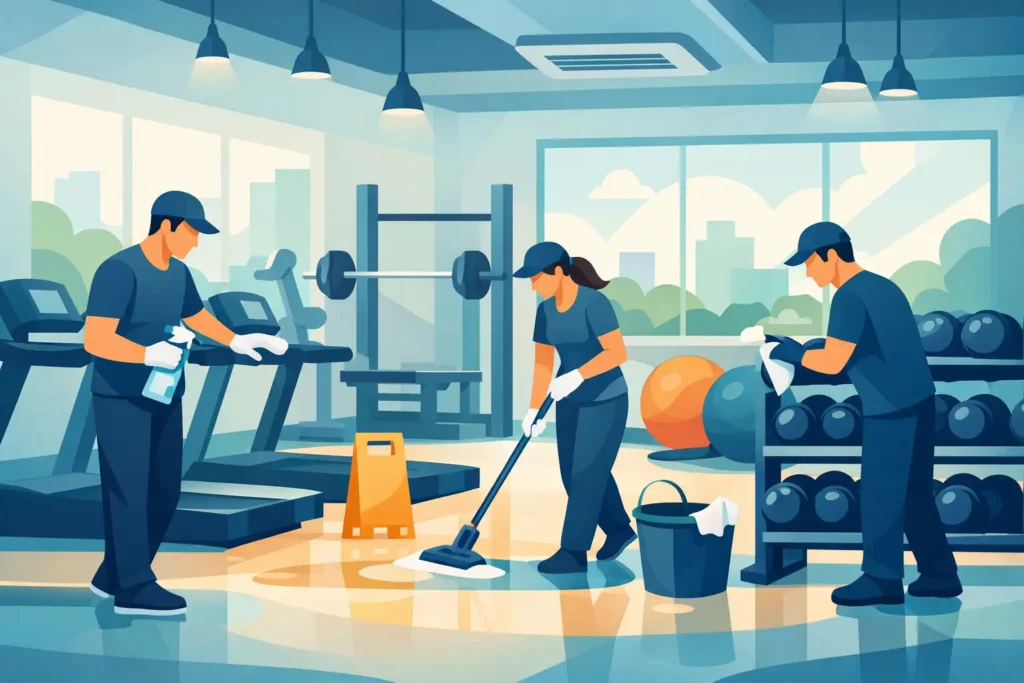
At 6 a.m., your gym can go from quiet to crowded in minutes. Members touch equipment, move through locker rooms, refill water bottles, and head to the next station without thinking twice about what was left behind. That is why fitness cleaners are not simply there to make a facility look presentable. They help create the clean, confident environment members expect every time they walk in.
For fitness centers in Lawrenceville and nearby Georgia communities, cleaning is part of the member experience. A spotless entryway, fresh-smelling locker room, and well-maintained workout floor tell people that their health, comfort, and time matter. When those details slip, members notice just as quickly.
Why Fitness Cleaners Matter for Member Retention
A gym has a different cleaning workload than a typical office or retail space. Sweat, humidity, frequent equipment use, and high foot traffic create constant demands throughout the day. Even a facility that appears tidy at a glance can develop odors, residue, and sanitation concerns in the places members use most.
Members may not mention every dusty treadmill base or streaked mirror, but these details shape their impression of your business. A clean facility feels organized, professional, and cared for. It gives new members confidence during their first visit and gives regulars another reason to keep coming back.
Professional fitness cleaners also allow staff to focus on members rather than spending valuable time managing deep cleaning tasks. Front-desk teams can greet visitors, trainers can work with clients, and managers can run the business knowing a dependable cleaning plan is in place.
What a Fitness Center Cleaning Plan Should Cover
The right service plan depends on your operating hours, membership volume, layout, and the services you offer. A small training studio may need focused recurring cleaning after business hours, while a large gym with showers, childcare, and group fitness rooms may need more frequent attention.
A strong plan starts with the spaces that receive the most contact and the fastest buildup. Equipment floors, free-weight areas, cardio zones, exercise mats, mirrors, benches, door handles, counters, and water stations all need regular cleaning. Locker rooms require added care because moisture, hair, soap residue, and odors can build up quickly around showers, toilets, sinks, and changing areas.
Restrooms deserve consistent attention throughout the facility. Clean fixtures, stocked supplies, dry floors, and fresh-smelling spaces make a meaningful difference to members. They also help your team avoid the frustrating last-minute cleanup requests that interrupt the workday.
Common areas matter, too. Entry doors, reception desks, seating, vending areas, offices, and staff break rooms should not be treated as an afterthought. These areas often form a visitor’s first and last impression of your facility.
Equipment Cleaning Needs a Careful Approach
Fitness equipment is expensive, and not every cleaning method is appropriate for every surface. Cleaning teams should follow the manufacturer’s care guidance and use products suited to handles, screens, upholstery, metal frames, rubber flooring, and mirrors. Harsh chemicals or overly wet cleaning can damage certain materials or leave behind slippery residue.
This is one reason a tailored plan is more useful than a one-size-fits-all checklist. Your cleaning provider should understand which areas need daily attention, which can be scheduled weekly, and where detail work will make the biggest difference.
Floors and Locker Rooms Need More Than a Quick Pass
Gym floors collect far more than visible dirt. Rubber flooring can hold onto dust and sweat, while hard surfaces near entryways and locker rooms can become slippery when moisture is tracked in. Regular floor care helps protect both the appearance of your space and the comfort of people moving through it.
Locker rooms can be the hardest-working part of a fitness facility. They need a reliable routine for showers, drains, tile, partitions, sinks, toilets, mirrors, and touchpoints. If a locker room smells stale or looks neglected, it can overshadow an otherwise excellent workout experience.
Choosing Fitness Cleaners for Your Facility
The best cleaning partner should make your operation easier, not force you into a rigid schedule that does not fit your business. Before choosing a provider, consider when your gym is busiest, whether cleaning must happen after hours, and which spaces need the most frequent attention.
Clear communication is especially valuable. You should be able to explain your priorities, adjust the scope as your facility changes, and know what services are included. A dependable team will welcome that direction because you know your members, brand standards, and problem areas best.
Reliability matters just as much as the cleaning itself. Missed visits, inconsistent results, or rushed work can quickly become visible in a fitness environment. Look for a company that takes details seriously and has a process for addressing concerns when they arise.
For many facilities, recurring service is the most practical option. It keeps cleaning from becoming a reaction to a complaint, an event, or a visibly dirty space. A set routine also makes budgeting more predictable and helps maintain a consistently polished environment.
How Often Should a Gym Be Professionally Cleaned?
There is no single schedule that works for every gym. A private training studio with limited daily traffic may need a thorough cleaning a few times each week. A busy commercial gym, apartment fitness center, or multi-use wellness facility may require daily service or a combination of daily maintenance and scheduled deep cleaning.
Your busiest areas should receive attention most often. High-touch surfaces, restrooms, locker rooms, and entry points can need daily or more frequent care depending on traffic. Deeper work, such as detailed floor cleaning, fixture buildup removal, high dusting, and hard-to-reach equipment areas, may be scheduled weekly, monthly, or as needed.
The key is to build a plan around real use rather than assumptions. If evening classes fill your studio, an early-morning cleaning schedule may make more sense. If your gym opens around the clock, daytime cleaning may need to happen in sections so members can continue using the facility safely.
Everyday Staff Care Still Makes a Difference
Professional cleaning works best alongside simple daily habits from your staff and members. Disinfectant wipe stations, clear signage, available paper towels, and prompt attention to spills can keep conditions under control between scheduled visits. Staff can also do quick walkthroughs to restock restrooms, remove visible debris, and flag maintenance issues before they become larger problems.
That does not mean your team should carry the full cleaning burden. Asking trainers or front-desk staff to handle deep restroom cleaning, floor care, or detailed equipment cleaning can pull them away from the service members came to receive. A professional plan gives your team support while keeping everyday upkeep manageable.
A Clean Gym Protects More Than Appearances
The goal is not to make every surface look perfect for a photo. It is to operate a facility where people feel comfortable working out, changing clothes, bringing a friend, or signing up for a membership. Cleanliness supports trust, and trust supports the relationships that keep a gym growing.
UpStraight Cleaning can build flexible commercial cleaning plans for fitness environments, from recurring upkeep to detailed cleaning for the areas that need extra attention. You stay in charge of the priorities, timing, and scope of service.
When your facility is consistently clean, members can focus on their next rep, next class, and next goal instead of wondering whether the space around them is being cared for.

