
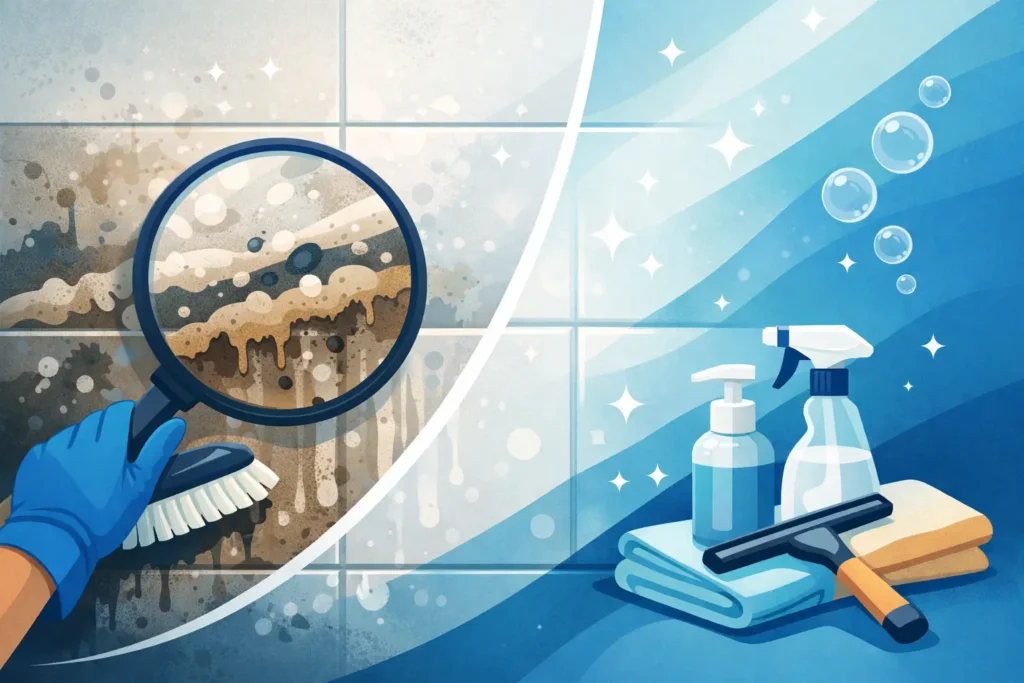
That sticky film on cabinet doors, the cloudy ring around a shower drain, the grime that keeps coming back on tile grout – these are the spots that make people wonder how deep cleaning removes buildup when regular cleaning no longer seems to work. Surface cleaning helps a space look better day to day, but buildup forms slowly in layers. Once those layers settle in, they need more than a quick wipe to truly come off.
Deep cleaning works because it targets what daily or weekly cleaning often misses. Instead of only removing visible dust or crumbs, it focuses on the residue underneath – grease, soap scum, hard water minerals, trapped dirt, body oils, and product film. In homes and businesses alike, that difference matters. A room can look tidy at first glance and still hold onto a lot of hidden grime that affects appearance, sanitation, and even how the space smells.
Why buildup forms so easily
Buildup usually starts with normal use. In kitchens, cooking oils settle on backsplashes, appliance exteriors, cabinets, and walls. Dust sticks to that grease and creates a thicker layer over time. In bathrooms, soap, shampoo, conditioner, and minerals in water leave residue on tile, glass, tubs, and fixtures. In high-traffic areas, dirt gets tracked in and pressed into floors, corners, baseboards, and grout lines.
The reason buildup becomes stubborn is simple – it hardens, spreads, and combines with other residue. A small splash of grease becomes a tacky film. Hard water spots become crusty mineral deposits. Dust mixes with moisture and turns into grime in places people may not notice until it is obvious. By that point, regular wipes and all-purpose sprays may only remove the top layer.
This is also why a space can feel dirty even after someone has cleaned it. The surface clutter may be gone, but the residue remains. That lingering film changes how counters feel, how bathrooms shine, and how floors look in natural light.
How deep cleaning removes buildup at the source
The biggest difference with deep cleaning is that it treats buildup as a layered problem. The goal is not just to make a room presentable. It is to break down residue, lift it safely from the surface, and remove it fully rather than spreading it around.
That usually starts with using the right product for the right kind of buildup. Grease needs a different approach than hard water stains. Soap scum responds differently than dust packed into textured flooring. A deep cleaning process matches the cleaner, tools, dwell time, and agitation level to the surface. That is what makes it more effective than rushing through with one spray and one cloth.
Time also matters. One reason buildup stays behind during routine cleaning is that there is not enough time to let products work. Deep cleaning gives residue a chance to soften before scrubbing or wiping. Once loosened, it can be lifted away instead of being rubbed into seams, grout, and corners.
Technique matters just as much. On some surfaces, buildup needs scrubbing with brushes or non-abrasive pads. In other areas, careful detailing around edges, hardware, vents, trim, and fixtures makes the real difference. That is often where grime collects the longest.
Kitchens show the difference fastest
If you want a clear example of how deep cleaning removes buildup, the kitchen is usually it. This is one of the busiest areas in any home or commercial setting, and it collects more residue than many people realize.
Grease travels. Even if cooking happens mostly on the stovetop, oily particles can settle on nearby cabinets, range hoods, backsplash tile, microwaves, and refrigerator surfaces. Over time, that layer dulls finishes and traps dust. Countertops may look clean but still feel slightly sticky. Around sinks, water spots and soap residue create a cloudy appearance that regular wipe-downs do not always fix.
A proper deep clean addresses those layers directly. Instead of focusing only on open surfaces, it includes the spots around burners, behind small appliances, on cabinet fronts, along trim, and in corners where crumbs and grease collect together. Once that residue is gone, the kitchen does not just look cleaner. It feels fresher, brighter, and easier to maintain.
There is a practical benefit too. When old grease and food residue are removed, future messes come off more easily. That can shorten routine cleaning time and help prevent odors from hanging around.
Bathrooms hold onto residue in plain sight
Bathrooms are another place where buildup becomes part of the room before anyone fully notices it. Soap scum on shower walls, mineral deposits around faucets, discoloration in grout, and film on mirrors all build gradually. Because it happens a little at a time, it is easy to adapt to the look of it.
Deep cleaning changes that by addressing the surfaces people use constantly but may not clean thoroughly every week. Tubs, shower enclosures, tile edges, sink bases, toilet exteriors, vents, and baseboards all hold onto moisture and residue. Some of that buildup is cosmetic, but some of it affects sanitation and odor control.
This is one of the best answers to the question of how deep cleaning removes buildup – it restores surfaces by removing the layers that block their original finish. Glass looks clearer. Chrome fixtures reflect light again. Tile lines look more defined. Even the room itself can feel more comfortable because it no longer carries that damp, stale smell that often comes from hidden residue.
There are trade-offs, though. Some staining or discoloration may be permanent if buildup has been ignored for too long or if hard water has etched a surface. Deep cleaning improves a lot, but it cannot always reverse damage. That is why earlier intervention usually gets the best results.
Floors, trim, and overlooked edges matter more than people think
A lot of grime lives below eye level. Floors collect dirt, but buildup also settles along baseboards, in corners, near door frames, under furniture edges, and around vents. In commercial spaces, especially, repeated foot traffic can press debris into textured surfaces and leave floors looking older than they really are.
Routine mopping may remove loose dirt, but it often misses residue along edges or leaves behind a fine film if products are overused. Deep cleaning focuses on the details that change the overall feel of the room. Clean floor edges, dust-free trim, and cleared corners make a space look sharper and more cared for.
This matters in homes, rental turnovers, offices, retail spaces, and managed properties. People may not point to a baseboard and say it looks dirty, but they notice when a room feels truly clean. Often, that feeling comes from the areas that are easiest to skip during faster cleanings.
Why recurring upkeep becomes easier afterward
One of the biggest benefits of deep cleaning is what happens next. Once heavy residue is removed, routine maintenance becomes more effective. Counters wipe down faster. Bathroom surfaces resist buildup longer. Floors respond better to regular cleaning because old layers are no longer trapping new dirt.
That is why deep cleaning often makes the most sense as a reset. For some households, that reset is seasonal. For others, it is helpful before starting recurring service, after a move, after renovations, or after life simply got too busy. The right timing depends on the space, how heavily it is used, and how long buildup has been sitting there.
For businesses, deep cleaning can also protect presentation. Customers, tenants, and employees notice details, especially in restrooms, entrances, break rooms, and shared surfaces. When residue is allowed to build up, it can make an otherwise well-run space feel neglected. A deeper service helps reset those high-visibility areas so regular maintenance can keep them looking polished.
When professional help makes the biggest difference
Some buildup can be handled with time and the right supplies, but not every situation is a good weekend project. If grime has spread across multiple rooms, if a property is being prepared for move-in or move-out, or if the buildup involves high-use kitchens or bathrooms, professional deep cleaning can save time and deliver more consistent results.
That is especially true when different surfaces need different care. Natural stone, glass, stainless steel, painted cabinets, grout, laminate, and specialty flooring do not all respond well to the same products or tools. A more careful approach helps avoid damage while still getting real residue off the surface.
For busy families, professionals, property managers, and business owners, the value is not just the cleaning itself. It is the relief of having someone handle the details thoroughly and efficiently. UpStraight Cleaning approaches deep cleaning with that mindset – focused on visible results, flexible service, and the kind of careful attention that helps a space feel under control again.
Buildup has a way of making a clean space feel like it is never quite clean enough. Once those layers are removed properly, everything gets easier – maintenance, presentation, and the simple comfort of walking into a room that feels fresh again.

