
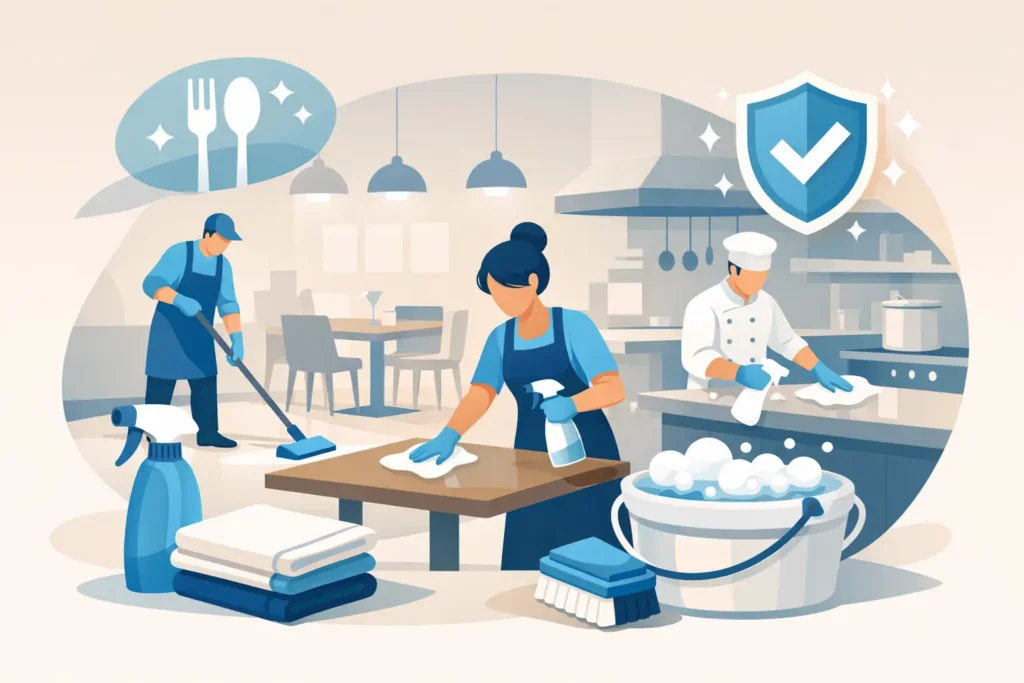
The rush ends, chairs go up, and the real test of a restaurant begins. A clean dining room may impress guests, but a reliable restaurant cleaning guide has to protect far more than appearances. It has to support food safety, reduce odors and pests, help equipment last longer, and give your staff a space they can feel proud to work in.
For restaurant owners and managers, the goal is not to make cleaning another complicated job. It is to create a clear routine that fits your concept, staffing level, hours, and kitchen setup. When everyone knows what clean looks like and who owns each task, standards are easier to maintain even on the busiest shifts.
Start With a Zone-Based Cleaning Plan
Restaurants are full of surfaces with different needs. A front entrance may need quick attention several times a day, while a walk-in cooler requires focused weekly care. Trying to clean everything with one generic checklist often leads to missed details.
Divide the restaurant into practical zones: the dining room and host area, restrooms, kitchen and prep stations, dish area, storage spaces, employee areas, and exterior entry points. Each zone should have a task list, a frequency, and a person responsible for checking that work is complete.
This structure also makes training easier. A new team member does not need to guess whether wiping a table includes the base, chair backs, condiment holders, and nearby wall marks. Your standard can spell it out.
A good plan should be realistic. A small cafe with counter service may be able to reset the dining area continuously throughout the day. A large full-service restaurant may need a dedicated side-work schedule and closing crew. The right schedule is the one your team can complete consistently without cutting corners.
Clean, Sanitize, and Disinfect Are Different Jobs
These terms are often used interchangeably, but they are not the same. Cleaning removes visible dirt, grease, food residue, and debris. Sanitizing reduces germs on food-contact surfaces to safe levels when the product is used correctly. Disinfecting is generally used on non-food-contact surfaces, such as restroom fixtures, handles, and certain high-touch areas.
Always follow the product label for dilution, dwell time, and approved surfaces. A sanitizer cannot work properly through a layer of grease or food particles, so surfaces should be cleaned before they are sanitized. Using too much chemical is not better, either. It can leave residue, create safety issues, and waste supplies.
Keep chemicals clearly labeled and stored away from food, utensils, and single-use service items. Staff should have access to safety information and know not to mix products. Bleach, degreasers, and other common cleaning chemicals can become dangerous when combined.
Daily Restaurant Cleaning Tasks That Cannot Wait
Daily cleaning protects the guest experience and prevents small messes from becoming expensive problems. It works best when tasks are split between opening, shift-change, and closing responsibilities rather than saved for the end of a long night.
During service, staff should stay ahead of spills, crumbs, fingerprints, restroom checks, and overflowing trash. In the kitchen, wipe up food debris promptly, keep handwashing sinks supplied, and maintain clean, dry floors as much as possible. Grease and moisture are not just unattractive – they can create slip hazards and attract pests.
At closing, make sure the team addresses these core areas:
- Clean and sanitize food-prep surfaces, cutting boards, counters, and food-contact equipment according to your procedures.
- Wash dishes, utensils, and removable equipment parts, then allow them to air dry properly.
- Empty interior trash, replace liners, and clean bins when spills or leaks occur.
- Sweep and mop floors, paying attention to corners, under counters, and behind movable equipment.
- Wipe tables, chairs, menus or table accessories, door handles, payment terminals, and other high-touch guest areas.
- Clean restrooms thoroughly, restock soap and paper products, and remove trash before locking up.
Do not overlook the floors under equipment. If a piece of equipment cannot be moved daily, build rotating access into the schedule so those hidden areas are still cleaned on a regular basis.
Weekly Work Prevents Bigger Problems
Weekly cleaning is where restaurants protect their long-term appearance and reduce the buildup that daily wipe-downs cannot solve. This is the time for detail work: baseboards, walls near prep areas, chair legs, booth seams, vents, shelving, and the edges of floors.
Kitchen teams should give extra attention to grease-prone areas, including fryer exteriors, range hoods, backsplash surfaces, and the space around cooking equipment. The exact frequency for hood systems, filters, and grease-related maintenance depends on your equipment, cooking volume, and local requirements. When in doubt, follow the equipment manufacturer’s guidance and applicable health and fire safety rules.
Walk-in coolers and dry storage areas deserve a weekly check as well. Remove expired or damaged items, wipe shelves, clean spills, and make sure food is stored in an orderly way. Organization is part of sanitation. Clear labeling and properly spaced storage make it easier to spot issues before they affect inventory or food safety.
Your dining room also benefits from a weekly reset. Dust ledges and light fixtures, clean windows and glass doors, wipe walls, polish fixtures, and inspect upholstery for stains or wear. Guests notice the details, even when they cannot name exactly what feels off.
Schedule Deep Cleaning Before It Becomes Urgent
Some cleaning jobs need more time, tools, or access than a normal closing shift allows. Deep cleaning may include moving equipment, scrubbing grout, removing grease buildup, cleaning ceiling vents, washing walls, treating floor edges, and detailing areas that are normally out of sight.
The timing depends on your operation. A high-volume restaurant with heavy frying and constant foot traffic may need more frequent deep cleaning than a low-volume coffee shop. Seasonal changes matter too. Rainy weather can make entry floors and mats dirtier, while patio season can increase dust, pollen, and outdoor debris.
A professional commercial cleaning team can be especially helpful when your staff is stretched thin or when a project requires a level of detail that is difficult to complete between shifts. UpStraight Cleaning can tailor commercial cleaning around your operating hours and priorities, whether you need recurring support, a one-time reset, or help preparing for a busy season.
Give Your Team a System They Can Follow
Even the strongest cleaning schedule will fail if it lives only in a manager’s head. Keep checklists in the areas where work happens, use simple language, and train employees on both the task and the reason behind it. A line cook may understand the importance of a clean prep surface immediately, while a host may need to know why door handles and menus require regular attention.
Assign ownership without turning cleaning into punishment. Everyone should contribute to a clean workplace, but responsibilities should match each person’s role and shift. Managers should also inspect completed work regularly. A checklist is not proof that a task was done well – a quick visual check, touch test, or supply review often catches gaps early.
Keep the right tools close to the work. Color-coded cloths and mops can help prevent cross-contamination between restrooms, dining areas, and food-prep spaces. Stock enough liners, hand soap, paper products, gloves, sanitizer, and approved cleaning solutions so employees are not forced to improvise during a rush.
Watch for the Details Guests Notice First
Guests may never see the inside of your dish area, but they quickly notice sticky tables, smudged entry glass, unpleasant restroom odors, dirty menus, and neglected floors. Those visible details shape whether a customer feels comfortable ordering, staying longer, or returning.
At the same time, do not let front-of-house appearance overshadow back-of-house sanitation. A polished dining room cannot make up for a disorganized cooler, greasy floor, or poorly maintained prep station. The best restaurants treat cleanliness as one connected standard from the front door to the storage room.
A dependable cleaning routine gives your staff fewer last-minute surprises and gives guests one more reason to trust your business. Build a plan your team can keep, review it often, and let a consistently clean restaurant speak for the care behind every meal.

