
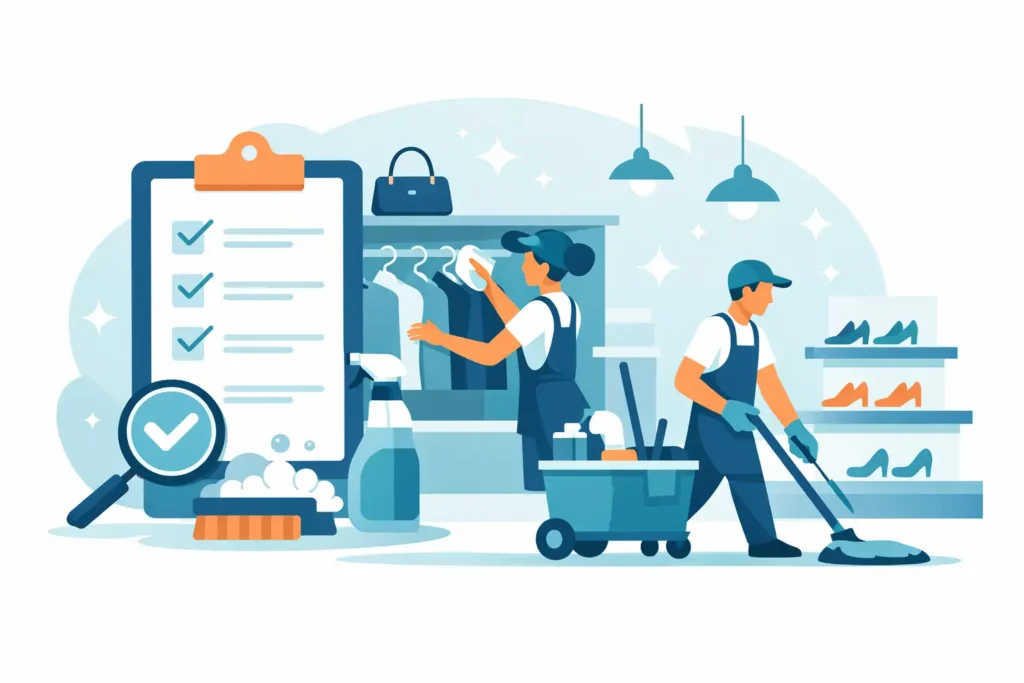
A customer notices more than your displays. They notice the smudged front door, the dusty shelf edge, the fitting room mirror with fingerprints, and the floor that looked fine until sunlight hit it. A strong retail store cleaning checklist helps you stay ahead of those details before they affect how shoppers feel in your space.
Cleanliness in retail is not just about appearance. It shapes trust. When a store looks cared for, customers are more comfortable browsing, trying products, and spending time there. For staff, a clean store is easier to work in, safer to maintain, and simpler to keep consistent from one shift to the next.
Why a retail store cleaning checklist matters
Retail spaces collect mess fast. Foot traffic brings in dirt, entry glass picks up prints all day, checkout counters become high-touch zones, and restrooms can change from acceptable to unpleasant in a short window. If cleaning is handled casually, important areas get missed. If it is handled with a clear routine, the store feels polished without adding chaos to the workday.
A checklist also creates accountability. Managers can see what has been done, employees know what is expected, and recurring issues become easier to spot. That matters whether you run a boutique, a grocery-adjacent retail space, a beauty supply store, or a multi-room showroom. The exact tasks may vary, but the need for structure stays the same.
Build your checklist around timing, not guesswork
The easiest way to make cleaning stick is to divide it by when it needs to happen. Some tasks belong at opening, some during business hours, and some after closing. A few deeper items should be handled weekly or monthly. That approach keeps your team from trying to do everything at once and helps protect the customer experience throughout the day.
Opening tasks
Start with first impressions. Before doors open, entry glass should be wiped clean, handles disinfected, and mats shaken out or vacuumed. Floors near the entrance usually need attention first because they collect dirt overnight and show wear quickly.
Sales floors should be dusted and spot-cleaned before customers arrive. Straighten product displays, remove debris from shelves, clean mirrors, and wipe down counters. If your store has fitting rooms, check benches, hooks, mirrors, doors, and floors. These spaces often shape a customer’s opinion more than owners realize.
Restrooms should be checked before opening as well. Refill soap, paper products, and toilet tissue. Disinfect sinks, toilets, flush handles, and door hardware. Empty trash before it looks full. A restroom does not need to be large to leave a strong impression.
Midday cleaning tasks
This is where many stores fall behind. Morning cleaning helps, but midday upkeep is what keeps standards visible. High-touch surfaces need repeat attention, especially checkout counters, card terminals, basket handles, fitting room doors, and restroom touchpoints.
Spot sweeping and mopping may be needed in problem areas, especially during bad weather or busy sales periods. Spills should be handled immediately, not saved for later. Dusting usually does not need a full second round midday, but obvious smudges, fingerprints, and clutter should be addressed as they appear.
Trash should be monitored throughout the day. Overflowing bins make the whole space feel neglected, even when the rest of the store is in good shape. For stores that sell cosmetics, food items, or products with samples, this matters even more because waste builds up faster.
Closing tasks
Closing is the time for reset. Floors should be vacuumed, swept, or mopped based on the material and traffic level. Counters, display surfaces, registers, break areas, and back-room workstations should be wiped down. Any sticky residue, product dust, or packing debris should be removed before the next day starts.
Restrooms need another full check, along with trash removal from all public and employee areas. Fitting rooms should be cleared, mirrors cleaned, and forgotten items handled according to store policy. If your team leaves with the store only half reset, opening staff start behind.
What every retail store cleaning checklist should include
Your store may have unique needs, but a useful checklist should cover the same core zones. The front entrance comes first because it frames the entire customer experience. Clean glass, doors, handles, mats, and any visible exterior debris right outside the entry.
The sales floor is next. That includes floors, shelves, display tables, signage holders, mirrors, and product touchpoints. Dust often settles on fixtures before anyone notices it from eye level, so teams should check edges and lower shelves too.
Checkout areas deserve extra focus because they combine customer contact with employee contact all day long. Clean conveyor surfaces if you have them, counters, screens, payment devices, pens, and bagging stations. If space is tight, clutter control is part of cleaning. A wiped surface still feels messy if it is crowded with supplies.
Fitting rooms should include mirrors, doors, seating, hooks, floors, and nearby trash bins. Small stains, tags, and discarded packaging can make a fitting room feel neglected fast.
Restrooms need a complete routine that includes disinfecting fixtures, refilling supplies, cleaning mirrors, emptying trash, and checking floors. Employee spaces matter too. Break rooms, stock rooms, and receiving areas may be hidden from customers, but when they are dirty, the disorder tends to spread into the front of the store.
The checklist should match your store type
A clothing boutique will not clean the same way as a pet supply store or a phone accessory shop. That is where many generic checklists fall short. They sound complete, but they skip the details that matter in real life.
If your store has frequent customer product handling, sanitize touchpoints more often. If you deal with packaging waste, flatten boxes and clear back-room clutter on a steady schedule. If weather drives in mud or pollen, entry maintenance should happen more than once per shift. It depends on your layout, traffic, staffing, and inventory.
That is also why outsourcing can make sense. Some store teams can manage daily upkeep but still need help with floor care, detailed restroom sanitation, high dusting, or recurring deep cleaning. A flexible service plan gives business owners support where they actually need it instead of paying for tasks they can already cover internally.
Common cleaning misses that hurt the customer experience
Most retail stores do not struggle because nobody cleans. They struggle because the same few details keep getting missed. Baseboards collect dust. Glass at eye level gets wiped while lower glass panels stay marked up. Corners of fitting rooms collect lint and tags. Door tracks, light switches, and shelf fronts rarely make it onto a rushed routine.
Another common issue is using one standard for all times of day. A store might look good at opening and rough by mid-afternoon. That does not always mean the team is careless. It may just mean the checklist is built for once-a-day cleaning when the space really needs touch-up rounds.
Training matters here. Employees should know not just what to clean, but what clean looks like. A quick wipe is not enough if smears remain on glass or if disinfecting products are removed before they have time to work.
Keep the checklist simple enough to use
The best checklist is not the longest one. It is the one your team can follow consistently. Break tasks by area and time of day. Use plain language. If a task needs special supplies or a specific method, note it clearly. Complicated systems often get ignored when the store gets busy.
It also helps to assign ownership. If everyone is responsible, often no one is. Clear roles reduce missed tasks and make shift transitions smoother. For larger stores, zone-based assignments usually work better than one giant list for the whole team.
If you work with a professional cleaning company, your in-house checklist should still exist. Daily upkeep and professional service should support each other, not overlap in a confusing way. At UpStraight Cleaning, that kind of flexibility is often what helps businesses stay consistently clean without overloading staff.
A practical rhythm for better results
For most retail stores, daily cleaning handles presentation and sanitation, while weekly attention handles detail work that builds up slowly. Monthly deeper service can tackle floors, hard-to-reach dust, vents, and neglected corners that staff may not have time to handle well.
That rhythm tends to be more realistic than expecting retail employees to manage every level of cleaning on their own. Staff should be able to focus on customers and store operations without sacrificing cleanliness. When the routine is right, the store feels fresh every day instead of only after a reset.
A reliable retail store cleaning checklist does more than keep a store tidy. It protects the experience customers have from the moment they walk in. When your space looks cared for, people feel it right away, and that kind of confidence is hard to fake.

