
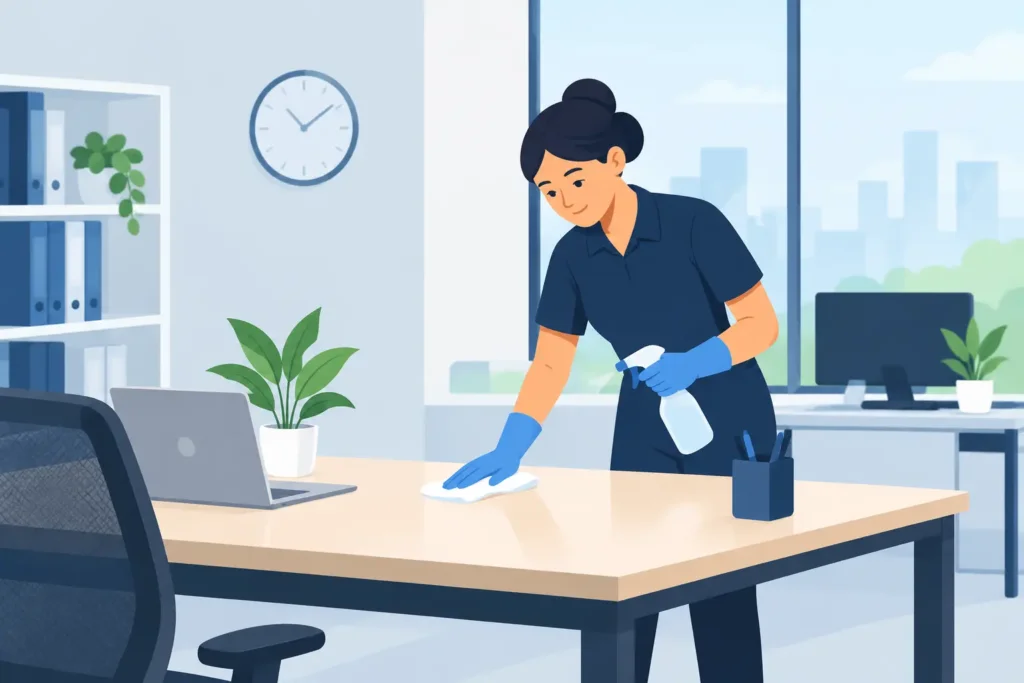
A clean break room at 8 a.m. can look completely different by noon. Coffee spills, shared counters, restroom traffic, fingerprints on doors, and full trash cans build up faster than most teams expect. That is why the answer to how often clean workspaces need attention is rarely a simple once-a-week rule. The right schedule depends on how people use the space, how many people use it, and what your customers see.
For Lawrenceville-area businesses, a consistent cleaning plan does more than make the office look polished. It helps employees feel comfortable, gives visitors a better first impression, and prevents small messes from becoming time-consuming problems. The goal is not to clean everything at maximum intensity every day. It is to match the work to the pace of your workplace.
How Often Should You Clean Workspaces?
Most workplaces benefit from some level of cleaning every business day, with deeper tasks scheduled weekly, monthly, or as needed. High-touch surfaces and shared areas need the most frequent attention because they collect the dirt, germs, and clutter that people notice first.
A quiet office with a small staff may stay presentable with light daily upkeep and a thorough cleaning once or twice a week. A busy medical-adjacent office, restaurant, gym, retail store, or customer-facing reception area may need cleaning during the day as well as after closing. More frequent service costs more than an occasional visit, but it can reduce disruptions, protect your image, and keep staff from spending valuable work time handling facility tasks.
Here is a practical starting point for building a schedule:
| Area or task | Recommended frequency | | — | — | | Entry doors, reception surfaces, shared desks, light switches, and restroom touchpoints | Daily, and more often in high-traffic spaces | | Trash removal, restroom checks, break room wipe-downs, and floor spot cleaning | Daily | | Vacuuming, mopping, dusting, and full restroom cleaning | 1-3 times per week, based on traffic | | Kitchen appliances, glass doors, baseboards, detailed dusting, and disinfecting overlooked surfaces | Weekly or biweekly | | Upholstery, interior windows, vents, storage areas, and deep floor care | Monthly, quarterly, or as needed |
This is a starting point, not a fixed formula. A professional service plan should adjust as staffing changes, seasons get messier, or your business gets busier.
Start With Traffic, Not Square Footage
Square footage matters, but foot traffic tells a more useful story. A 2,000-square-foot office with six employees may need far less attention than a 1,000-square-foot retail shop with steady customer traffic all day.
Pay attention to the areas where people naturally gather. Entrances, restrooms, break rooms, waiting areas, checkout counters, conference rooms, and shared equipment usually need priority. If employees regularly comment on a sticky floor, overflowing trash, or an empty restroom supply dispenser, the schedule is probably not keeping up.
Customer-facing businesses should also consider what visitors see in the first 30 seconds. Smudged glass, dusty displays, unpleasant restroom odors, and clutter around a front desk can affect how people view the rest of your operation. Regular cleaning protects the details that are easy to overlook when your team is focused on serving customers.
Daily Cleaning Keeps Small Problems Small
Daily cleaning is the foundation for most active workplaces. It does not have to mean a top-to-bottom deep clean every evening. It means resetting the space so employees and visitors return to an environment that feels cared for.
For a typical office, daily service often includes emptying trash, wiping and disinfecting high-touch surfaces, cleaning restrooms, tidying common areas, vacuuming or spot-cleaning floors, and refreshing the break room. Restaurants, fitness centers, and retail locations may need those same tasks repeated throughout the day because their surfaces and floors experience heavier use.
Daily attention is especially helpful during cold and flu season, after employee events, and when outside weather brings in mud, pollen, or rainwater. It also prevents odors from lingering in trash cans, kitchens, and restrooms. These details may seem minor individually, but together they determine whether a workplace feels fresh or neglected.
Weekly Cleaning Restores the Whole Space
Weekly cleaning gives your workplace the deeper reset that daily maintenance cannot always cover. This is when floors receive fuller care, dust is removed from ledges and furniture, glass is cleaned, restrooms get extra attention, and corners that are missed during quick cleanups are addressed.
For many offices, one thorough weekly cleaning paired with simple daily upkeep is enough. For busier workplaces, two or three weekly visits may be a better fit. The right cadence should reflect real conditions, not a package that is too light for your needs or more frequent than your space requires.
Weekly cleaning also gives you a chance to look for patterns. Is the break room becoming cluttered every Friday? Are the lobby floors dirtier after rainy days? Does one restroom need supplies more often than another? Those observations help refine the plan and keep cleaning resources focused where they matter most.
Plan Deep Cleaning Before You Need It
Even a well-maintained workspace needs periodic deep cleaning. Dust settles behind furniture, grime builds around fixtures, and floors show wear over time. A deeper service reaches the places that routine cleaning maintains but does not fully restore.
Most businesses should schedule a deep clean every three to six months. Spaces with heavy public traffic, food preparation, frequent spills, pets, construction dust, or high-touch equipment may need it more often. A move into a new suite, renovation, leadership visit, seasonal event, or lease turnover can also be a smart time to schedule one.
Deep cleaning does not replace recurring service. It works best alongside it. Think of regular cleaning as preserving the condition of the space, while deep cleaning addresses buildup before it becomes visible, unpleasant, or harder to remove.
Different Workplaces Need Different Schedules
An office, restaurant, retail shop, and fitness center should not all follow the same checklist. The risks and expectations are different.
Office spaces usually need consistent care for workstations, conference rooms, break rooms, restrooms, and floors. If desks are shared or customers visit regularly, increase attention to touchpoints and reception areas. Hybrid offices can be tricky because some days are much busier than others. Schedule around your peak in-office days rather than relying only on a weekly routine.
Restaurants need frequent sanitation and floor care because spills, food debris, grease, and customer traffic add up quickly. Restrooms, entryways, dining areas, and back-of-house spaces each need a clear plan. Retail businesses should focus on glass, fitting rooms, display areas, checkout counters, and entrances where customers form quick impressions.
Fitness centers need regular attention to locker rooms, restrooms, mirrors, floors, and shared equipment. In these spaces, cleaning is directly connected to member confidence. A clean facility tells members that their comfort and well-being are being taken seriously.
Signs Your Current Schedule Is Too Infrequent
You do not need a formal inspection to know when cleaning has fallen behind. Employees may start cleaning around customers before meetings, odors may return soon after service, trash may fill before the end of the day, or floors may look worn even after a quick sweep.
Other signs are more subtle. Dust on window sills, fingerprints on glass, residue in break room sinks, and cluttered supply areas can make a space feel less organized than it really is. When your team is constantly reacting to messes instead of preventing them, it is time to revisit the schedule.
A flexible plan is often the best answer. You may need extra service during a busy season, after a special event, or while your office is hosting more visitors. Then you can scale back when traffic slows. UpStraight Cleaning helps businesses build cleaning plans around the way their spaces actually operate, with clear priorities and service that can adjust as needs change.
Make the Schedule Easy to Maintain
The most effective cleaning plan is one employees can count on without having to manage every detail. Decide which tasks belong to daily service, which can wait for scheduled visits, and who will report issues between cleanings. Keeping a small supply of essentials available for spills is useful, but your staff should not have to become the cleaning crew just to keep the workplace functional.
Communicate expectations clearly with your cleaning provider. Mention high-traffic days, sensitive areas, access instructions, supply preferences, and spaces that need special attention. A good plan leaves room for feedback, because workplace needs change over time.
A clean workspace should feel like quiet support for a productive day. When the floors, restrooms, shared spaces, and customer-facing details are consistently cared for, your team has one less thing to worry about and your business has more room to make a strong impression.

