
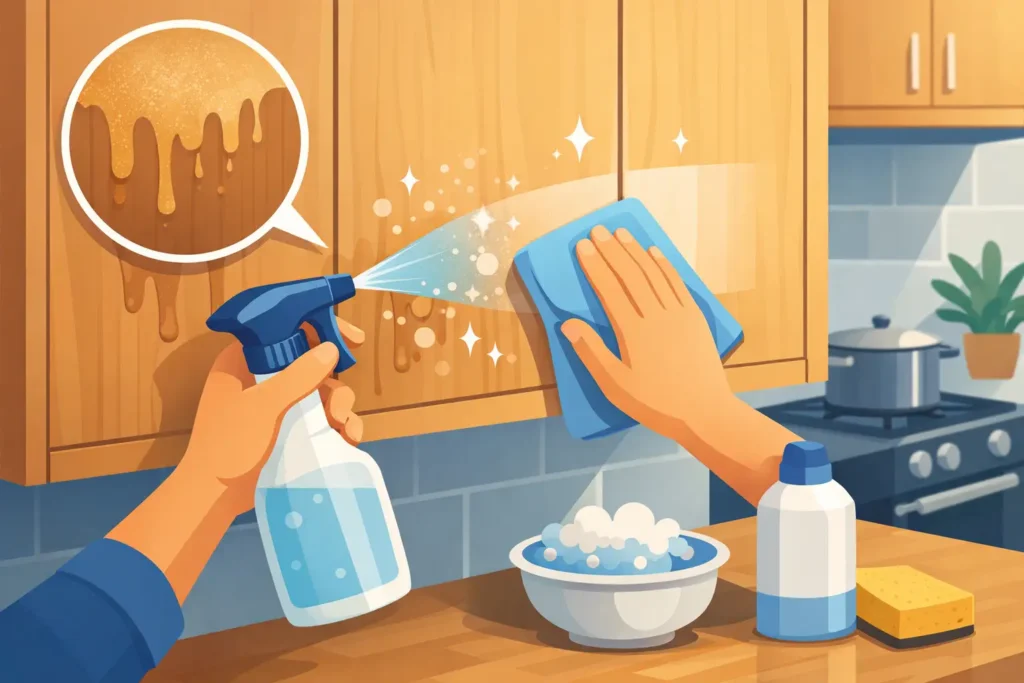
Grease on kitchen cabinets rarely appears overnight. It builds slowly near the range, settling into handles, door edges, and the space above your cooktop until the finish feels sticky or looks dull. Learning how to clean greasy cabinets the right way helps restore that fresh, cared-for look without stripping paint, clouding wood, or leaving behind a residue that attracts more grime.
The good news is that most cabinet grease can be removed with simple supplies and a little patience. The key is matching the cleaner and your technique to the cabinet surface, then drying thoroughly when you finish.
How to Clean Greasy Cabinets Step by Step
Start by clearing the counters below the cabinets and moving small appliances away from the wall. Put down a towel to catch drips, especially if you are cleaning upper cabinets. This makes the job easier and protects your counters from dirty runoff.
Mix a mild solution of warm water and a few drops of grease-cutting dish soap in a bowl. You want enough soap to break down the oil, not so much that it leaves a film. Dip a soft microfiber cloth into the mixture, then wring it out well. Cabinets should be cleaned with a damp cloth, not a dripping one.
Work in small sections, beginning at the top and moving down. Wipe the cabinet doors, frames, edges, and handles with light pressure. Let the damp cloth sit on stubborn areas for 30 to 60 seconds before wiping again. This gives the soap time to loosen the grease instead of forcing you to scrub aggressively.
Follow with a second microfiber cloth dampened with plain water to remove any soap residue. Then dry the surface immediately with a clean towel. That last step matters, particularly on wood or MDF cabinets, because standing moisture can damage seams, cause swelling, or leave water marks.
For grease around knobs and pulls, use a soft toothbrush or small detailing brush. Dip it lightly in your cleaning solution, brush around the hardware and corners, then wipe and dry the area. Avoid soaking the hardware or letting liquid collect where it meets the cabinet door.
Choose the Right Method for Your Cabinet Finish
Not every cabinet can handle the same cleaner. A product that works beautifully on laminate may dull a painted surface or dry out natural wood. When you are uncertain about the finish, test your method in a hidden spot inside a cabinet door first.
Painted Cabinets
Warm water, mild dish soap, and a microfiber cloth are usually the safest starting point for painted cabinets. Use gentle pressure and avoid abrasive sponges, powdered cleansers, or stiff scrub brushes. These can scratch the paint or leave shiny spots on a matte finish.
If the grease remains after one pass, repeat the process rather than reaching immediately for a harsh degreaser. For a small stubborn patch, a baking soda paste made with a little water can help, but use it sparingly and gently. Wipe it away completely and dry the surface right after.
Wood Cabinets
Wood cabinets need the least moisture possible. Use a barely damp cloth with mild soapy water, wiping in the direction of the grain when visible. Never spray cleaner directly onto wood doors, since liquid can seep into joints and edges.
Skip vinegar on unsealed, waxed, or delicate wood finishes. Although vinegar is often suggested as a household cleaner, its acidity can be too harsh for some finishes over time. If your wood cabinets have heavy buildup or an older finish, a cabinet-safe wood cleaner may be the better choice.
Laminate and Thermofoil Cabinets
Laminate and thermofoil are generally more forgiving, but they can still be damaged by harsh solvents, scouring pads, and excessive heat. Mild dish soap and warm water handle everyday grease well. For a more stubborn film, use a small amount of a kitchen degreaser labeled safe for the surface, following the directions carefully.
Pay close attention to seams and edges. Even durable cabinet materials can lift or peel if moisture gets underneath them. Wipe, rinse, and dry one section at a time.
What to Use for Stubborn Grease Buildup
When cabinets have not been cleaned in a while, gentle dish soap may need some backup. The right option depends on how thick the grease is and what the cabinets are made of.
A paste of baking soda and water can loosen a tacky spot on durable painted or laminate cabinets. Apply it with a soft cloth, rub gently, and remove it with a clean damp cloth. Do not use a dry, gritty paste that requires heavy scrubbing.
A commercial degreaser can be useful on laminate, metal hardware, and especially greasy areas near a stove. Read the label before using it on cabinets, and never assume a restaurant-grade or oven cleaner is safe for finished wood or painted surfaces. Strong products can remove sheen, discolor cabinet fronts, or leave a finish feeling rough.
If grease has collected inside cabinet doors near the range, take the same careful approach. Clean the interior with a lightly damp cloth, keeping water away from hinges and unfinished edges. A few short cleaning sessions are safer and more effective than saturating the surface in an attempt to finish faster.
Common Mistakes That Can Damage Cabinets
The biggest mistake is using too much water. A cabinet can look clean at first but develop swelling, peeling, or cloudy marks later if moisture enters seams. Always wring out your cloth until it is just damp and dry every area as you go.
Another common issue is reaching for rough scrubbers. Steel wool, magic eraser-style products, and abrasive pads may remove grease quickly, but they can also scratch laminate, flatten a painted finish, or wear through protective coatings. Use the least aggressive method that gets the job done.
Be cautious with homemade mixtures, too. Combining cleaning products can create harmful fumes, and mixing vinegar with products that contain bleach is never safe. Keep your process simple: one appropriate cleaner, clean water for rinsing, and dry microfiber cloths.
Keep Cabinet Grease From Returning So Quickly
The cabinets closest to your cooking area need the most attention. Wipe handles, lower door edges, and the cabinet fronts around the stove once a week with a damp microfiber cloth. This small habit prevents fresh cooking oils from turning into the sticky layer that takes much longer to remove.
Use your range hood whenever you cook, even for quick meals. It helps pull airborne grease and moisture away from the cabinets. Cleaning the hood filter regularly also helps it do its job more effectively.
For a busy household, a deeper cabinet wipe-down every month or two is usually enough. It depends on how often you cook, whether you fry foods often, and how close your cabinets are to the range. If the cabinet surface feels tacky when you touch it, it is time for a quick reset.
When It Makes Sense to Call for Help
Sometimes greasy cabinets are part of a bigger kitchen cleanup. If buildup covers cabinet fronts, backsplashes, appliances, and high-touch surfaces, professional help can save hours and deliver a more consistent result. This is especially helpful before guests arrive, after a move, or when everyday cleaning has fallen behind during a busy season.
UpStraight Cleaning can tailor a kitchen deep-cleaning plan around the areas that need the most attention, so you stay in control of the work and the level of care your home needs.
A clean cabinet door can change the whole feel of a kitchen. Start with one small section, use a gentle method, and give yourself credit for making your home feel lighter, cleaner, and easier to enjoy.

