
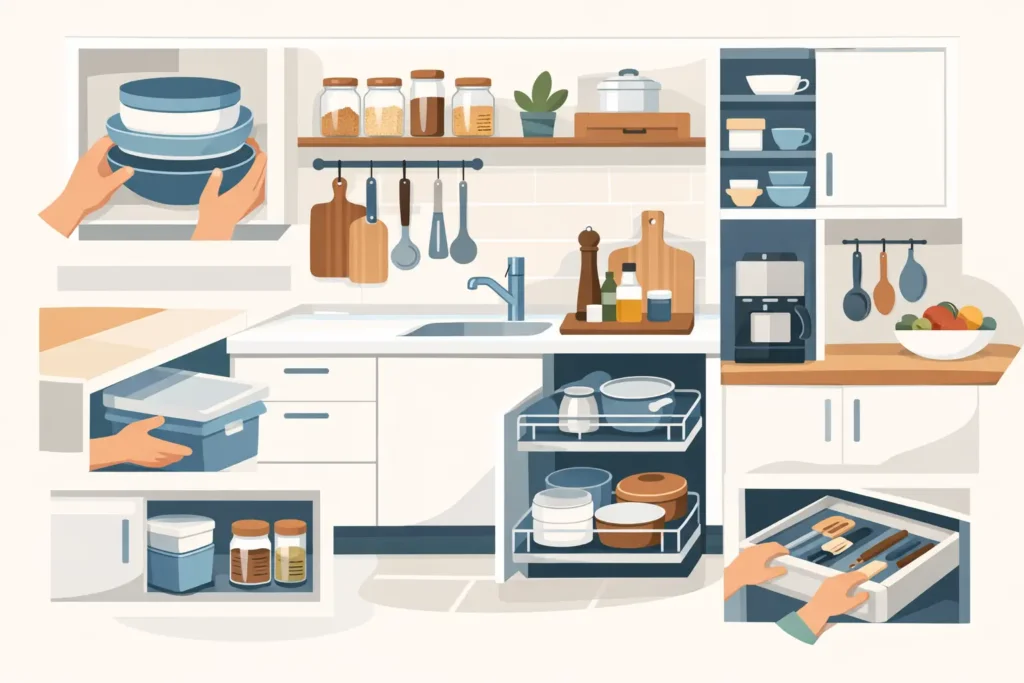
A small kitchen can feel crowded long before it is actually full. One stack of mail on the counter, a few appliances left out, and a cabinet that opens into an avalanche can make meal prep feel like another chore. The good news is that learning how to organize small kitchens is less about buying more storage and more about giving everyday items a clear, workable home.
The goal is not a picture-perfect kitchen that is difficult to maintain. It is a clean, functional space where you can find what you need, cook without constantly moving things around, and reset the room quickly after a busy day.
Start by clearing what does not belong
Before rearranging cabinets or shopping for bins, take everything off the counters that does not support how you use the kitchen. Mail, school papers, unopened packages, and chargers often land there because the counter is convenient, not because it is the right place.
Create a small landing spot somewhere else for those items, even if it is simply a tray near the entryway or a designated drawer. In a compact kitchen, clear counter space is valuable work space. Protect it.
Then work through drawers and cabinets one at a time. Check expiration dates, set aside duplicate utensils, and be honest about items you never use. You do not need three chipped mugs, five water bottles without lids, or a specialty gadget that has not been touched since last year.
This step can feel slow, but it prevents a common mistake: organizing clutter into neater piles. If an item does not earn its space through regular use, it may be better donated, recycled, or stored elsewhere.
How to organize small kitchens by zone
Once you have pared down, organize the kitchen around the tasks you do most often. This makes a small layout work harder without making it feel overfilled.
Keep cooking tools near the stove. Pots, pans, cooking oils, spices, and everyday utensils should be easy to reach when you are preparing meals. Place plates, bowls, glasses, and silverware near the dishwasher or sink if that makes unloading easier. Store food containers close to the area where you pack lunches or put away leftovers.
These zones do not need to be perfect. In many apartments, condos, and older homes, cabinet placement is fixed and counter space is limited. The best arrangement is the one that reduces unnecessary steps in your own routine.
Give prime space to daily essentials
The shelves and drawers between waist and eye level are prime kitchen real estate. Reserve them for the items you use most: everyday dishes, favorite cookware, coffee supplies, lunch containers, and staple ingredients.
Less-used serving platters, holiday baking supplies, and large pots can go on high shelves or in harder-to-reach cabinets. If you have deep lower cabinets, store heavy items there, but avoid placing everyday necessities behind bulky pieces. You should not have to remove a roasting pan just to reach a skillet on a Tuesday night.
Keep countertops intentionally limited
Counters are not storage units. Choose only the appliances you use several times a week, such as a coffee maker or toaster, and put the rest away. A blender that comes out once a month does not need a permanent place beside the stove.
Leaving some open space also makes cleaning much easier. When counters are mostly clear, crumbs, splatters, and dust can be wiped away in minutes instead of requiring a full rearrangement first.
Use cabinet space more efficiently
Small kitchens often have enough storage, but much of it is wasted because cabinets are tall, deep, or difficult to see into. A few simple tools can make a major difference.
Shelf risers create a second level for mugs, plates, or canned goods. Clear bins keep snack packets, baking items, and sauce mixes together so they do not disappear behind larger products. Pull-out organizers can help in deep cabinets, especially for pantry staples or cleaning supplies. Drawer dividers prevent utensils from becoming one tangled pile.
Measure before buying anything. An organizer that is even an inch too wide can become another item to store. It also helps to avoid over-containerizing. Bins are useful when they create categories and make items easier to access. They are not helpful when every individual product needs its own labeled box.
For spices, choose the solution that fits your cabinet and your cooking habits. A drawer insert may work well if you want to see labels at a glance. A small shelf riser can be better when cabinet space is available. The right answer depends on where you naturally reach while cooking.
Make vertical space part of the plan
When floor space and counter space are tight, look upward. The inside of cabinet doors can hold slim organizers for wraps, cutting boards, or cleaning cloths. Wall-mounted hooks can keep frequently used utensils, oven mitts, or lightweight pans accessible.
Use vertical storage carefully, though. Open shelves and hanging racks can look inviting, but they collect grease and dust in an active kitchen. They work best for items you use and wash regularly, not for displaying every dish you own.
A rolling cart can also be useful when cabinets are limited. It can hold produce, coffee supplies, or meal-prep tools and be moved aside when you need more room. Just make sure it has a defined purpose. A cart without a plan can quickly become a place for random overflow.
Create a realistic pantry system
Whether your pantry is a walk-in closet, one cabinet, or a few shelves, organize it so you can see what you have. Group similar foods together: breakfast items, snacks, canned goods, pasta, baking supplies, and quick dinner ingredients. Keep the categories broad enough that everyone in the household can put groceries away without guessing.
Place older products toward the front and newer ones behind them. This simple first-in, first-out habit helps reduce waste and prevents a collection of forgotten food from building up at the back of a shelf.
Decanting dry goods into matching containers can save space and make inventory easier, but it is optional. If it adds work you will not keep up with, use the original packaging and simple bins instead. A system only works when it fits your schedule.
Build in a fast daily reset
The most effective small-kitchen organization plans include a maintenance routine. Take five to ten minutes after dinner to load or empty the dishwasher, wipe counters, return stray items to their homes, and check the sink.
This is especially helpful for busy families and working professionals. You do not need to complete a deep clean every evening. You simply need to stop small messes from becoming a weekend project.
Set one weekly time to check the refrigerator, clear expired food, and wipe down the shelves that need attention. A quick reset before grocery shopping keeps the kitchen cleaner, helps you avoid buying duplicates, and gives fresh food a proper place when you bring it home.
Get help when the kitchen feels overwhelming
Sometimes the challenge is not a lack of ideas. It is a lack of time, energy, or a clear place to begin. If cabinets are overpacked, counters have become catchalls, or a move has left you surrounded by unopened boxes, professional organizing support can help create a system that fits your household.
UpStraight Cleaning can help homeowners and renters create cleaner, more functional spaces with organizing services tailored to what needs attention. You are in charge of every decision, from what stays to which areas need the most support.
A small kitchen does not need more things to feel complete. It needs a little breathing room, useful storage, and habits that are easy to repeat. Start with one drawer or one counter today, and let the relief of a clearer space carry into the rest of your home.

