
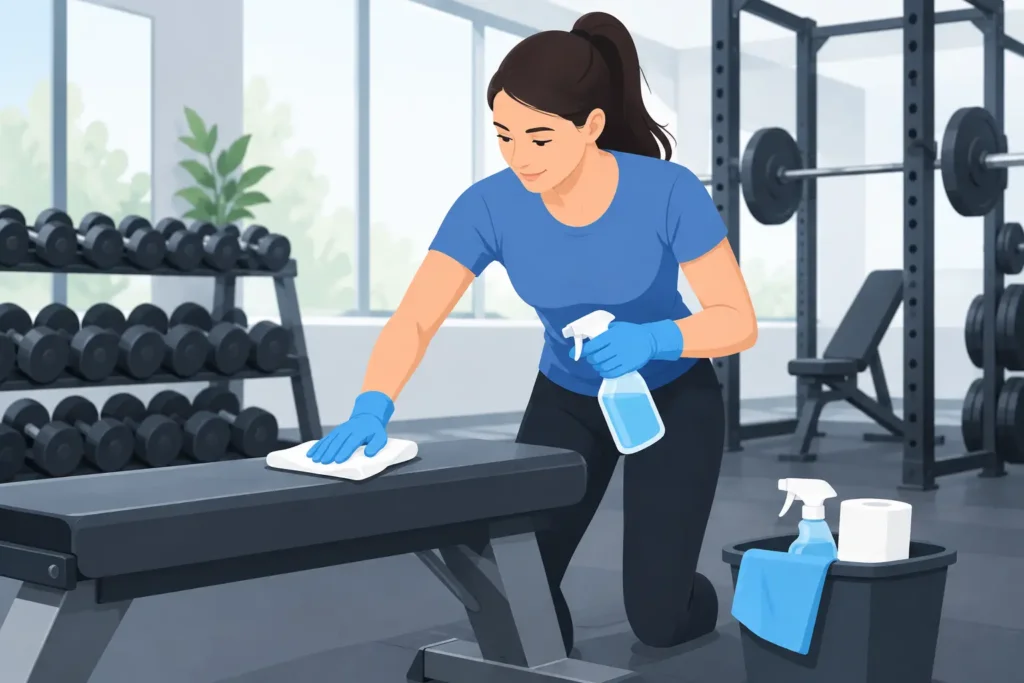
A busy fitness center can look clean at first glance while still collecting sweat, skin oils, dust, and germs on nearly every high-touch surface. Members notice sticky handles, smudged mirrors, and unpleasant odors quickly. Knowing how to clean gym equipment correctly helps protect your investment, supports a healthier workout environment, and gives every member more confidence in your facility.
For gym owners, property managers, and fitness center operators, the goal is not simply to spray everything at the end of the day. Effective cleaning follows a consistent routine, uses products safely, and gives special attention to the equipment and spaces people touch most.
Start With the Right Cleaning and Disinfecting Approach
Cleaning and disinfecting are related, but they are not the same task. Cleaning removes visible soil, sweat, dust, and oils from a surface. Disinfecting uses an approved product to reduce germs left behind after the surface has been cleaned.
This order matters. A disinfectant may not work as intended when it is sprayed over grime or dried sweat. Wipe down the surface first, then apply your disinfectant according to the label directions. Most products need to remain visibly wet for a specific amount of time before being wiped away or allowed to air dry. That contact time is easy to overlook, but it is a key part of proper sanitation.
Always check equipment manufacturer instructions before choosing a product. Harsh chemicals, abrasive scrubbers, and overspray can damage upholstery, screens, rubber grips, painted frames, and electronic consoles. When in doubt, use a gym-safe cleaner or a mild cleaner followed by a compatible disinfectant.
How to Clean Gym Equipment by Type
A one-size-fits-all method can create problems. Cardio machines, free weights, mats, and locker room fixtures each need slightly different care.
Cardio Machines and Touch Screens
Treadmills, ellipticals, stair climbers, and stationary bikes have frequent touch points: handrails, resistance controls, speed buttons, seat adjustments, water bottle holders, and display screens. Start by removing dust from the machine frame and console with a clean microfiber cloth.
For screens and electronic controls, avoid spraying liquid directly onto the machine. Spray the cleaner onto a microfiber cloth instead, then wipe carefully. Too much moisture can seep into seams and cause expensive electronic damage. Pay close attention to handles and adjustment levers, where sweat tends to build up.
Do not forget the areas below and behind cardio equipment. Dust, hair, and debris can collect under treadmills and around machine bases, affecting both appearance and maintenance. A regular vacuuming schedule helps keep those spaces cleaner and safer.
Free Weights, Bars, Benches, and Strength Machines
Dumbbells, kettlebells, barbells, weight plates, cable handles, and selector pins should be wiped down frequently throughout the day. These pieces move from person to person, often without much downtime between sets.
Use a clean cloth and an appropriate disinfectant on metal grips, rubber-coated weights, handles, and adjustment points. Avoid soaking the equipment, especially near moving parts or cables. For chrome bars, dry the surface after cleaning so moisture does not sit on the metal.
Benches need extra attention because they come into contact with clothing, hands, backs, and sometimes bare skin. Wipe vinyl upholstery thoroughly, including seams and edges. If you see cracks, peeling material, or exposed foam, schedule a repair or replacement. Damaged upholstery is harder to clean and can make a well-maintained gym feel neglected.
Mats, Flooring, and Stretching Areas
Yoga mats, exercise mats, foam rollers, and stretching blocks can hold moisture and odor if they are not cleaned and dried properly. Shared mats should be cleaned after use and allowed to dry completely before they are stacked or stored.
Rubber flooring is durable, but it still needs routine care. Vacuum or sweep first to remove grit that can wear down the surface. Then mop with a cleaner designed for rubber flooring. Avoid products that leave a slippery residue, particularly around racks, benches, and high-traffic walkways.
For carpeted areas, vacuuming alone is not enough. Regular spot treatment and periodic deep cleaning help remove sweat odors, tracked-in dirt, and stains near entryways or training zones.
Build a Cleaning Schedule That Members Can Feel
The best cleaning plan is one that fits your gym’s traffic level, staffing, and layout. A small apartment fitness room may need a thorough daily routine and several quick touch-ups. A busy commercial gym may need cleaning support throughout operating hours, with a more detailed service after closing.
High-touch surfaces should be cleaned several times daily, especially during peak periods. This includes door handles, check-in counters, water fountain buttons, machine handles, locker handles, restroom fixtures, and shared training equipment. Encourage members to wipe down equipment before and after use, but do not rely on member habits as your entire sanitation plan.
A practical schedule may include:
- Ongoing wipe-downs of high-touch equipment and surfaces during operating hours
- Daily cleaning of floors, restrooms, locker rooms, trash areas, mirrors, and shared equipment
- Weekly detail work for machine bases, vents, storage racks, upholstery seams, and hard-to-reach corners
- Periodic deep cleaning for carpets, rubber flooring, showers, lockers, and areas with persistent odor or buildup
The exact frequency depends on how many people use the facility, whether towels are provided, the number of locker rooms, and the type of training offered. A gym with group classes, youth programs, or high-intensity training will usually need more frequent attention than a lightly used office fitness room.
Keep Supplies Convenient Without Creating Clutter
Members are more likely to clean equipment when supplies are easy to find. Place clearly labeled wipe or spray stations in visible locations, such as near cardio equipment, free weights, studios, and entrances. Make sure dispensers are refilled before they run out, and provide enough paper towels or clean microfiber cloths for proper use.
At the same time, avoid leaving open bottles, overflowing wipe containers, and used towels scattered around the floor. Those details can make a clean gym appear disorganized. A staff member should check stations regularly, remove trash, and replace empty supplies before members need to ask.
Clear signage can help, but keep it simple and respectful. A short reminder to wipe down equipment after use is more effective than a wall of rules. The environment should feel welcoming, not policed.
Do Not Overlook Restrooms, Locker Rooms, and Air Quality
The locker room often shapes a member’s overall impression of cleanliness. Sweat, humidity, hair, soap residue, and heavy foot traffic can create odor and buildup quickly. Clean toilets, sinks, faucets, shower walls, benches, lockers, and floors daily, with extra attention during busy hours.
Shower areas need consistent cleaning to reduce soap scum and mildew. Use a product appropriate for tile, grout, glass, and drains, and make sure floors are dry enough to reduce slip risks. Empty trash often, particularly in restrooms and towel areas.
Air quality matters, too. Replace or service HVAC filters as recommended, keep vents free of dust, and address musty smells promptly. Air freshener can temporarily cover an odor, but it will not solve dirty drains, damp mats, full trash cans, or moisture issues.
Know When Professional Gym Cleaning Makes Sense
In-house teams can handle daily upkeep, but recurring professional support can make a major difference for busy facilities. It gives staff more time to focus on members while providing a reliable plan for detailed cleaning, floors, restrooms, high-touch surfaces, and overlooked areas.
UpStraight Cleaning can tailor commercial cleaning service to the needs of fitness centers in Lawrenceville and surrounding communities, whether you need routine support, a detailed reset, or a plan built around your operating hours. You stay in charge of the scope, frequency, and priorities for your space.
A clean gym tells members that their health, comfort, and time matter. Keep the routine visible, stay ahead of buildup, and your facility will feel ready for the next workout from the moment someone walks through the door.

