
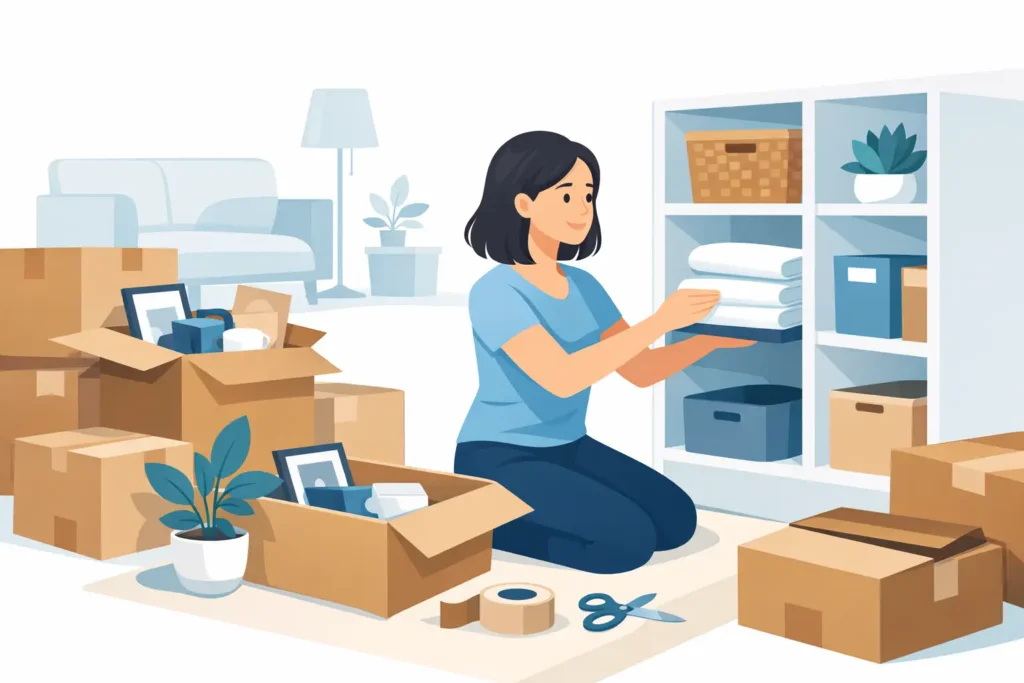
The first night after a move usually tells the truth. You know where the coffee maker is, but not the mugs. The bathroom is half set up. Someone packed scissors in a mystery box. And even though everything made it into the house, it still does not feel livable yet. That is exactly why learning how to organize after moving matters so much – not just to make your space look better, but to make daily life easier right away.
A good post-move plan is less about unpacking every box fast and more about getting your home functional in the right order. If you try to handle everything at once, the process drags out and the clutter sticks around longer. When you organize with a clear sequence, you save time, cut stress, and avoid creating new mess while dealing with the old one.
How to organize after moving in the right order
The biggest mistake people make is unpacking room by room based on whatever box is closest. That feels productive for an hour, then the house starts filling with half-finished piles. A better approach is to organize by priority.
Start with the rooms you need to use every single day. For most households, that means the bathroom, kitchen, and bedrooms first. Those spaces affect your routine immediately. If your shower items, cookware, towels, work clothes, and bedding are easy to reach, the whole move feels more under control.
After that, focus on storage, not decoration. Put dishes where they will actually stay. Assign drawers before filling them. Decide where shoes, backpacks, chargers, mail, and cleaning supplies belong. It is tempting to hang wall art and style shelves early because it makes the place feel settled, but decorative work goes much faster once the practical items already have a home.
If you moved with kids, pets, or a packed work schedule, this order matters even more. Daily-use systems reduce stress faster than a perfectly arranged guest room ever will.
Start by clearing the packing mess
Before you can really organize, you need to remove the visual noise. Flatten boxes as you empty them. Keep one container for trash, one for recycling, and one for packing materials worth saving. If you let cardboard, paper, and bubble wrap build up around the house, it becomes harder to tell what still needs attention.
This is also the right moment to do a light reset cleaning. Wipe shelves before loading them. Vacuum corners before sliding in storage bins. Clean inside cabinets and drawers before you commit to a layout. Organizing on top of dust or debris never feels finished, and it often means doing the same work twice.
For some moves, especially after a rushed closing, apartment turnover, or renovation, the cleanup stage can be bigger than expected. That is where a professional cleaning and organizing team can take a lot off your plate. UpStraight Cleaning works with people who need more than a basic tidy-up, especially when unpacking, deep cleaning, and setting up a functional home all need to happen at once.
Set up one complete room before moving on
There is a trade-off here. Some people like to open every box and sort everything by category across the house. Others prefer finishing one room at a time. In most cases, one complete room works better.
A finished room gives you a working base. If the kitchen is fully unpacked, meals become easier. If the bedroom is done, you can sleep in a calm space instead of stepping around baskets and lamp shades. That momentum matters.
The key is to define what finished means. It does not mean perfect. It means the room is usable, the main items are stored logically, and loose clutter is gone. You can fine-tune later.
The kitchen usually deserves first attention
The kitchen affects your budget, your schedule, and your energy. If you cannot find utensils or lunch containers, you are more likely to eat out, lose time, and feel disorganized all week.
Group items by use, not just by type. Everyday plates and cups should be easy to reach. Cooking tools should live near the stove. Food storage containers should be close to the fridge or prep area. Keep only what fits comfortably in your cabinets. If a shelf is already crammed on day two, it will not improve on its own.
Pantry items deserve a quick check before they go on shelves. Toss anything spilled, stale, or expired from the move. If you use bins or labels, keep them simple. Over-labeling can make a kitchen feel rigid when you are still learning the space.
Bedrooms should support rest, not overflow
A lot of moved-in homes turn the bedroom into temporary storage. That works for a day or two, but after that it starts affecting sleep and routine.
Make the bed, place laundry where it belongs, and unpack enough clothing for the week ahead. You do not need to organize every seasonal item immediately, but your daily wardrobe should be easy to access. Nightstands, chargers, and hampers should be set up early because those small details make the room feel stable fast.
Closets are worth editing as you unpack. Moving is one of the best times to stop storing clothes you no longer wear. If it did not earn the effort of moving, it may not deserve space in your new home.
Bathrooms need function more than aesthetics
Keep bathroom organization simple at first. Store the products you use every day where you can grab them quickly. Backstock, extra toiletries, and guest items can wait until the basic setup is done.
Drawer organizers and baskets help, but only if they fit the way you actually live. A single under-sink bin for hair tools or first-aid items is better than a complicated system you will stop using after two weeks.
Create drop zones early
If you want to know how to organize after moving in a way that lasts, pay attention to what enters the house every day. Keys, shoes, bags, packages, mail, and jackets can make a clean home feel messy fast.
A small landing area near the door prevents that buildup. It does not need to be fancy. A tray, a basket, a hook, and a clear place for shoes can change how the whole home functions. Families often need a little more structure here, while a single professional may only need a mail spot and a charging area. It depends on your routine, not a picture-perfect setup.
These drop zones are easy to ignore at first because they seem minor compared to unpacking boxes. In reality, they protect all the progress you make everywhere else.
Be careful not to recreate old clutter
Moving gives you a rare reset. It also creates a trap. When you are tired, it is easy to shove things into the nearest cabinet and promise yourself you will fix it later. Later usually gets busy.
Pause when you unpack items that caused clutter in your last place. Random cords, duplicate cleaning products, piles of paper, mystery kitchen gadgets, and decor without a real destination tend to follow people from home to home. If something did not work before, this is your chance to change it.
That might mean using fewer storage bins, not more. It might mean keeping one drawer empty for breathing room. It might mean donating things before they hit a shelf. Organizing is not only about where things go. It is also about what you stop keeping.
Give yourself a realistic timeline
Most people underestimate how long it takes to feel fully settled. A move can be physically done in a day and mentally unfinished for weeks. That does not mean you are behind.
A realistic plan is to get daily-use areas functional in the first 48 hours, complete the main living spaces within the first week, and handle storage fine-tuning after that. If you work long hours or moved with a large household, your timeline may need more margin. That is normal.
The goal is progress you can maintain. Fast organizing that leads to hidden clutter, packed closets, and unfinished surfaces usually creates more frustration later. Steady, thoughtful setup tends to hold up better.
When to ask for help
Sometimes the hardest part of moving is not the heavy lifting. It is the decision fatigue afterward. If every room still needs unpacking, cleaning, organizing, and setup, the process can stall out quickly.
Getting help makes sense when the workload is bigger than your available time, when the mess is affecting daily life, or when you want the house working properly from the start. A second set of experienced hands can speed up sorting, reduce overwhelm, and help you make smart decisions about layout and storage.
A well-organized home after a move is not about making everything look perfect for guests. It is about being able to wake up, find what you need, move through your routine, and feel like your space is helping you instead of slowing you down. Start with function, keep your systems simple, and let order build room by room.

