
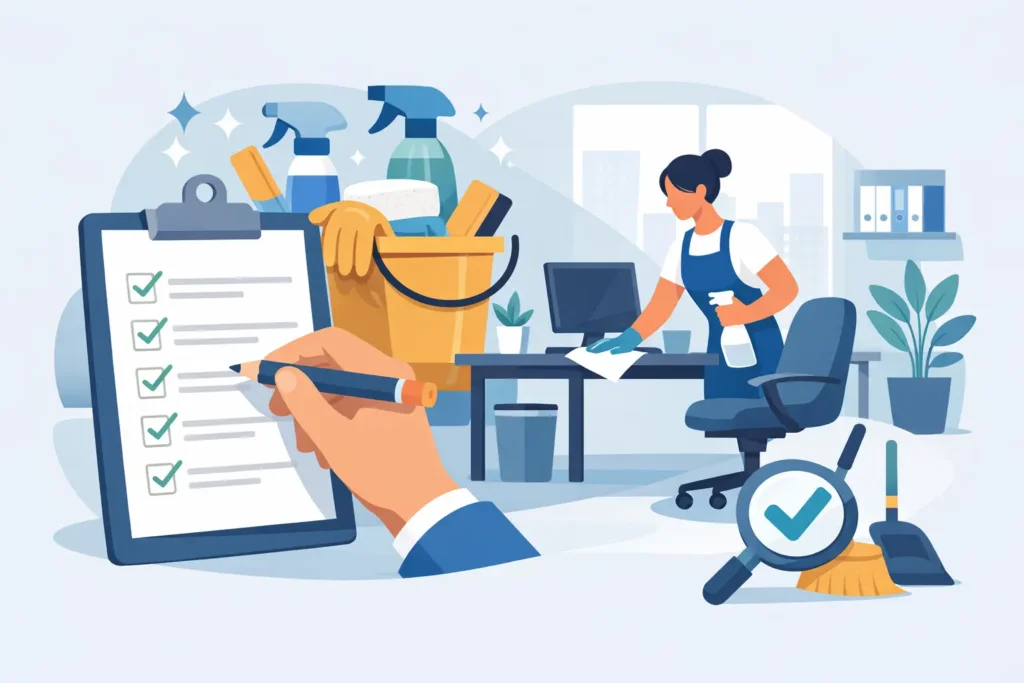
A messy office usually does not happen all at once. It builds quietly – fingerprints on glass, dust on vents, crumbs in the breakroom, overflowing trash, and restrooms that stop feeling fresh before the day is over. A practical office cleaning checklist example helps prevent that slow decline by giving your team or cleaning provider a clear standard to follow.
For business owners, office managers, and property teams, the value is simple. A checklist protects consistency. It makes it easier to maintain a clean, healthy space for employees, clients, and visitors without having to guess what was handled, what got missed, or how often certain tasks should happen.
Why an office cleaning checklist example matters
Clean offices support more than appearance. They affect how people feel in the space and how confidently they use it. When desks are dusty, floors are marked up, and shared areas feel neglected, the whole workplace can seem less organized than it really is.
A checklist solves that by turning cleaning into a routine instead of a reaction. It creates accountability, especially in offices where multiple people share responsibility or where a business works with a professional cleaning company. It also helps with budgeting because you can separate what needs daily attention from what can be handled weekly or monthly.
There is one important trade-off, though. A checklist should guide the work, not box it in. A medical office, sales office, coworking suite, and small law firm will not all need the exact same schedule. The best checklist is specific enough to keep standards high and flexible enough to fit how the office is actually used.
Office cleaning checklist example by frequency
The easiest way to build an office cleaning routine is to group tasks by how often they should be completed. That keeps high-touch areas under control while preventing deeper cleaning needs from piling up.
Daily office cleaning tasks
Daily cleaning is what employees and visitors notice first. These tasks help the office stay presentable and sanitary from one business day to the next.
Start with all entry points and shared surfaces. Glass doors should be spot-cleaned for fingerprints, handles and push plates should be disinfected, and reception counters should be wiped down. If your office sees regular foot traffic, these areas can look worn long before anything else does.
Workstations should be tidied as appropriate for your setup. In some offices, cleaners only wipe accessible surfaces and empty trash, while employees are expected to clear paperwork and personal items first. That division of responsibility matters. A checklist works best when everyone knows what “ready for cleaning” means.
Common daily tasks usually include emptying trash and replacing liners, vacuuming carpeted traffic areas, sweeping and mopping hard floors, wiping desks and tables, disinfecting shared touchpoints like phones, keyboards, door handles, and light switches, and cleaning breakroom counters, sinks, and appliance exteriors.
Restrooms also need daily attention, and in busy offices, more than once a day may be necessary. Toilets, urinals, sinks, counters, mirrors, dispensers, and floors should be cleaned and disinfected. Soap, toilet paper, and paper towels should be restocked before they run low, not after complaints start.
Weekly office cleaning tasks
Weekly cleaning handles the buildup that daily wipe-downs cannot fully solve. This is where an office starts to feel truly maintained rather than simply picked up.
Carpets should be vacuumed more thoroughly beyond the obvious traffic lanes. Hard floors may need a more detailed mop or machine cleaning depending on size and finish. Baseboards, window sills, partition tops, and other dust-catching surfaces should be wiped down.
Breakrooms deserve extra attention each week. Microwave interiors, refrigerator exteriors and handles, cabinet fronts, tables, and chair surfaces should be cleaned carefully. If employees store food in a shared fridge, a weekly cleanout policy can make a major difference, though that usually works best when office management sets clear rules.
Weekly restroom cleaning may go deeper as well, including detailed scrubbing around fixtures, polishing metal surfaces, and addressing corners or grout lines that do not get enough attention during faster daily service.
If your office includes conference rooms, weekly tasks should include wiping down chairs, sanitizing remotes and shared equipment, cleaning presentation surfaces, and checking under tables where dust and debris often collect unnoticed.
Monthly office cleaning tasks
Monthly tasks focus on the details that shape the long-term condition of the space. These are the items most likely to be skipped without a written plan.
This may include dusting vents, high ledges, wall décor, blinds, and light fixtures. Interior windows can be cleaned more thoroughly, and carpets may need spot treatment in stained areas. Upholstered office seating can be vacuumed, and hard floors may benefit from buffing or deeper treatment depending on the material.
A monthly review is also a good time to look at less obvious problem areas. Are corners collecting cobwebs? Are storage rooms becoming cluttered? Are trash cans stained or holding odor? These issues tend to sit below the surface until they start affecting the overall impression of the office.
A simple office cleaning checklist example
If you want a starting point, this basic structure works well for many general office environments.
Daily
Clean and disinfect entry doors and handles, empty trash and replace liners, vacuum or sweep visible floor areas, mop hard floors as needed, wipe reception surfaces, disinfect shared touchpoints, clean breakroom counters and sink, wipe appliance exteriors, clean and restock restrooms, and tidy conference rooms.
Weekly
Vacuum carpets thoroughly, mop hard floors in full, dust baseboards and low ledges, wipe window sills, sanitize phones and shared equipment, clean microwave interiors, wipe refrigerator and cabinet exteriors, detail conference room furniture, and deep clean restroom surfaces.
Monthly
Dust vents, blinds, and light fixtures, clean interior glass, spot clean carpets, vacuum upholstered chairs, sanitize trash cans, address buildup in corners and storage areas, and review supply levels and cleaning needs for the next month.
That said, a checklist should reflect the actual office. A small professional suite with five employees may not need the same restroom and breakroom schedule as a busy office with constant client visits. The right plan depends on occupancy, layout, flooring, industry, and how much use shared areas get each day.
How to customize your office cleaning checklist example
Start by walking the office as if you were seeing it for the first time. Look at the lobby, desks, floors, glass, breakroom, and restrooms. Then look again from the perspective of staff who use the space all day. These are not always the same priorities.
Next, separate appearance issues from sanitation issues. Smudged glass is noticeable, but a neglected restroom or contaminated shared surface creates a bigger problem. If your budget is limited, prioritize health, high-touch surfaces, trash removal, and floor care in the busiest zones before adding detail work.
It also helps to define who handles what. Some offices expect their staff to keep personal desks clear, load dishwashers, or remove food from the refrigerator on Fridays. Others prefer a fully managed service approach. Neither option is wrong, but the checklist should reflect reality so no one assumes a task belongs to someone else.
If your office has special conditions, build those in. Post-construction dust, pet-friendly workplaces, training rooms, fitness areas, or client-facing showrooms all require more specific care. A generic checklist can be useful, but a customized one will always perform better.
When professional office cleaning makes more sense
There comes a point where an internal checklist alone is not enough. If employees are trying to clean between regular job duties, standards usually slip. The office may look acceptable at a glance while dust, bacteria, floor wear, and restroom issues keep building in the background.
Professional cleaning brings consistency, proper tools, and a more objective eye. It also gives business owners better control over frequency and scope. Some offices only need a few scheduled visits each week. Others need daily service with periodic deep cleaning layered in. The right setup is the one that supports the way your business actually runs.
For companies that want a dependable system without overcomplicating it, working with a local provider can make the checklist easier to follow and easier to adjust. UpStraight Cleaning, for example, focuses on flexible service plans that can be tailored to the space instead of forcing every office into the same routine.
A clean office should not feel like a moving target. With a clear checklist and the right level of support, it becomes one less thing your team has to worry about while they focus on the work that keeps the business moving.

