
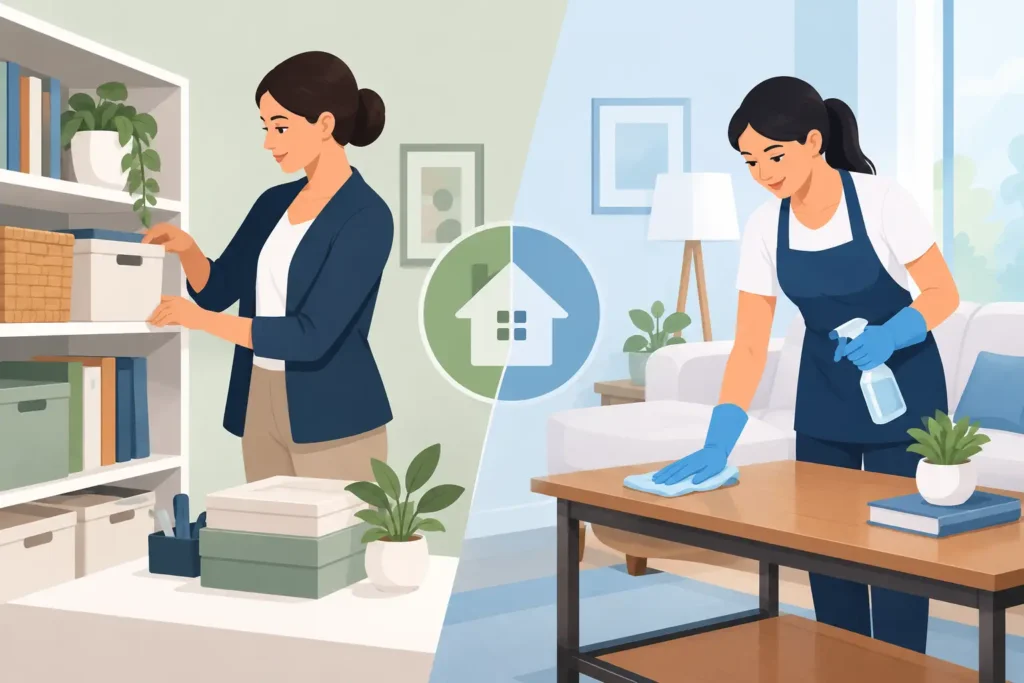
A closet can be full of clean clothes and still be impossible to use. A kitchen can be neatly organized and still need a serious scrub. That is the real difference in the professional organizer vs housekeeper decision: one service helps your home function better, while the other helps it stay clean, sanitary, and comfortable.
Both can bring meaningful relief when your to-do list is already full. The right choice depends on what is creating the most stress in your space, how you want to use your time, and whether you need a one-time reset or ongoing support.
Professional Organizer vs Housekeeper: The Core Difference
A professional organizer focuses on systems. Their work is designed to make belongings easier to find, store, maintain, and put away. They may help you sort through a crowded pantry, create workable storage in a small bedroom, set up a home office, or unpack efficiently after a move.
A housekeeper focuses on cleaning and upkeep. Their work typically includes removing dust, dirt, grease, soap buildup, and everyday mess from the surfaces and rooms you use. Depending on the service plan, that can include bathrooms, kitchens, floors, bedrooms, common areas, trash removal, bed making, and other routine cleaning tasks.
The difference is not about which service is more valuable. It is about the problem you need solved first. If you cannot find the school forms, your counters are buried under mail, or your cabinets do not hold what your household actually uses, organizing support may be the better starting point. If the floors are dirty, bathrooms need attention, and cleaning keeps getting pushed aside, housekeeping is usually the more immediate need.
What a Professional Organizer Can Help You Do
Organizing is practical problem-solving. A good organizer does more than make a room look polished for a photo. They help create a setup that fits your routines, your storage, and the people who live in the home.
For example, an organizer may work with you to decide what stays, what should be donated, and what needs a new home. They can group similar items, suggest storage solutions, label categories when helpful, and create a system that makes everyday cleanup less frustrating. This is especially useful in closets, pantries, garages, laundry rooms, playrooms, home offices, and spaces that collect paperwork.
Organizers can also be valuable during transitions. Moving into a new home, downsizing, welcoming a baby, combining households, or helping an older family member relocate can create a lot of physical and emotional clutter. Packing and unpacking support can reduce the pressure of trying to make hundreds of small decisions while managing a major life change.
Still, organization does not automatically mean deep cleaning. An organizer may wipe a shelf before placing items back, but detailed cleaning is not necessarily the focus of the appointment. If a pantry has sticky shelves, expired food, and accumulated crumbs, you may need cleaning and organizing together for the best result.
What a Housekeeper Can Help You Maintain
Housekeeping gives your home a dependable baseline of cleanliness. It is often the best choice for busy families, working professionals, renters preparing for visitors, and anyone who wants their weekends back.
A standard cleaning service usually concentrates on the visible, high-use areas that make the biggest day-to-day difference. Think cleaned bathrooms, refreshed kitchen surfaces, dusted furniture, vacuumed carpets, and mopped floors. Recurring service can keep those tasks from building into an overwhelming project.
A deeper cleaning is better suited for homes that need extra attention beyond routine upkeep. This may include more detailed work around baseboards, fixtures, buildup in bathrooms, kitchen grime, and areas that are easy to overlook during a busy week. Move-in, move-out, and post-construction cleaning are also specialized needs that go beyond typical housekeeping visits.
What a housekeeper usually does not do is decide where everything belongs. They can clean around items, straighten a space, and help it look refreshed, but a cleaning appointment is not typically a full decluttering or storage-planning session. If every surface is covered with belongings, cleaning can be less efficient because there is simply less access to the surfaces underneath.
Signs You Need an Organizer First
Choose organizing help when clutter is making normal routines harder. You may have enough storage but no clear system. You may be buying duplicates because no one can find what is already there. Or you may spend too much time moving items from one pile to another without making real progress.
An organizer is often the stronger fit when you are facing:
- Overfilled closets, cabinets, pantries, or garages
- Paper piles, crowded counters, and unclear storage zones
- A move, renovation, downsizing project, or major household change
- Rooms that are clean but still feel chaotic or difficult to use
The best organizing work is collaborative. You remain in charge of decisions about personal belongings, sentimental items, and what stays in your home. A no-judgment approach matters because clutter is rarely just about being careless. It can come from a demanding schedule, a growing family, a move, grief, health changes, or simply years of life happening faster than cleanup can keep up.
Signs You Need a Housekeeper First
Housekeeping should come first when sanitation and cleaning are the immediate issue. If your bathroom needs disinfecting, your kitchen has grease buildup, or your floors have not been properly cleaned in weeks, start with cleaning support.
This is also the practical choice if your home is generally functional but you do not have enough time to keep up with routine tasks. Recurring cleaning is not just for large homes or special occasions. It can be a realistic way to protect your time, reduce household tension, and stay consistently clean without carrying every chore alone.
A housekeeper may be especially helpful before hosting guests, after a busy season at work, when recovering from illness, or when you want a fresh start without spending an entire Saturday cleaning. For landlords, property managers, and renters, move-out cleaning can also help make a transition smoother and more manageable.
When Cleaning and Organizing Work Best Together
Many homes do not fit neatly into one category. You may need to clear and organize a closet before it can be thoroughly cleaned. You may want a deep cleaning before unpacking into a new house. You may need to get the kitchen under control, then set up a pantry system that keeps it that way.
Combining services can be especially useful after a move or during a household reset. Cleaning creates a fresh surface. Organizing creates a plan for keeping that surface clear. Together, they can turn a space from stressful to usable without asking you to figure out every detail alone.
At UpStraight Cleaning, service plans can be tailored to the work that matters most in your home, whether that means recurring cleaning, a detailed reset, home organizing, or packing and unpacking support. You are in charge of the scope, priorities, and schedule.
Questions to Ask Before You Book
Before choosing a service, look at the room that frustrates you most and ask one simple question: what would make this space easier to live in tomorrow? If the answer is “clean surfaces and a fresher home,” book cleaning. If the answer is “a place for everything and less visual stress,” book organizing.
It also helps to consider your long-term goal. A one-time deep clean can restore a home after a busy stretch. Recurring housekeeping can prevent cleaning tasks from piling up again. A one-time organizing session can create a better system, but that system works best when everyone in the household can realistically maintain it.
Be clear about your priorities when requesting a quote. Mention problem areas, upcoming moves, pets, allergies, heavy buildup, storage challenges, or any rooms that need special attention. The more specific you are, the easier it is to build a service plan that delivers visible results.
The right support is the one that gives you more room to live, rest, work, and enjoy your home. Start with the task that is weighing on you most, then build from there.

