
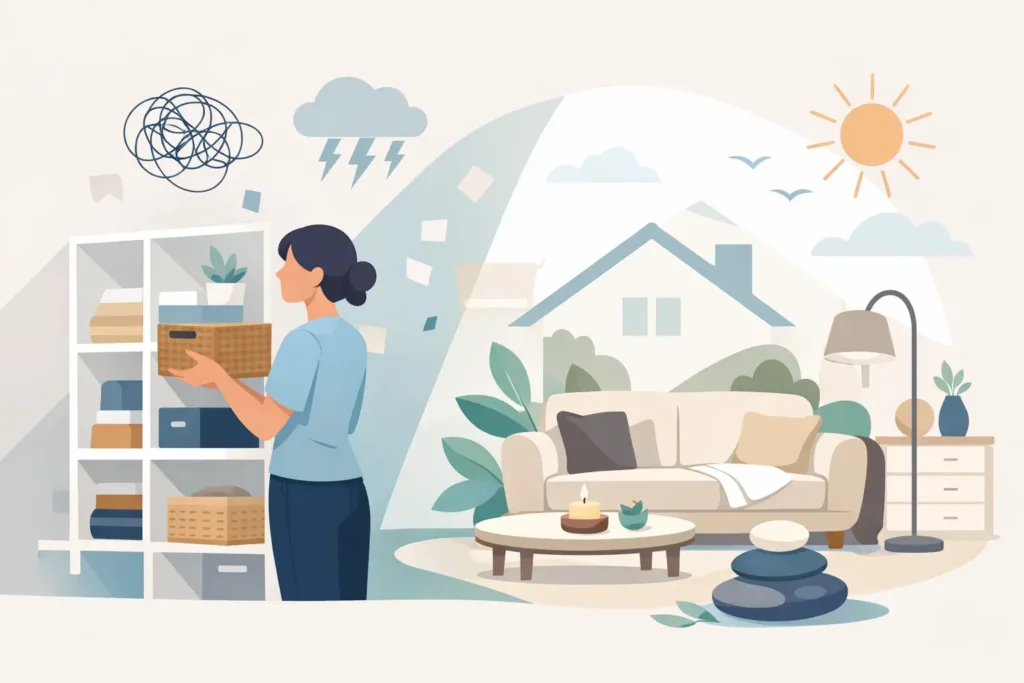
You feel it before you even sit down. The shoes by the door, the papers on the counter, the laundry waiting on the chair, the drawer that will not close all the way. How home organizing reduces stress is not just about making a space look better. It is about removing the small, constant friction that turns a normal day into a tiring one.
For busy families, working professionals, and anyone trying to keep up with a full schedule, clutter creates more than a visual problem. It interrupts routines, makes simple tasks take longer, and adds one more thing to think about when your mind is already full. A home that functions well gives you back time, attention, and a sense of control.
Why clutter feels heavier than it looks
Most people do not get stressed because a room is imperfect. They get stressed because disorder creates repeated decisions. Where did the keys go? Is that paper important? Did I already wash that shirt? Which cabinet has the lunch containers? Every extra question uses energy.
That is one reason organized homes feel calmer even when they are not spotless. The brain relaxes when it knows where things belong. It does not have to keep scanning, sorting, or remembering unfinished tasks. Visual clutter can also make a room feel louder than it is. Even when the house is quiet, a crowded surface can signal that something still needs attention.
There is also an emotional side. Clutter often carries guilt. People see the unopened mail, the toy pile, or the hallway drop zone and feel like they are falling behind. A well-organized space reduces that pressure because the home starts supporting your routine instead of fighting it.
How home organizing reduces stress in everyday routines
Organization helps most when it improves the moments you repeat every day. Mornings are smoother when bags, shoes, chargers, and lunch supplies have a home. Evenings feel lighter when the kitchen is easier to reset and bedrooms are not doubling as storage rooms.
This is where stress reduction becomes practical, not theoretical. If you can get out the door without searching for essentials, that changes the tone of the day. If putting groceries away is simple because the pantry is not overstuffed, that saves time and frustration. If the bathroom cabinet is organized, getting ready takes less effort.
The biggest benefit is often predictability. When your home is arranged around how you actually live, daily tasks stop feeling like little emergencies. That does not mean every room has to look picture-perfect. It means the layout, storage, and systems make sense for your household.
Organized spaces reduce decision fatigue
A disorganized home asks you to make too many choices. Keep this or toss it? Put this here for now? Clean this first or that first? Over the course of a week, those choices add up.
Home organizing reduces that load by creating fewer open loops. You know where incoming mail goes. You know where cleaning supplies are stored. You know which bin holds school papers and which shelf holds extra linens. When systems are clear, you spend less energy managing the same categories over and over.
This matters even more for people balancing work, children, caregiving, or packed schedules. By the end of the day, most people are not short on effort. They are short on mental bandwidth. An organized home protects that bandwidth.
Clean and organized are not the same thing
A house can be clean and still feel stressful if it is disorganized. It can also be organized but overdue for cleaning. The two work best together because they solve different problems.
Cleaning removes dirt, dust, buildup, and germs. Organizing removes confusion and inefficiency. When both are handled well, the home feels easier to maintain. Surfaces are simpler to wipe down when they are not crowded. Floors are faster to clean when items are not constantly being moved around. Closets and storage areas are easier to use when they are not packed with things that do not belong.
That is why many homeowners find real relief when they stop treating clutter as a personal failure and start treating it as a systems issue. The goal is not perfection. The goal is a space that stays manageable.
The stress relief is different in each room
Some rooms carry more daily pressure than others. Kitchens often create stress because they combine food, schedules, dishes, paperwork, and family traffic in one place. A few simple zones for cooking tools, snacks, lunch prep, and incoming paper can make the room feel much more controlled.
Bedrooms affect stress in a quieter way. When clothing, laundry, and bedside surfaces are under control, the room becomes more restful. That matters because the brain does not fully separate your environment from your ability to relax.
Bathrooms benefit from organization because they support fast routines. If the basics are easy to reach and backups are stored clearly, the room works better during busy mornings.
Entryways and mudrooms are often underestimated. These are transition spaces, and when they are disorganized, the whole day can feel off balance. A reliable place for shoes, bags, keys, and jackets prevents a lot of rushing and backtracking.
Where organizing helps the most – and where it depends
Not every organizing project delivers the same stress relief right away. If your biggest problem is time, focus on high-traffic spaces first. If your biggest problem is feeling overwhelmed, visible surfaces may give the fastest emotional payoff. If your biggest problem is storage, closets, pantries, and utility areas may matter more.
It also depends on the household. A family with young children needs systems that are simple and easy to reset. A working professional may care more about a calm bedroom, a functional kitchen, and an uncluttered home office. Someone preparing for a move may need organizing that supports packing, sorting, and decision-making.
That is why one-size-fits-all advice usually falls short. The best setup is the one you can maintain without constant effort. Fancy containers do not solve much if the system does not match your routine.
How to make home organizing actually last
The most effective organizing is realistic. It respects how people move through a home instead of forcing perfect habits. Frequently used items should be easy to reach. Drop zones should exist where clutter naturally lands. Storage should be simple enough that other household members can follow it too.
It helps to reduce before you rearrange. Trying to organize too much stuff usually creates nicer-looking clutter. Once the excess is gone, the remaining items are easier to group and store in a way that makes sense.
Maintenance also matters. Small resets are easier than major overhauls. Ten minutes spent returning items to their place can protect the progress you made and keep stress from building again. Recurring cleaning and organizing support can make an even bigger difference for households that are short on time or already stretched thin.
Professional help can remove the hardest part
For many people, the most stressful part is not the organizing itself. It is getting started while already feeling overwhelmed. That is where professional support can be valuable. A dependable team can help you sort priorities, create practical systems, and get the home back to a condition that feels manageable.
This is especially helpful after life changes such as moving, welcoming a new baby, recovering from renovations, handling a demanding work season, or helping a family member transition. During those periods, clutter grows quickly and energy runs low.
A service-focused company like UpStraight Cleaning can be useful because organizing works best when it is paired with real upkeep. When cleaning and organization support are aligned, the results are easier to maintain and the home starts working for you again, not against you.
A calmer home supports more than appearances
When people talk about organizing, it can sound cosmetic. In real life, it affects how you start the morning, how quickly you clean up after dinner, how easily guests can come over, and whether your home feels like a place to recharge.
That is the real answer to how home organizing reduces stress. It removes daily obstacles, clears mental noise, and turns your space into something more supportive. You do not need a perfect house to feel better. You need a home that helps life run with less friction, so your energy can go where it matters most.

