
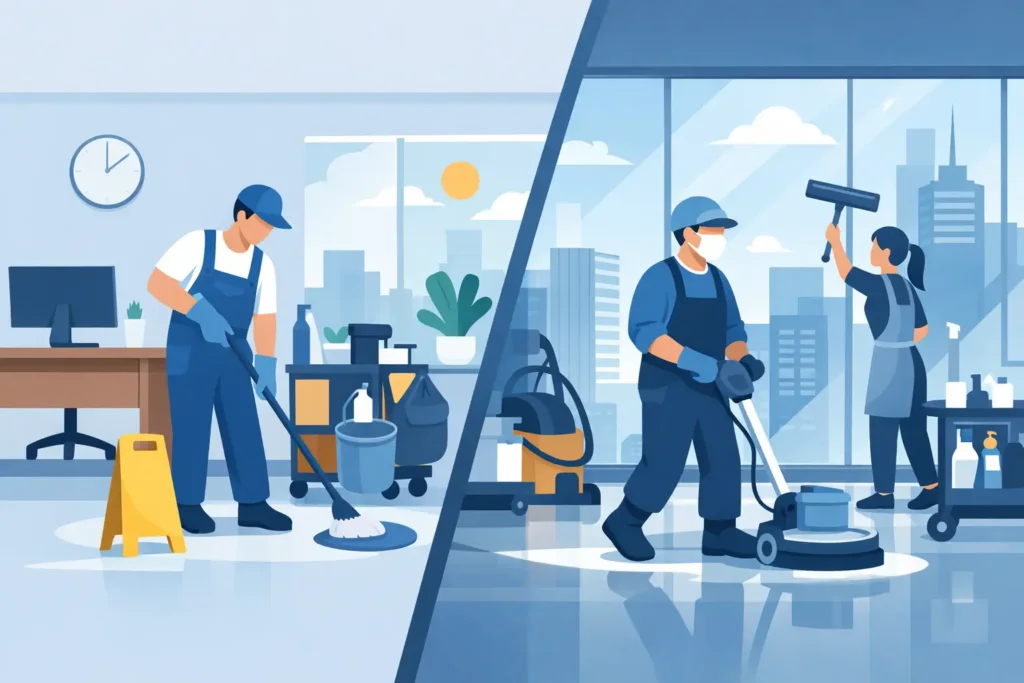
A clean business does more than look professional. It helps employees focus, gives customers confidence, and makes daily operations easier to manage. When comparing janitorial services vs commercial cleaning, the biggest difference is usually not who does the work. It is the type of work, how often it is needed, and the level of detail your facility requires.
For a busy office, restaurant, retail store, fitness center, or managed property, choosing the right service can prevent missed tasks, surprise costs, and the frustration of cleaning that never seems to stay done. The best plan is one that fits how your space is actually used.
Janitorial Services vs Commercial Cleaning: The Core Difference
Janitorial services are typically routine cleaning services performed on a recurring schedule. Think of the work that keeps a facility presentable and sanitary from one business day to the next: emptying trash, cleaning restrooms, vacuuming floors, wiping high-touch surfaces, and restocking paper products when requested.
Commercial cleaning is a broader category. It can include recurring janitorial work, but it also covers larger, more specialized, or less frequent cleaning projects. A commercial cleaning plan may include deep cleaning kitchens, detailed floor care, post-construction cleanup, move-in or move-out service, interior glass cleaning, or a thorough reset after a busy season.
The terms are sometimes used interchangeably, and that is understandable. A cleaning company may offer both under one service plan. The practical distinction is this: janitorial service maintains your space, while commercial cleaning can maintain it and restore it when routine upkeep is not enough.
What Janitorial Services Usually Include
Janitorial service is built for consistency. It is often scheduled daily, several times a week, weekly, or on another predictable cadence based on your traffic and facility needs.
In an office, routine janitorial work may cover lobby floors, desks or shared surfaces, break rooms, restrooms, trash removal, and touchpoint disinfection. In a retail space, the focus may shift toward entryways, fitting rooms, checkout areas, mirrors, and clean floors that help the store feel cared for. For property managers, dependable common-area cleaning can make a noticeable difference for residents, guests, and prospective tenants.
The value of janitorial service is not just the task list. It is the reliability of having cleaning handled before small issues become visible problems. Overflowing trash, marked glass doors, restroom odors, and neglected floors can affect how people view a business within seconds.
That said, routine service has limits. A standard nightly or weekly visit may not include detail work such as grout scrubbing, high dusting, intensive appliance cleaning, or floor restoration unless those tasks are specifically added to the plan.
When Commercial Cleaning Is the Better Fit
Commercial cleaning is often the right choice when your facility needs more than everyday upkeep. This may be a one-time project, a seasonal service, or a detailed cleaning scheduled alongside recurring janitorial visits.
A restaurant may need a deep clean of areas affected by grease, food debris, and heavy kitchen activity. An office that has hosted a large event, completed renovations, or experienced unusually high traffic may need a more complete reset. A retail business preparing for a grand opening may need construction dust removed and every surface polished before customers arrive.
Commercial cleaning is also useful when a space has been neglected or when the next occupant needs a fresh start. For managed properties, turnover cleaning can help prepare units, hallways, clubhouses, and leasing areas for the next stage of use. In fitness centers, a periodic deep clean supports the daily disinfecting routine by addressing areas that receive constant contact and moisture.
Because the scope is more detailed, commercial cleaning projects are usually priced and scheduled differently than janitorial service. They may take longer, require additional equipment, or involve a crew sized for a larger job. That does not make them automatically better. It simply makes them better suited to a different need.
How to Choose the Right Cleaning Schedule
The right schedule depends on your foot traffic, industry, operating hours, and tolerance for visible mess. A quiet professional office may be comfortable with service two or three times a week. A medical-adjacent office, busy restaurant, gym, or high-traffic retail location may need daily attention to keep restrooms, entrances, and shared areas in good condition.
Start by looking at what happens in your space between cleaning visits. Are trash cans filling up? Do restroom supplies run low? Are floors showing dirt at the entrance by midday? Are employees spending time handling cleaning tasks that should not be on their plates? Those are signs that the schedule or scope may need to change.
It also helps to separate daily needs from periodic needs. For example, you may need restrooms, trash, and floors addressed every evening, while detailed baseboards, interior windows, high shelves, and deep floor care can be scheduled monthly, quarterly, or as needed. This approach keeps the facility consistently clean without paying for intensive work every single visit.
Ask About Scope, Not Just Price
Two quotes can look similar while covering very different work. Before choosing a provider, ask what is included at every visit, what is considered an add-on, and how the team handles special requests.
A clear cleaning scope should identify the areas being serviced, the frequency of each task, and the standard expected for restrooms, floors, break rooms, common areas, and touchpoints. If your business has specific concerns, such as customer-facing glass, odors, food-service areas, or locker rooms, those details should be part of the conversation from the beginning.
Flexibility matters, too. Your facility may have a slower season, a special event, construction work, or an unexpected mess that requires more than the normal plan. A provider that can adjust without making the process difficult gives you more control and less to worry about.
At UpStraight Cleaning, commercial plans are tailored to the way each location operates, so businesses can build recurring upkeep around the spaces and priorities that matter most.
Common Situations and the Best Service Match
A law office with steady but moderate traffic often benefits from recurring janitorial services. Regular vacuuming, restroom cleaning, trash removal, and break room care help the office stay polished for employees and clients.
A restaurant usually needs frequent janitorial attention plus scheduled deep commercial cleaning. Daily sanitation supports normal operations, while deeper service can address buildup that routine cleaning does not fully remove.
A property manager may need both services at different times. Recurring cleaning helps maintain lobbies, hallways, and shared amenities, while commercial cleaning can support unit turnovers, post-construction cleanup, or a detailed refresh before inspections.
A retail store may need a flexible plan based on its busiest days. Routine cleaning keeps the sales floor ready for shoppers, while a deeper service before seasonal promotions or major inventory changes can help the space feel new again.
The Result You Should Expect
Whether you choose janitorial services, commercial cleaning, or a combination of both, the goal should be visible, dependable results. Your employees should walk into a cleaner workspace. Customers should notice an orderly environment without having to think about why. And you should not have to chase down basic tasks or wonder whether the work was completed.
A good cleaning plan makes your facility easier to run. Begin with the areas people notice first, build a schedule around your real traffic patterns, and leave room for deeper service when your space needs more than a quick reset.

