
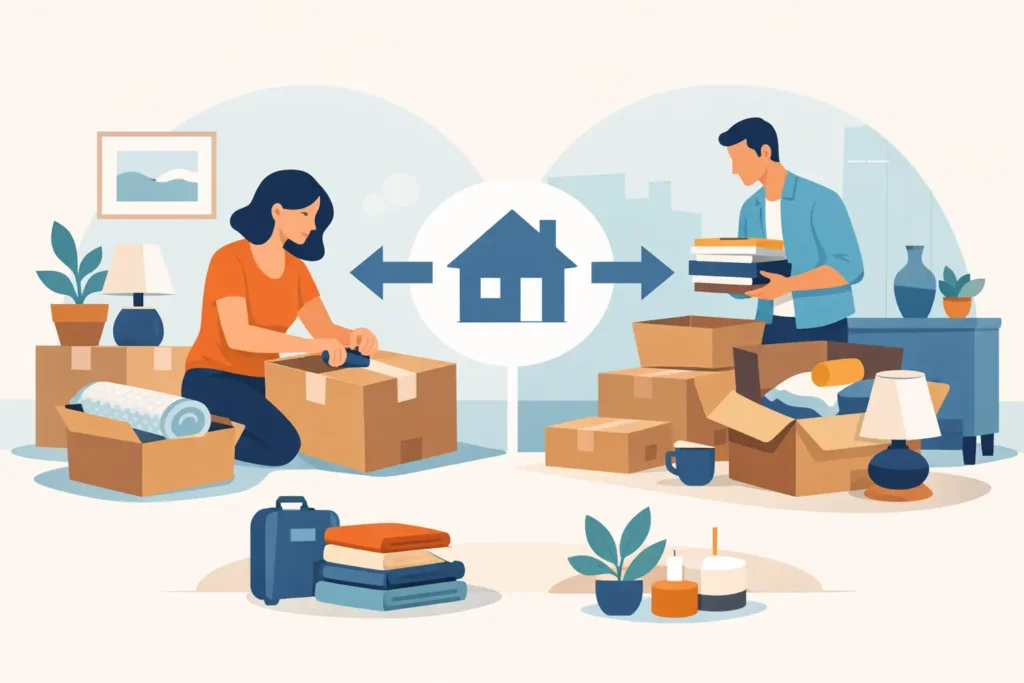
A move can feel manageable right up until the boxes begin to pile up. Then the missing tape, mixed-up kitchen items, and pressure to get settled quickly can turn a fresh start into a long, exhausting week. This packing and unpacking guide helps you make clear decisions before moving day, protect the belongings you care about, and create a home that works from the first night.
Start Packing With a Plan, Not Empty Boxes
Packing goes faster when you know what each room needs to become functional again. Before filling a single box, walk through your home with a notebook or phone and identify what you use every day, what can wait, and what should not make the move at all.
This is the right moment to let go of expired pantry items, clothing that no longer fits your life, broken furniture, duplicate tools, and décor you have not used in years. A move is not the time to pack every item just because you already own it. Fewer belongings mean fewer boxes, less loading time, and less to organize on the other side.
Work room by room instead of bouncing between spaces. Finish the guest room, linen closet, or storage area first because those items are usually less essential. Leave your daily kitchen supplies, work equipment, medications, and children’s routines until closer to moving day.
Build a simple packing timeline
If you have several weeks, start with nonessential belongings three to four weeks before your move. Pack seasonal clothing, books, wall art, extra bedding, and rarely used serving pieces first. During the final week, focus on the rooms you use every day.
For a shorter timeline, prioritize decisions over perfection. Sort items into keep, donate, discard, and pack categories. Avoid creating a vague “deal with later” pile. Those piles usually become the last boxes loaded and the first source of frustration in your new home.
Gather Supplies That Protect Your Belongings
The cheapest boxes are not always the best value if they collapse under books or leave fragile items unprotected. Use sturdy boxes in a few manageable sizes, along with packing paper, bubble wrap for delicate pieces, strong tape, markers, labels, and resealable bags for hardware.
Small boxes are best for heavy items such as books, canned goods, tools, and dishes. Medium boxes work well for toys, shoes, pantry items, and small appliances. Large boxes should hold lighter belongings, including pillows, linens, lampshades, and bulky clothing. A box that is too heavy is harder to carry safely and more likely to break.
Wrap glassware and dishes individually, then fill empty spaces so items cannot shift. Plates generally travel more safely when packed upright, like records, rather than stacked flat. For furniture that must be disassembled, place screws, bolts, and small parts in a labeled bag and tape that bag directly to the furniture frame when possible.
Do not forget to label boxes with more than a room name. “Kitchen” is helpful, but “Kitchen – everyday dishes” or “Kitchen – baking supplies” makes unpacking far easier. Add a brief note if a box contains fragile items or needs to be opened quickly.
Pack an Essentials Box for the First 48 Hours
The first night in a new home rarely goes exactly as planned. You may be waiting on a delivery, looking for a missing charger, or too tired to unpack much after the truck is empty. An essentials box keeps the basics within reach.
Pack this box separately and keep it with you rather than on the moving truck. Include medications, identification, phone chargers, basic toiletries, toilet paper, towels, a change of clothes, bedding, snacks, water, pet supplies, and any important documents. Families may also want familiar toys, school items, or a few easy activities for children.
A second small box for cleaning supplies is equally useful. Bring all-purpose cleaner, disinfectant, trash bags, paper towels, a broom or vacuum, gloves, and a few cloths. Even if the home was cleaned before you arrived, you may want to wipe cabinets, counters, shelves, and high-touch surfaces before putting belongings away.
Make Moving Day Easier to Manage
Moving day works best when everyone knows what is leaving, what is staying, and where the boxes should go. Create a clear path through hallways and entryways. Keep pets in a quiet, secure area, and make sure children are supervised away from loading zones.
Use a simple color or number system for each room if you have many boxes. Place a matching sign on the door of each destination room so movers, helpers, or family members can set boxes down in the right location without asking you to make dozens of small decisions.
Before the last box leaves, do one final sweep. Check closets, cabinets, the garage, outdoor storage, the attic, and behind doors. Take photos of the property if you are moving out of a rental, and set aside keys, remotes, and any documents that need to be returned.
This Packing and Unpacking Guide Starts With the Kitchen and Bedrooms
Unpacking does not need to happen all at once. In fact, opening every box quickly often creates more clutter and makes it harder to find what you need. Start with the rooms that help your household rest, eat, and get ready for the next day.
Set up beds first. Clean sheets, pillows, and a place to sleep make a major difference after a physically demanding day. Next, focus on the bathroom. Hang towels, stock toilet paper, place toiletries where they belong, and set out any daily medications.
The kitchen should be functional before it is fully organized. Unpack the coffee maker, basic cookware, plates, utensils, dish soap, and food storage containers. You can decide later where specialty gadgets, serving dishes, and extra pantry items should live. Getting the essentials in place prevents takeout containers and half-opened boxes from taking over the counter.
Unpack by function, not by pressure
There is no prize for emptying every box in one weekend. A home feels settled when its daily systems work, not when every decorative item is displayed. Start with clothing you need for the week, workspace materials, laundry supplies, and the items that support school, work, meals, and sleep.
Then move through one category at a time. For example, complete the pantry before opening the decorative kitchen boxes. Finish one bathroom before sorting the hallway closet. This approach creates visible progress and prevents the familiar feeling of having everything out but nothing put away.
If a box stays unopened for several weeks, pause before automatically finding a permanent place for its contents. You may discover that some items are no longer useful in your new space. It depends on the size and layout of the home, but leaving a little breathing room in closets and cabinets is usually better than filling every shelf immediately.
Clean Before You Fully Settle In
Unpacking is easier in a clean, organized space. Wipe down shelves and drawers before loading them, vacuum or sweep rooms before placing rugs and furniture, and clean inside appliances before stocking the kitchen. This is especially helpful in homes that have been vacant, newly renovated, or used by previous occupants.
For busy families, renters working around a lease deadline, or professionals balancing a move with a full schedule, this step can become overwhelming quickly. A move-in cleaning and organizing service can take the pressure off while you focus on utilities, work, children, pets, and the practical details that only you can handle. UpStraight Cleaning can tailor packing, unpacking, cleaning, and organizing support to the parts of the move that need the most help.
Give Your New Home Time to Take Shape
The best organization choices are made after you have lived in a space long enough to understand how you use it. You may think a cabinet should hold snacks until you notice everyone reaches for them near the family room. You may plan a home office layout that changes once you learn where the afternoon light falls.
Unpack the essentials, keep pathways clear, and make each room more useful than it was the day before. A calm move is not about having every box gone immediately. It is about giving yourself a clean, workable place to land while your new routines begin to feel like home.

